
First Delaware General Assembly
Delaware’s first separate elected Assembly met in New Castle, ending its joint legislature with Pennsylvania. Although the colonies continued to share a governor, the new Assembly gave Delaware greater political independence and helped establish the distinct government that eventually enabled it to become an independent state.
The Liberty Bell
Cast in 1752 for the Pennsylvania State House (now Independence Hall), the Liberty Bell became an enduring symbol of American freedom. It bears the biblical inscription, “Proclaim LIBERTY Throughout all the Land unto all the Inhabitants thereof” (Leviticus 25:10).
End of the Seven Years War
Treaty of Paris is signed and France surrenders all of its North American Territories east of the Mississippi, leaving Great Britain in possession of vast French and Spanish territories in North America. However, the cost of the war and maintaining an army leaves Britain with significant debt, prompting them to impose new taxes on the colonists.
English Sugar Act
England’s Parliament adopts a Sugar Act to regulate trade and raise revenue leading to protests by colonists who depended on the trade. Colonists insist that the duties on sugar violate their right to consent to their own taxation. Others are concerned about being accused of smuggling sugar and being tried without a jury. Some protest that the act supports slavery on Caribbean sugar plantations.
Passage of the Stamp Act
The British passed the Stamp Act on March 22, 1765 to help support the British regiments left to defend the American colonies following the Seven Years War. Stamps were applied to all legal documents, newspapers, and pamphlets to prove that the tax was paid. Many colonists thought that the tax was unfair. Protests against the act broke out in almost every colony. The Stamp Act was repealed on March 11, 1766 and never took full effect in the American colonies.
Stamp Act Congress meets in New York City
Nine representatives of the colonies convened in New York City to frame resolutions of “rights and grievances” and to petition the British Parliament to repeal the Stamp Act. This was the first time representatives of the colonies gathered and acted collectively leading to the formation of the Continental Congress. Amongst the representatives were Thomas McKean and Caesar Rodney who represented Delaware. McKean proposed the voting procedure that the Continental Congress later adopted in which each colony, regardless of size or population, would have one vote.
Repeal of the Stamp Act
In the aftermath of the Stamp Act’s repeal, Parliament adopted the Declaratory Act, asserting its right to make laws for the American Colonists, reinforcing Parliament’s right to impose taxes on the colonists.
Townshend Acts
The British Parliament enacts a series of laws to assert and exercise its right to raise revenue in the colonies and strengthen enforcement of trade regulations, sparking renewed protests in many of the colonies.
Letters from a Farmer in Pennsylvania
Published serially by John Dickinson, these essays strongly criticized the Townshend Acts and became widely popular, circulating throughout the American colonies as well as in England and France. Although Dickinson wrote the letters while living in Pennsylvania, he had significant ties to the Delaware region, where he owned a plantation and farmed near Dover. Despite becoming celebrated as a Founding Father and an influential advocate for freedom and colonial rights, Dickinson was also an enslaver, revealing the contradiction between his defense of liberty and his participation in the institution of slavery.
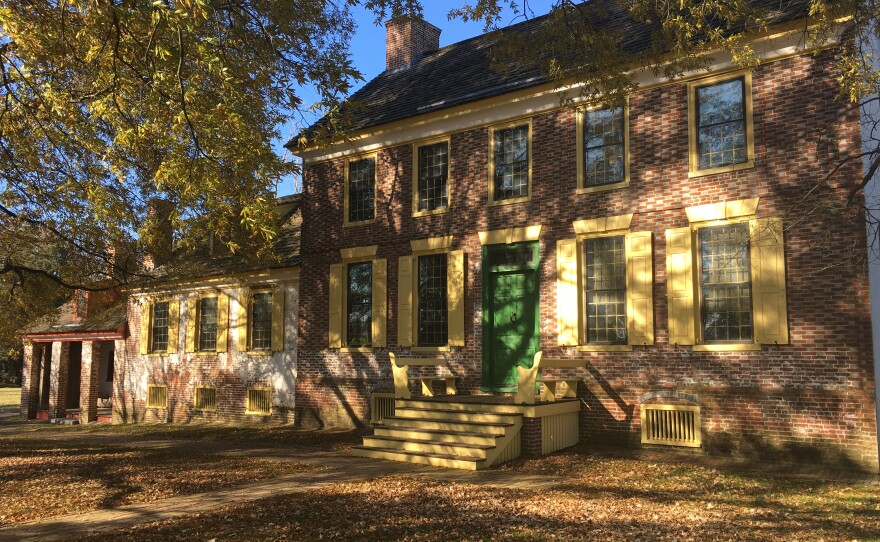
British Troops Occupy Boston
British troops land in Boston, Massachusetts, spurring anti-British sentiment. More protests and confrontations ensue.
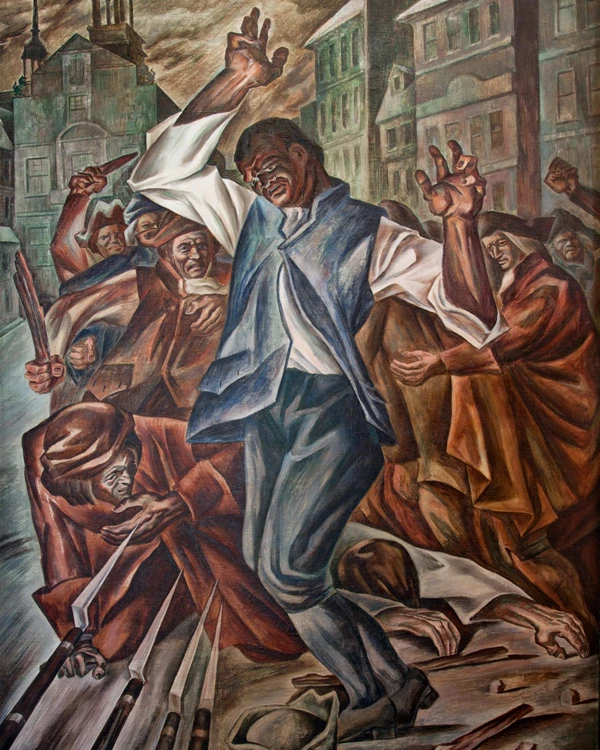
Boston Massacre
Years of tension between Bostonians and British soldiers erupts in violence. A crowd of Bostonians attack a British guard. Five soldiers and an officer come to relieve him. Someone yells “fire” and British troops open fire on the unarmed crowd. Five people were killed in the shooting, including Crispus Attucks, a formerly enslaved man who is often remembered as the first casualty of the American Revolution.
Boston Tea Party
Colonists dressed as Mohawk Indians dump more than 300 crates of British East India Company tea into Boston Harbor. The British report that the damages amounted to £9,659 which in 2026 is more than $1,700,000. As a result, Britain passes the so-called Coercive Acts. Other tea parties follow and in January 1774 crowds in Princeton and Greenwich, New Jersey, burn piles of tea.
Coercive Acts
Parliament passes the four Coercive Acts to punish Massachusetts for the Boston Tea Party. The act closes Boston’s port to trade, suspends its colonial legislature, establishes a military governorship, and requires all colonies to house British soldiers.
First Continental Congress Convenes in Philadelphia
A convention of 56 delegates from 12 of the colonies meets to consider a coordinated response to the Intolerable Acts. Thomas McKean, George Read, and Caesar Rodney represent Delaware.
Battle of Lexington and Concord
British forces from the Boston garrison attempt to seize military supplies from the Massachusetts militia, spurring the first military engagement of the American Revolution.
Capture of Fort Ticonderoga
The Green Mountain Boys led by Colonel Ethan Allen and Colonel Benedict Arnold surprised and captured Fort Ticonderoga. This was the first offensive victory for the American forces in the Revolutionary War and it secured the strategic passageway north to Canada.
Second Continental Congress Convenes in Philadelphia
Colonial delegates reconvene in Philadelphia to address bloodshed in Massachusetts and the divisions over whether to seek reconciliation with the British Crown. Congress votes to create a Continental Army for New England forces and appoints George Washington commander.
The Battle of Bunker Hill
British troops seize the strategic heights overlooking Charlestown and Boston Harbor after forcing entrenched New England defenders from their positions. Despite their victory, the British sustained more than 1,000 casualties, boosting American confidence and persuading British commanders to avoid direct attacks on well-fortified American positions.
Thomas Jefferson Lodges at Witherspoon Tavern
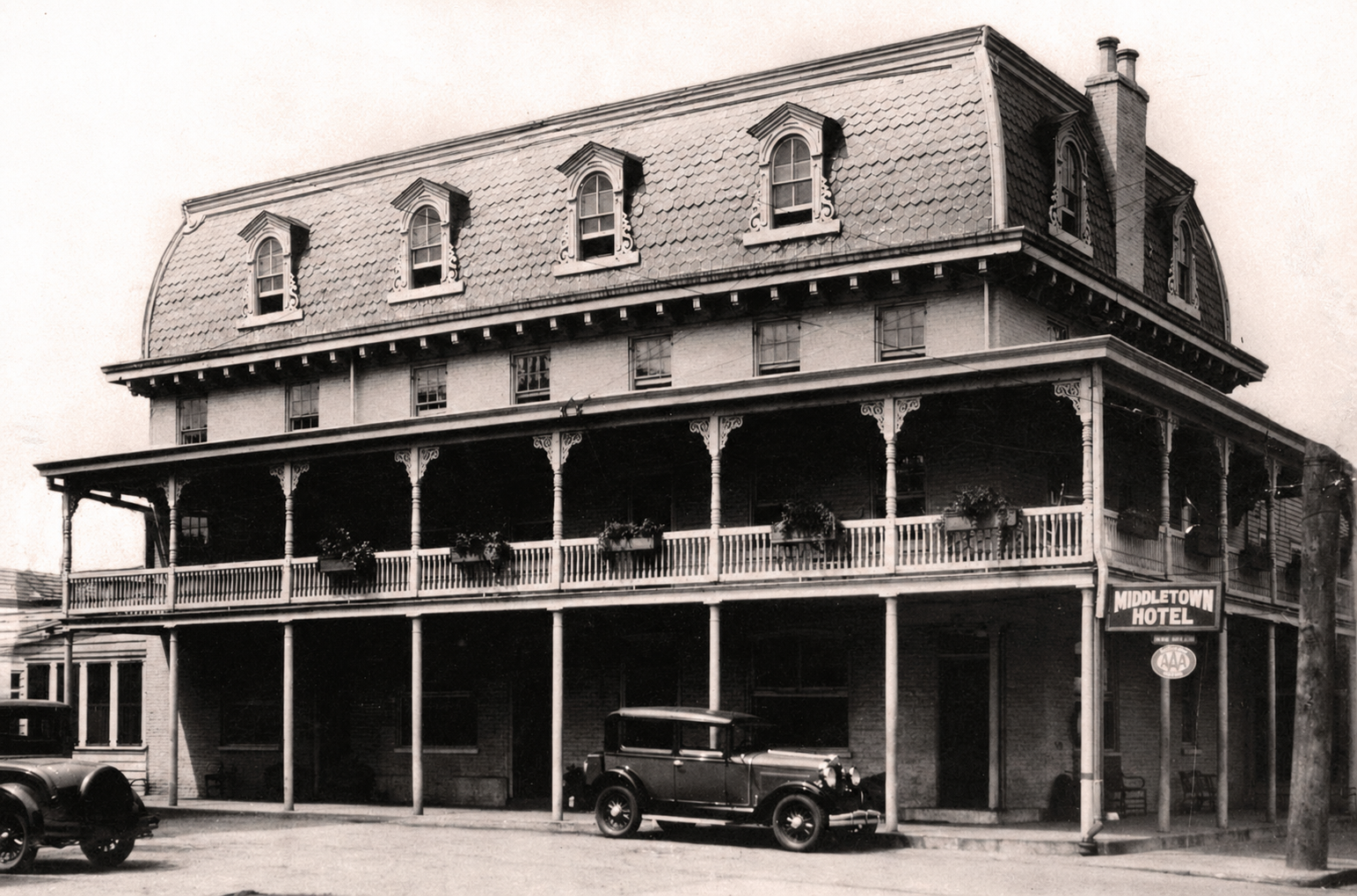
Thomas Jefferson stays at the Witherspoon Tavern in Middletown, Delaware (now Sully’s Irish Pub at Witherspoon), while traveling the King’s Highway to attend the Continental Congress in Philadelphia.
Dunmore’s Proclamation
In November 1775, John Murray, the governor of Virginia, issued Dunmore’s Proclamation, offering freedom to enslaved men owned by Patriot colonists if they escaped and joined the British Army. Thousands sought refuge behind British lines during the war. A smaller number of enslaved and free Black people would fight on the patriot side, despite policies that discouraged their enlistment.
Thomas Paine publishes Common Sense
Philadelphia printers circulated political pamphlets that stoked debates about the American Revolution. In early 1776, Thomas Paine anonymously published Common Sense in which he advocated for American independence. The pamphlet was widely successful selling 100,000 – 500,000 in the first year in both America and Europe. Often, these political pamphlets would be read in public places and taverns like the Witherspoon Inn, in Middletown, Delaware.
Delaware Independence
The Delaware legislature declared its independence from Pennsylvania and the Crown. This day is now known as “Separation Day” and is celebrated throughout the state, especially in New Castle, the colonial capital at the time.
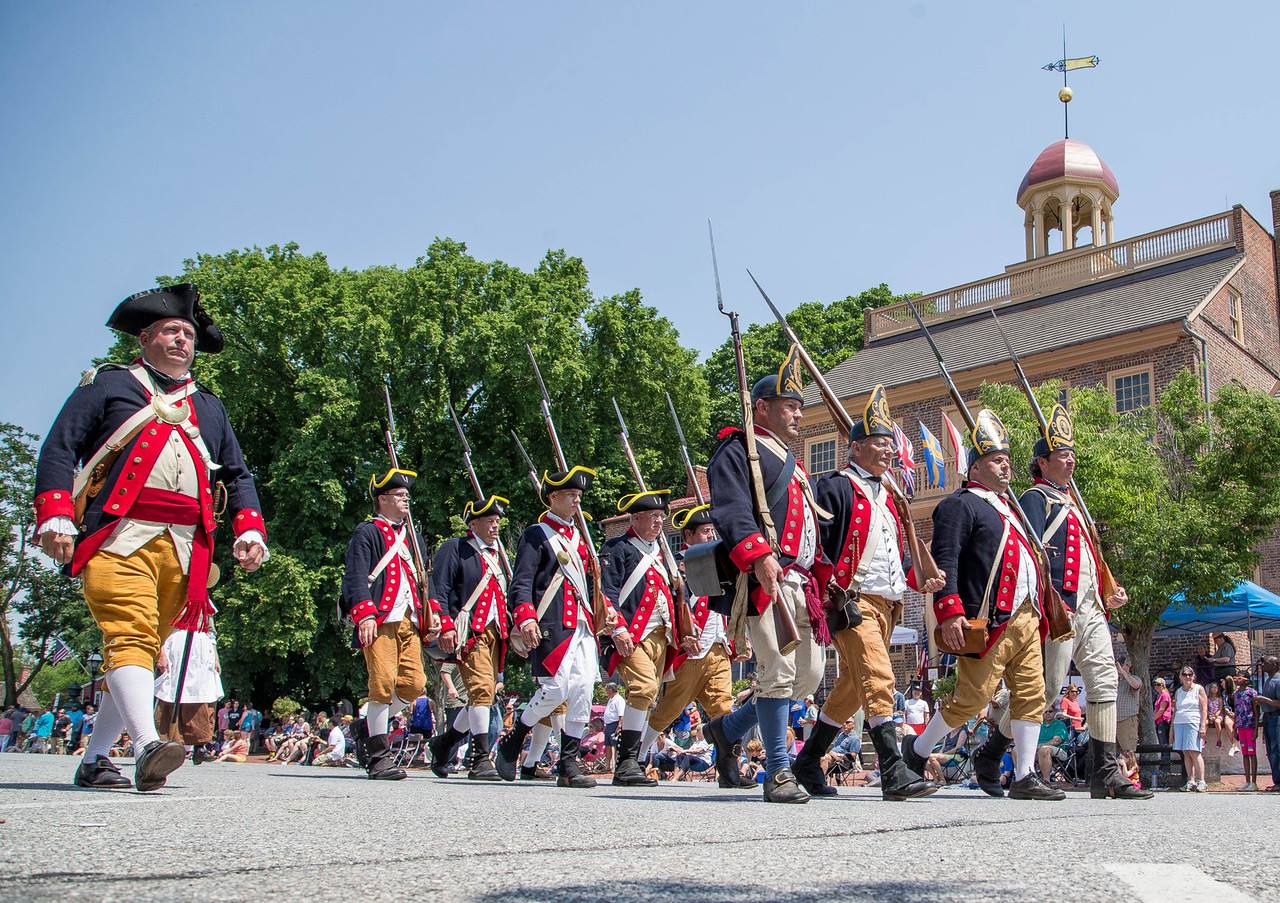
Delaware Defends the Coast
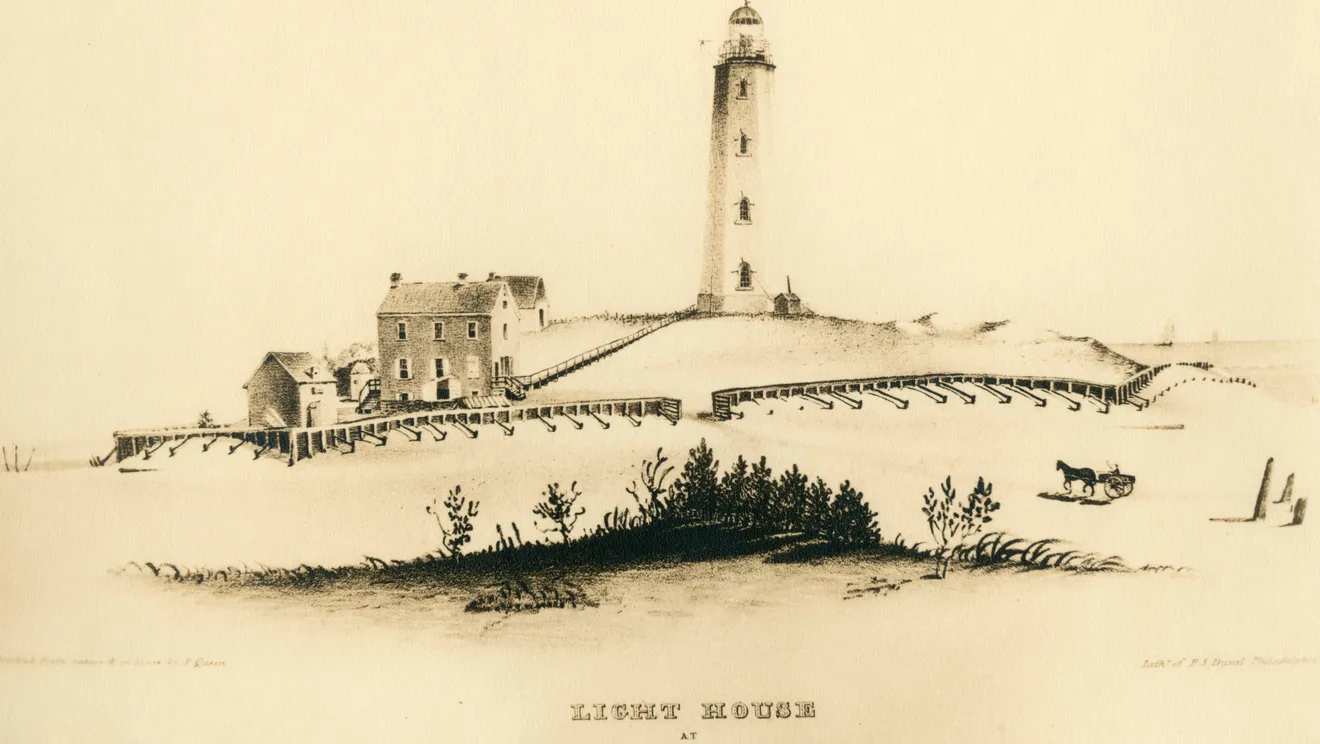
Following the outbreak of war, the Delaware General Assembly ordered troops to defend the coastline. Soldiers were stationed at the Lewes Watch House and Cape Henlopen to guard the entrance to the Delaware bay.
Fire at Cape Henlopen
The Cape Henlopen Lighthouse was reportedly burned during the American Revolution after British troops clashed with keeper Elener Hitchcock, a story that remains part of local lore. However, historians question the story’s accuracy, as contemporary evidence confirms only that the lighthouse burned, not who was responsible. Some researchers suggest Patriot forces—or even Hitchcock herself—may have set the fire.
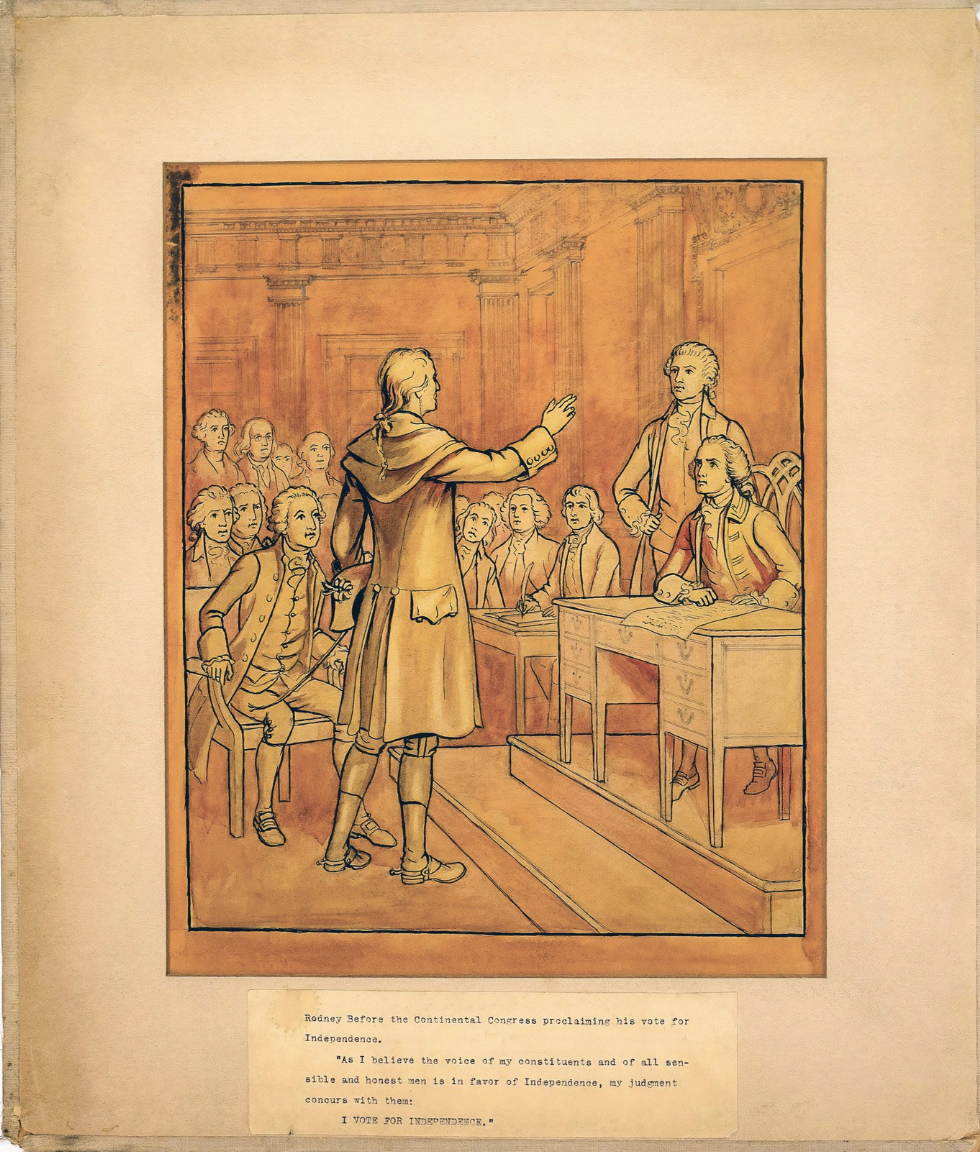
Caesar Rodney’s Ride to Philadelphia
Caesar Rodney rode approximately 80 miles overnight from Dover, Delaware to Philadelphia, Pennsylvania to break Delaware’s deadlocked delegation. Rodney arrived just in time to cast the deciding vote in favor of independence, allowing Delaware to support the resolution declaring the colonies free and independent states.
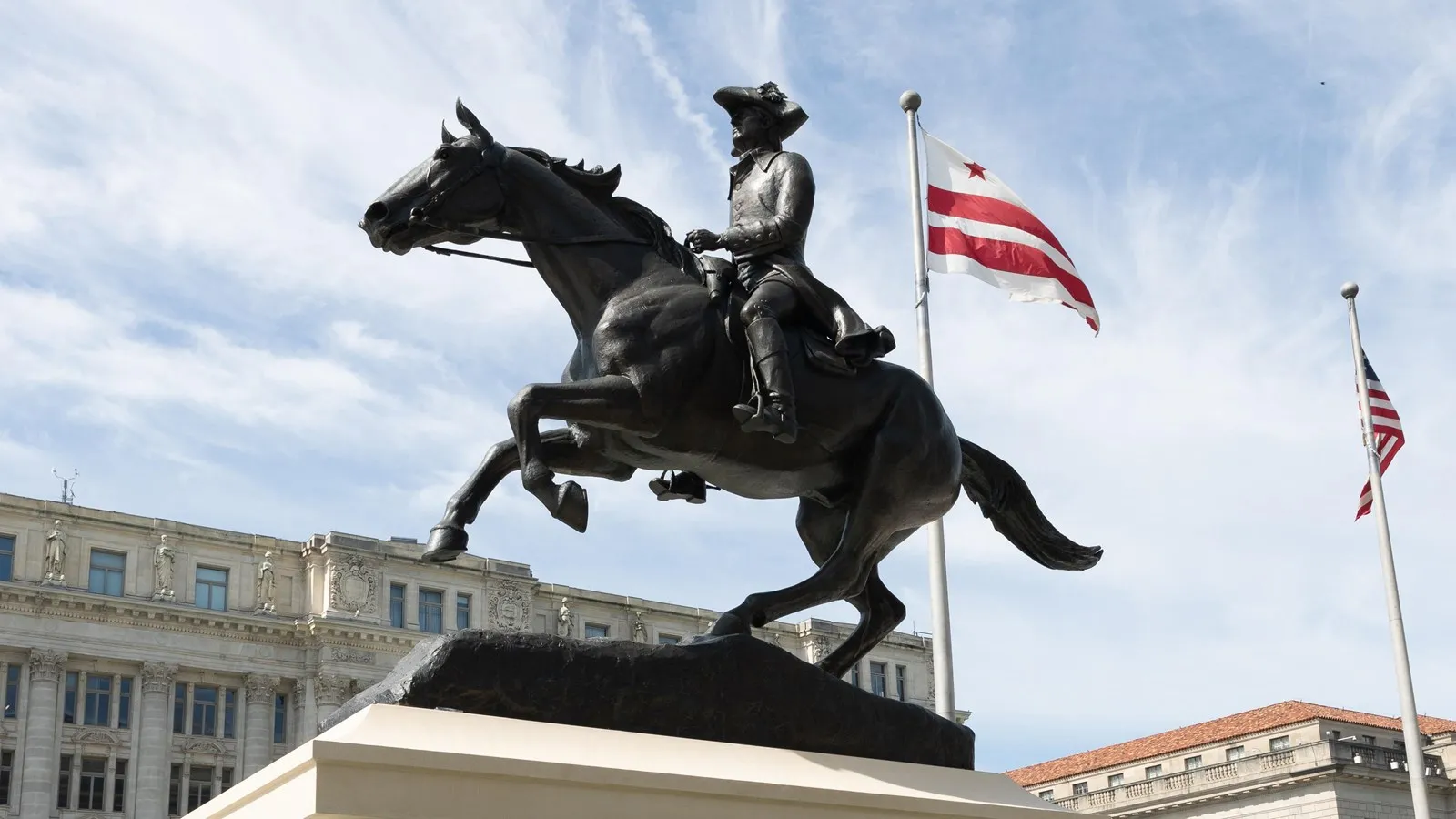
Rodney’s Complicated Legacy
There is ongoing debate about aspects of Caesar Rodney’s biography, including his famous ride to Philadelphia and his relationship to slavery. While tradition holds that Rodney rode horseback through a thunderstorm to cast Delaware’s decisive vote for independence, historians now believe he likely traveled much of the journey by carriage because he was suffering from facial cancer. Estimates of the number of people he enslaved also vary. The Delaware Public Archives has reported that Rodney owned more than 200 enslaved people, while a recent report commissioned by former Wilmington Mayor Mike Purzycki estimates he enslaved at least 26 people during his lifetime. In light of Rodney’s connection to slavery, his statue was removed from Wilmington’s Rodney Square in 2020. It is currently on display in Washington, D.C., as part of the nation’s 250th anniversary commemoration, but its future in Delaware remains the subject of ongoing public debate.
Declaration of Independence
The United States Declaration of Independence was approved by the Continental Congress in Philadelphia. Amongst the signers were Delawareans Caesar Rodney, Thomas McKean, and George Read.
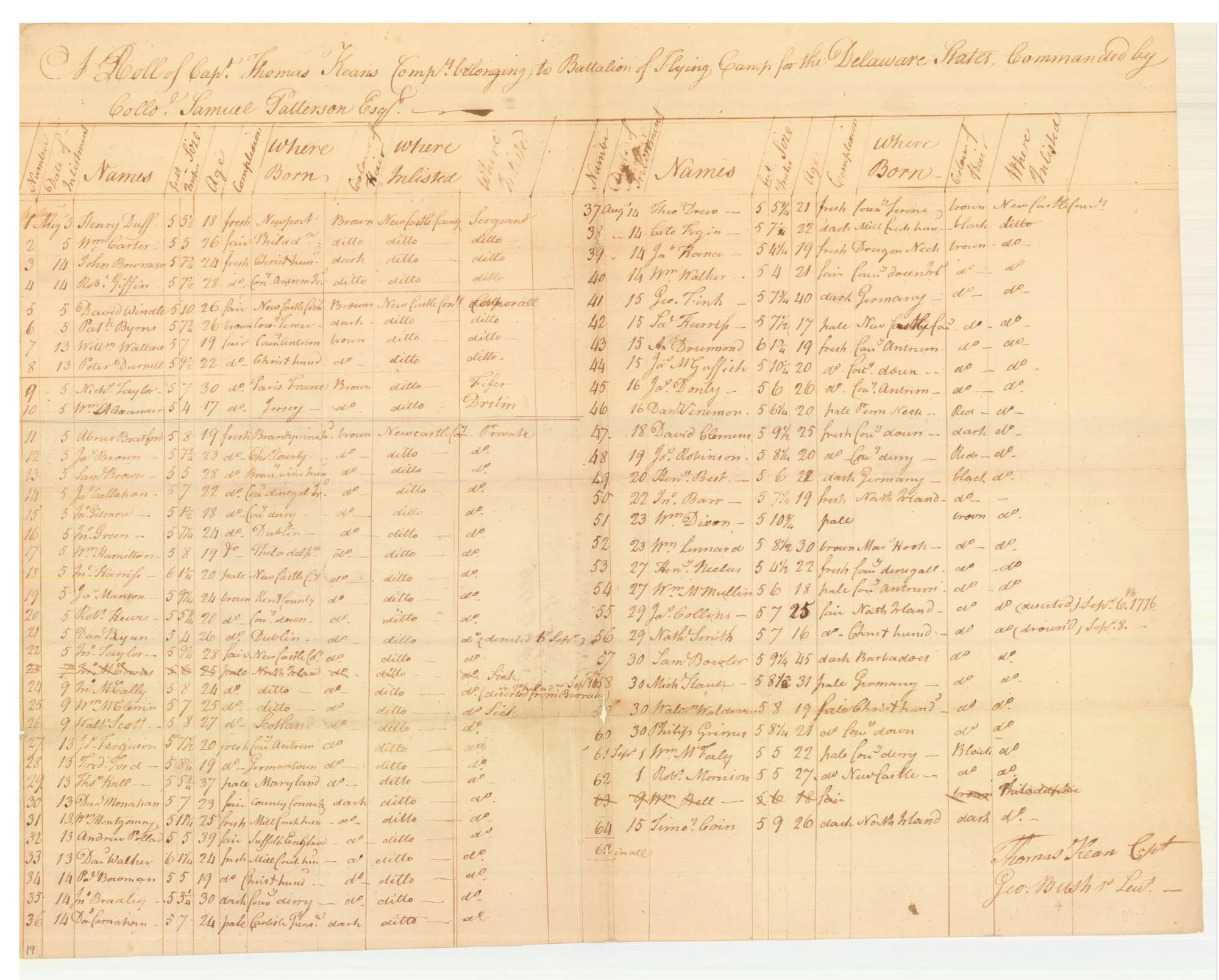
Cato Fagin Serves in the Continental Army
Cato Fagin of New Castle County, Delaware is one of the few documented African American Delawareans known to have served in the Continental Army during the Revolutionary War. He was recruited with the Delaware Flying Camp under Captain Thomas McKean at the rank of Private. Fagin served in this role until he enlisted in the Sixth Company of the Delaware Regiment under Captain John Learmonth on June 5, 1777. He served for a year before disappearing from the payroll in June 1778.
British Occupy New York
After defeating American forces on Long Island, British Troops captured New York City, making it their headquarters for the remainder of the war. Many Delaware soldiers fought in the New York campaign before retreating across New Jersey with General George Washington.
The Delaware Crossing and Battle of Trenton
On Christmas night, Washington led approximately 2,400 Continental soldiers across the Delaware River. The surprise attack at the Battle of Trenton resulted in the capture of nearly 900 Hessian soldiers and revived American morale after months of defeats.
Washington’s Victory in Princeton
Following the victory at Trenton, Washington’s army defeated British forces at Princeton, New Jersey.
Skirmish with British Vessels Near Wilmington, Delaware
Patriot-controlled American galleys and the Continental schooner Wasp clashed with the Royal Navy’s HMS Roebuck and HMS Liverpool on the Delaware River near Wilmington. After a brief exchange of long-range fire, the British vessels withdrew from the engagement.
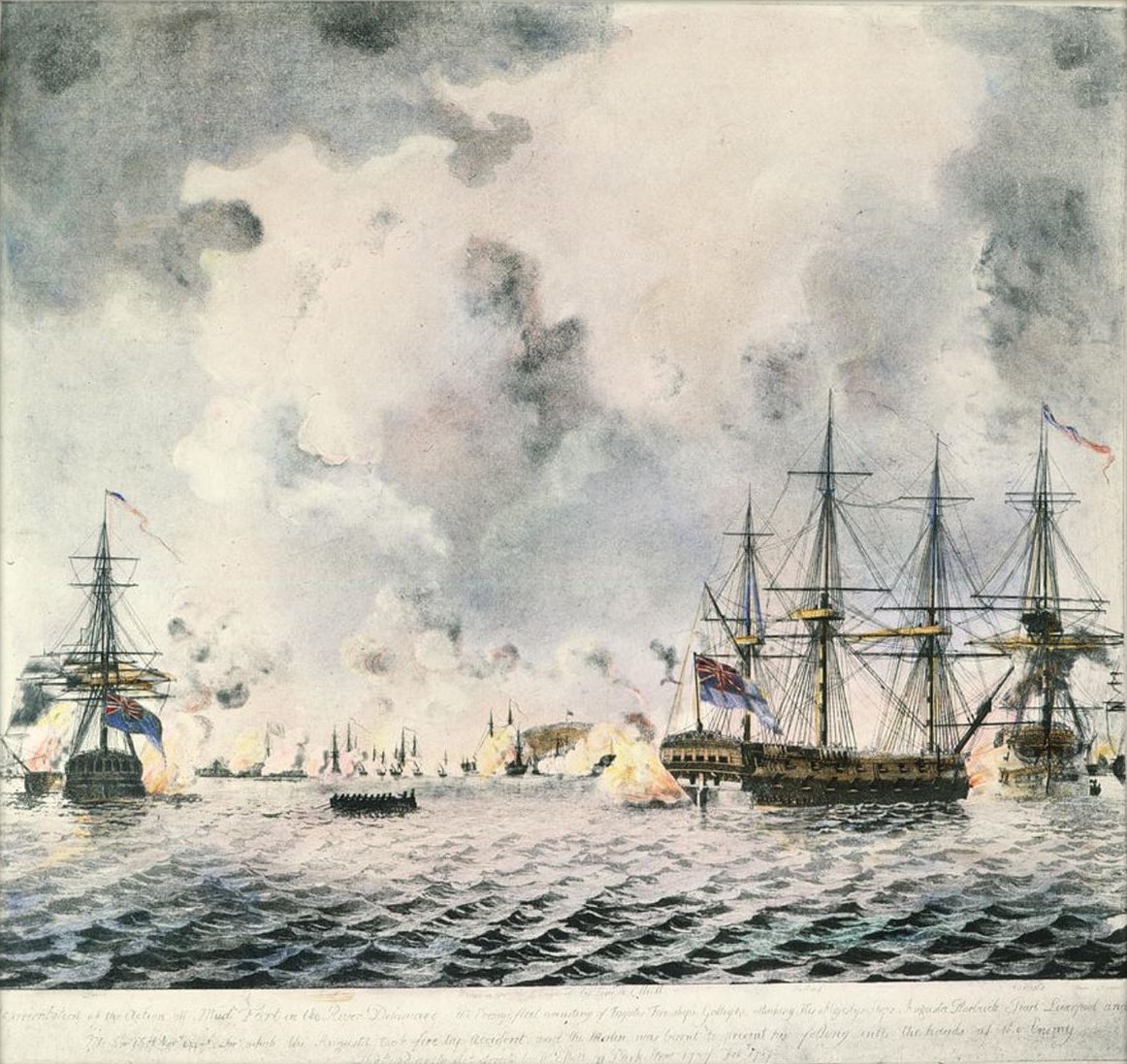
British Troops Threaten Middletown, Delaware
A British column crosses the Elk River, threatens Middletown, and encamps near Summit (modern day Summit Bridge).
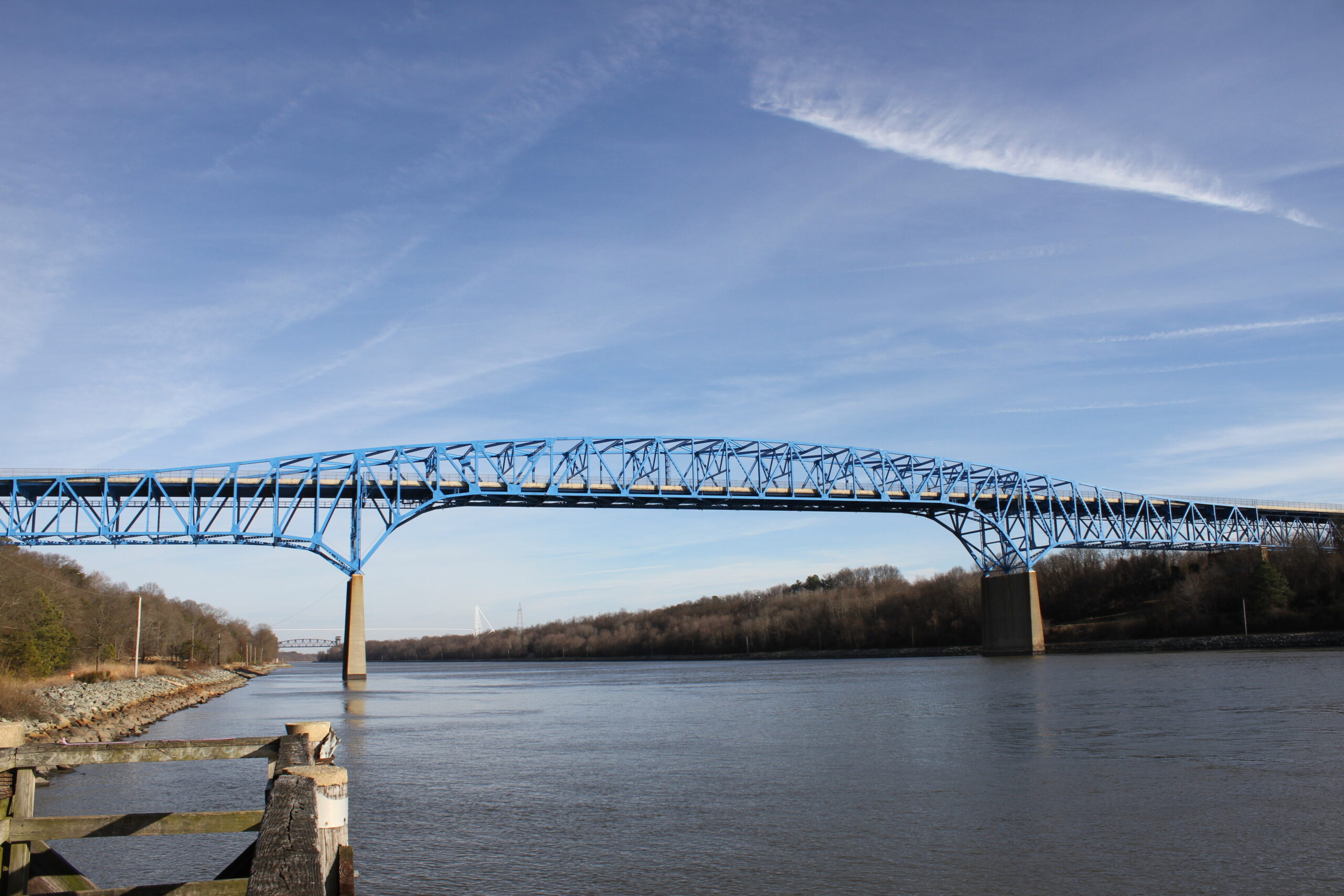
General Caesar Rodney Relocates Headquarters to Middletown,DE
General Rodney shifts his militia headquarters from Noxontown to Middletown and back again as troop movements intensify.
Battle of Cooch’s Bridge
The Battle of Cooch’s Bridge was the only Revolutionary War battle fought on Delaware soil. American forces under General William Maxwell fought a delaying action against advancing British troops near Newark, Delaware. Although the Americans ultimately retreated, they slowed the British advance toward Philadelphia.
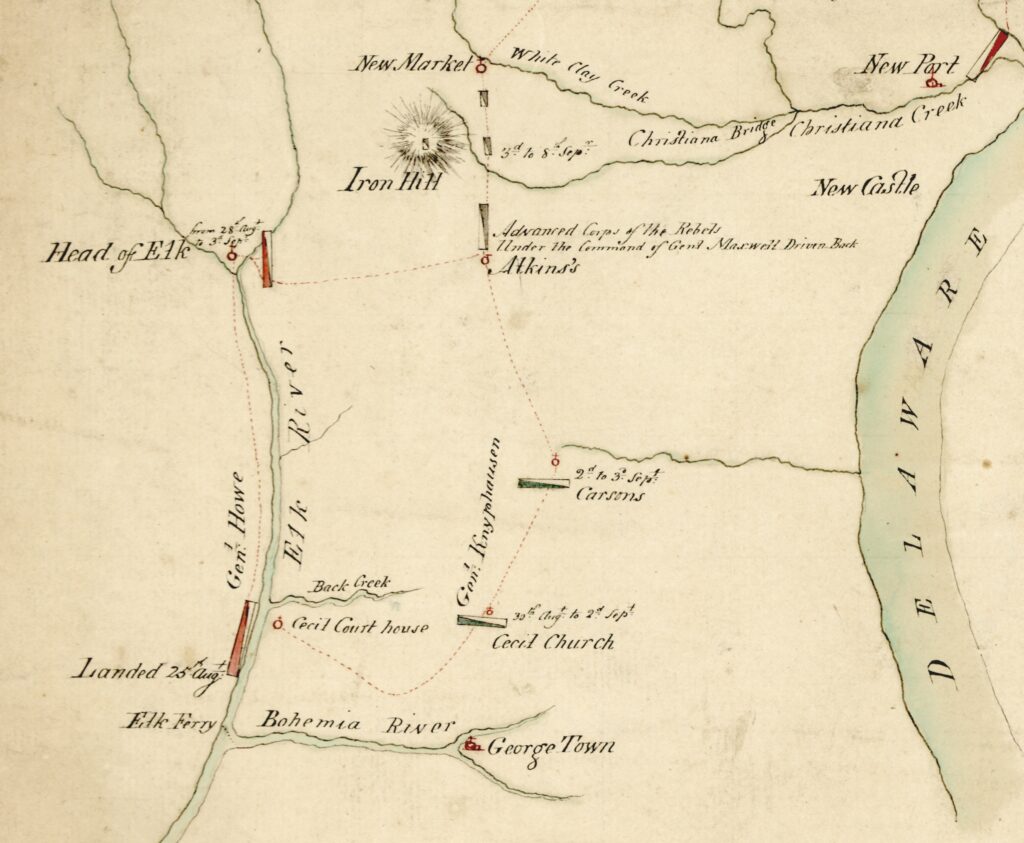
Council of War at Hale-Byrnes House (Stanton, De)
Washington and his generals met at the Hale-Byrnes House to plan their defenses before the pivotal Battle of Brandywine.
Battle of Brandywine (Pennsylvania)
Delaware troops fight alongside Continental forces in one of the largest battles of the Revolution. Despite the Americans losing the battle, British troops are slowed in their march toward Philadelphia.
British Capture John McKinly
Following the Battle of Brandywine first elected president of Delaware, John McKinly, is captured by British forces. He is kept as a prisoner of war on the Roebuck and later the Solebay on the Delaware River. Thomas McKean replaces McKinly until October 1777.
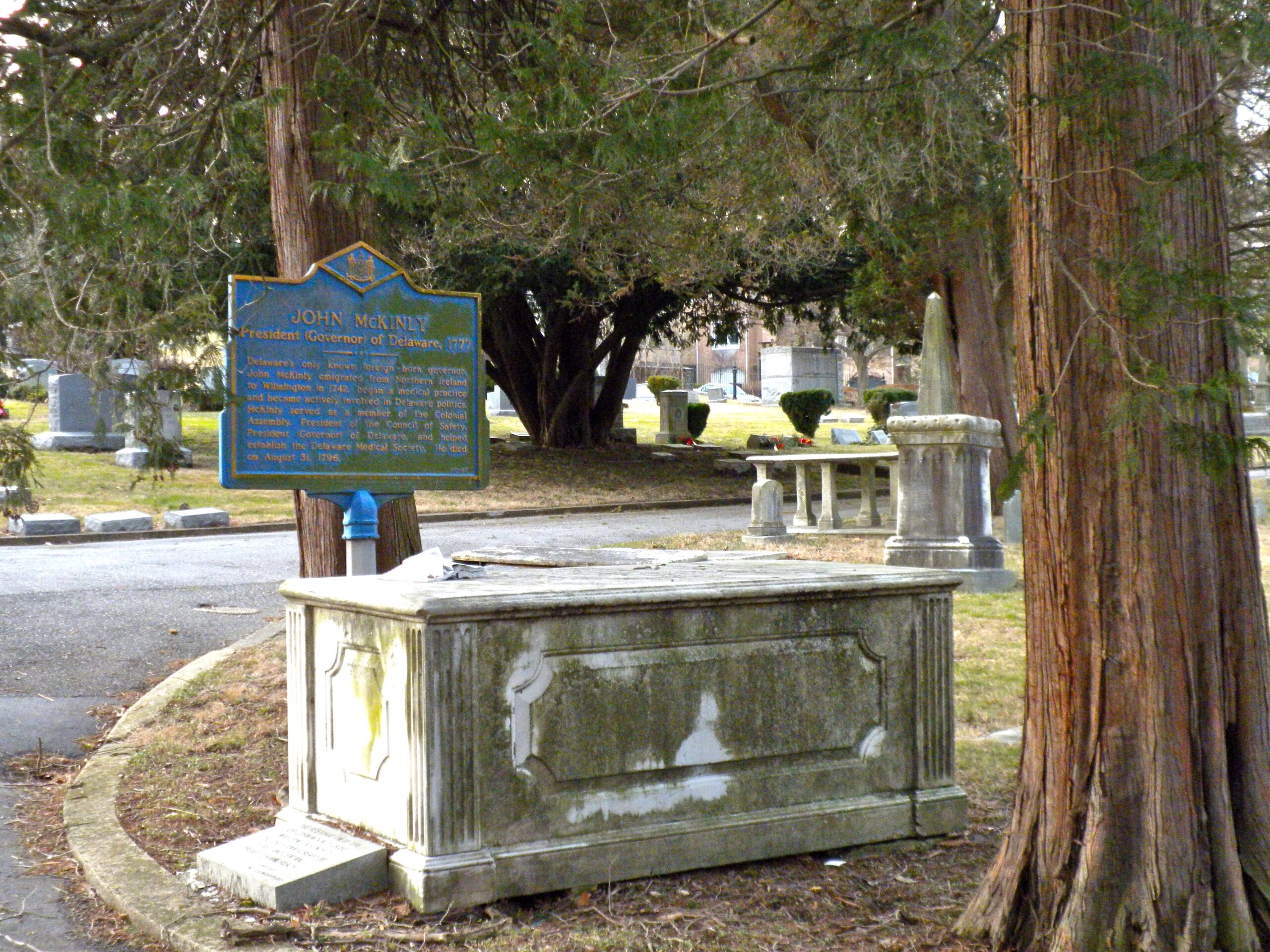
Delaware’s Capital Moved to Dover
When New Castle was threatened by British forces in 1777, Delaware moved its capital inland, with the seat of government shifting among the three counties. Dover eventually became the permanent capital, and the Old State House, completed in 1791, became Delaware’s first permanent capitol building there.
British Surrender Saratoga
After a campaign in the Hudson and Mohawk valleys, Britain’s plan to isolate New England from the other rebelling colonies collapsed with its defeat at Saratoga. General John Burgoyne’s surrender boosted American morale after the loss of Philadelphia and helped persuade France to enter the war against Great Britain.
Valley Forge Encampment
Washington’s exhausted army reached Valley Forge, roughly 20 miles northwest of British-occupied Philadelphia, and settled into winter quarters there for the next six months.
Franco-American Alliance
Representatives of the Continental Congress and France signed the Treaty of Alliance, establishing formal diplomatic recognition of the United States, strengthening commercial ties, and pledging mutual military support against Great Britain. French volunteer the Marquis de Lafayette had already joined General Washington’s army the previous summer.
Battle of Monmouth
British and American forces fought in central New Jersey in the final major battle before the war’s focus shifted south. The Continental Army’s strong performance reflected the improved training and discipline developed during the winter encampment at Valley Forge.
British Capture Charleston
With the northern campaign at a stalemate, the British shifted their strategy to the South. Although Charleston had repelled a major British attack in 1776, the city fell to British forces in 1780. Its capture weakened the Patriot cause and intensified the war throughout the southern colonies.
British Surrender at Yorktown
After a three-week siege by American and French forces, British General Cornwallis surrendered his army to General Washington at Yorktown. The decisive victory effectively ended major military operations in the American Revolution and paved the way for American independence.
Treaty of Paris
Negotiations to end the war took nearly two years. The preliminary peace agreement, signed on November 30, 1782, recognized American independence and granted the new nation territory stretching from the Atlantic Ocean to the Mississippi River. The treaty was formally ratified by Congress and King George III in 1784, officially ending the American War of Independence.
Delaware Becomes the First State
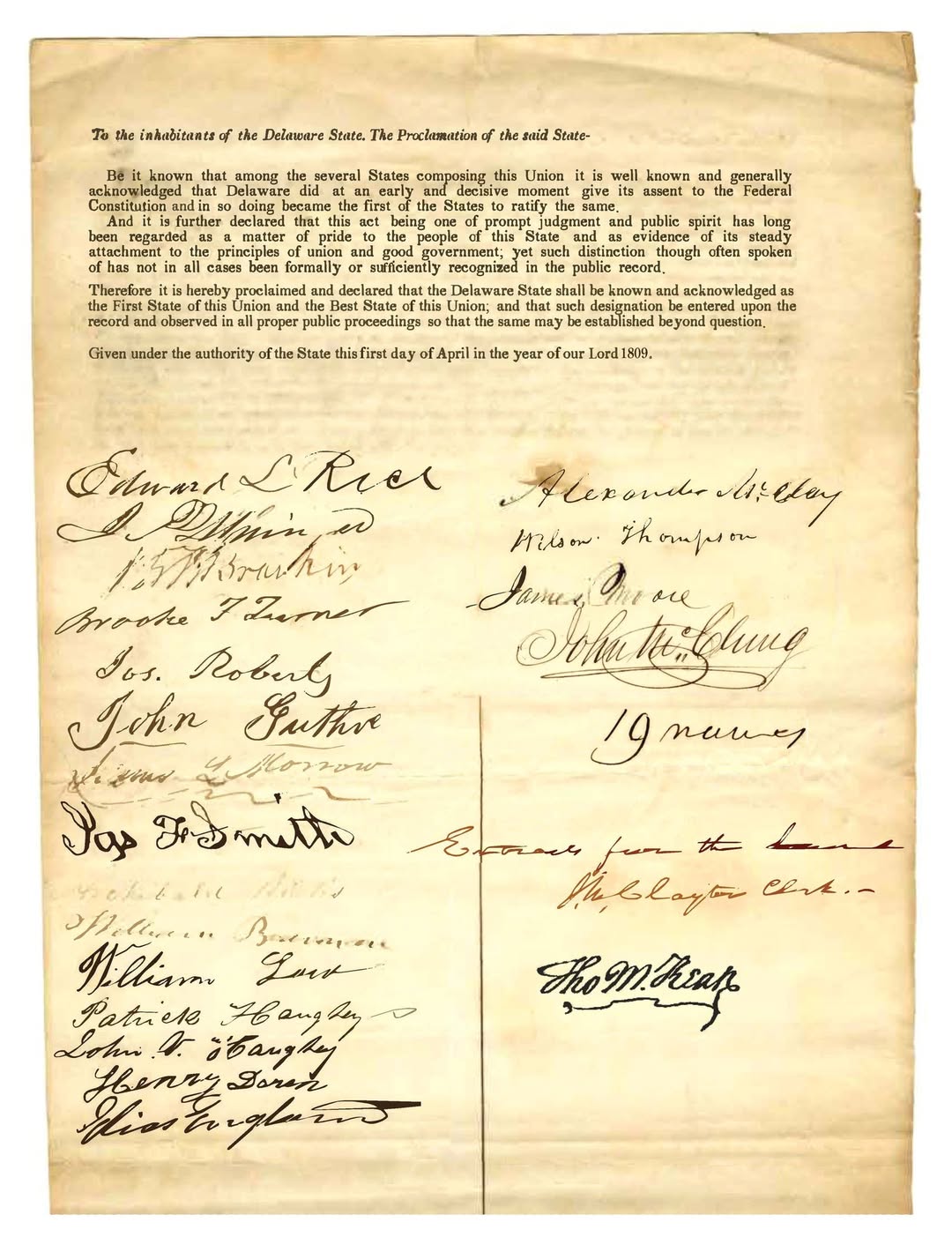
Delaware became the first state to ratify the U.S. Constitution, securing its place as “The First State” in the new republic. Richard Bassett, Gunning Bedford, Jr., Jacob Broom, John Dickinson, and George Read represented Delaware.
Further Reading:
- Emerging Revolutionary War Era
- Museum of the American Revolution Timeline
- Delaware Historical & Cultural Affairs: Saving Delaware History – John Dickinson Plantation
- 250 years since his ride, how does Delaware reckon with Caesar Rodney’s legacy?
- Crispus Attucks and the Boston Massacre
- Cape Henlopen lighthouse fire of 1777 remains a mystery: Delaware history
- Cape Henlopen Lighthouse History
- Cape Henlopen Lighthouse Legend
- Cato Fagin and Black Delawareans in the Revolution
- African American Soldiers in History
- Delaware’s Revolutionary Timeline
- Sully’s Irish Pub at the Witherspoon: A Middletown Time Capsule
- The Battle at Cooch’s Bridge