
2026.005.012 William Saunders
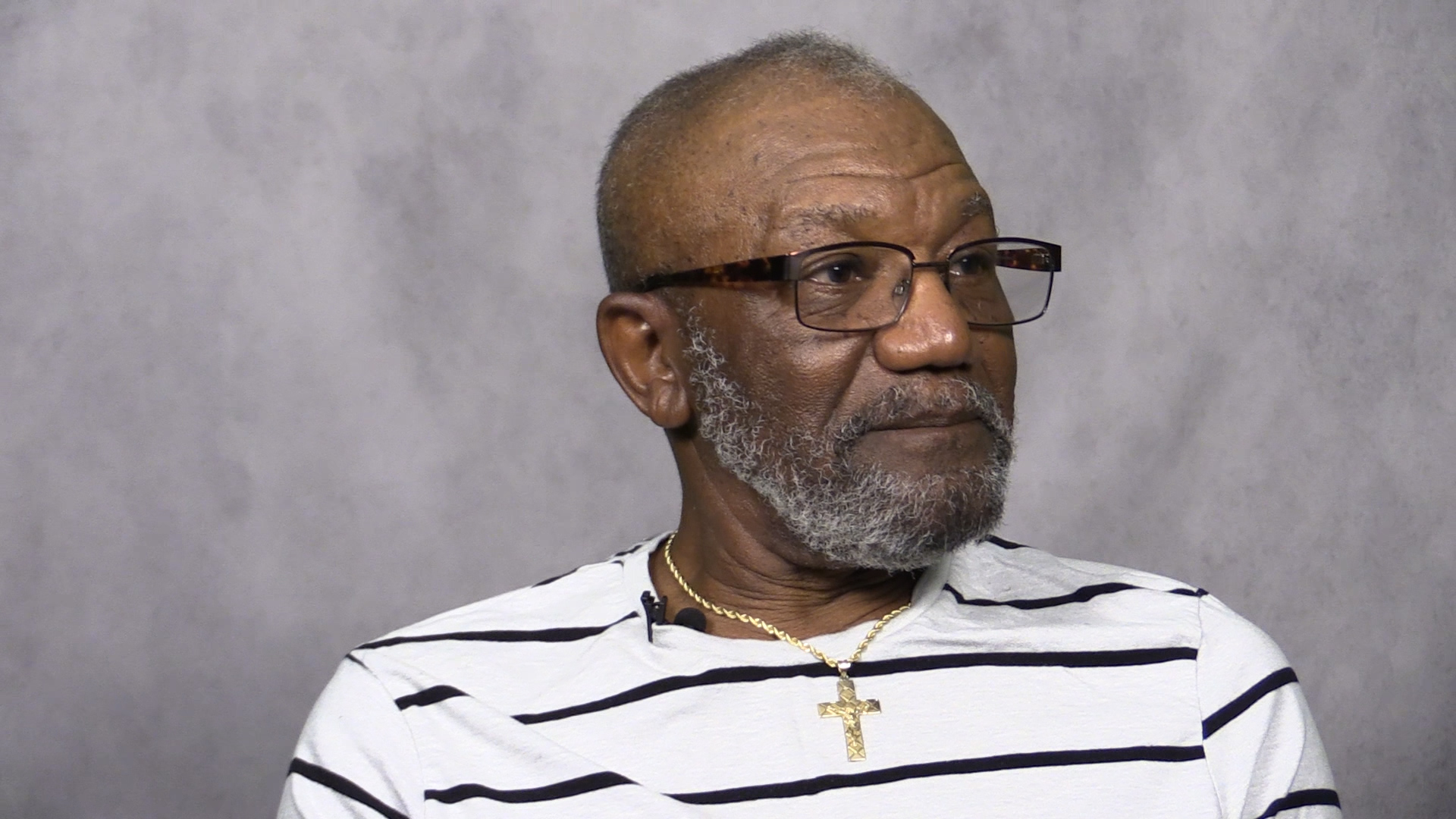
BIO INFO: William Saunders was born in Middletown, Delaware in 1943 to Edna and Leon Saunders. He had 10 brothers and sisters. He served in the U.S. Air Force for 28 years and was stationed all over the world. He met his wife in Germany and they have three children, 5 grandchildren, and 2 great grandchildren. He and his wife retired to Dover, Delaware, but William still connects with Middletown and his family and friends who still reside there.
TOPICS AND SUBJECT MATTER KEYWORDS: Family Heritage, Military Service, Farming, Education, Segregation, Religion
Recording Inventory Sheet: William Saunders
Digital Collections Sheet: William Saunders
Middletown Historical Society
Middletown, Delaware Oral History Series
Speaking of the Past: Conversations
With Long-Term Residents of
Middletown, Delaware, 1900 – Present
Interview with William Saunders
April 15, 2026
Middletown Historical Society Oral History Transcript
William Saunders – Youtube – 04152026
Interviewer: Patricia L Peirson Maichle
Pat: Good morning.
Bill: Good morning.
Pat: How are you today?
Bill: I’m doing well.
Pat: That’s good. I’m Pat Maichle. I’m a volunteer with the Middletown Historical Society and I’m here with Keith Schneider who’s our videographer and we’re in the Appoquinimink Community Library here in Middletown, Delaware. What the Historical Society is attempting to do is to document the history of Middletown based on your memories and experiences um from the 1900s through today. So, we’re hoping that you will be comfortable and tell your stories, tell us your memories, and uh hopefully that will then inform others who come after us what the history of Middletown was like. So, we’ll get started. Uh, what is your full name and do you have a nickname?
Bill: My full name is William Robert Saunders. Nickname is Bill, which I prefer rather than Billy.
Pat: Okay. And um, when and where were you born?
Bill: I was born in Middletown, uh area called Ham Town, uh which is at the south of Lake Street, uh I should say. Uh north east Lake Street. I think is it called its original name is Dale Town and I was born there in 1943.
Pat: Were you born at home?
Bill: I was born at home from what I was told.
Pat: That’s what a lot of a number of people actually have told us. How did your family come to live here?
Bill: My grandfather moved to Middletown from Blanca. He called Blanca, Delaware, but or well Blanca, Maryland, but it was Blanco Church on Down’s Chapel Road on west side of Dover out near 301. Uh he was a mile from the Maryland line, but the church that his family attended was in Delaware. He moved to Middletown at the age of 15 when his to be close to his cousin Oscar Todd who also lived in uh who was probably one of the original members in the uh Ham Town area. I don’t know how old that area is.
Pat: And were there other family members in the area when when your family moved here?
Bill: Well, as I said, Oscar was born was uh living there. My grandfather was 15. He was born I think around 196 1863. And at the age of 15, he moved to uh Middletown.
Pat: 1863 would have been right before the Civil War, right?
Bill: Or yeah, before it ended, right,
Pat: around there and he was here at that time.
Bill: He had already moved here.
Pat: Your cousin was here.
Bill: My cousin, I don’t I’m not sure. Okay. That uh I don’t know the difference in their ages. Uh but uh I know he was 15 and Oscar had moved probably three to four years ahead of him from what I was told and that felt made him comfortable coming to Middletown.
Pat: Okay. Um the house that you grew up in, tell us what it was like. Did it have electricity? Did it have running water? Where was it? etc.
Bill: M the house I grew up in was uh it had electricity but had no indoor plumbing. It uh we heated by wood stove and we cooked by wood stove until I was probably 11 years old. And we converted to coal oil and had a tank outside. But my mother was she kept wanting to get rid of the big stove that my dad had put in in the home which had like eight burners and a area to the left of the stoves you could keep your food warm. You had a oven. And on the back you had a tank where you could fill with water and keep to get hot water go. But we had to bring the water from my grandfather’s house which was three or four uh homes north or I’m sorry north but uh south of us going toward Louis L Redding School or at that time it was PS120C. Uh, and we had to take, but boys had to take turns with the wagon to bring the water down. We didn’t go to bed at night unless you fill the water bucket, you know, to have water, fresh water to drink and cook and wash. We used, you know, as I said, we could draw it off of the back of the stove.
Pat: What is your earliest childhood memory? Good or bad?
Bill: My earliest childhood memory would probably be when I started school or while I was in school or going to school which uh that was your place of recreation and meeting friends. So that’s uh I remember as a early uh after I turned eight or nine, we had a little garden and my dad would lay out for us to pull the weeds out of the the garden. And I could remember we couldn’t go to play with other kids unless we had that done by the time he come home got home. So that’s my early and my cousin down the street. We played, you know, had a good time playing together.
Pat: What kind of games did you play now that you mentioned playing?
Bill: We uh played like shooting marbles. We played uh soldier, cowboys and uh going in the woods just to explore. We called it, you know. Uh we always called ourselves pioneers, you know. So, we want to go to areas of the woods, make our mark in the trees that uh uh so whoever came behind us would know we’ve been there.
Pat: That sounds like a fun childhood. What was your favorite thing to do for fun? Like go to the movies, go to the beach, something else.
Bill: Well, uh, our favorite thing, well, I can’t say we went to, we could go to the movie after we turned 11 or 12 and and there was the beach wasn’t a thing for us to do during that time. It wasn’t, you know, on Rehoboth, we had an area that they called the Crow’s Nest. It was separated. So, a lot of African-Americans didn’t go to the beach. We had a there were some uh African-American beaches down south, but I was too small. I just heard of those in the past. Rosedale Beach and and in Maryland uh Carl’s Beach uh that were predominantly African-American. But uh for my family, the big uh thing was to go to Summit, which we called the Buck Summit Bridge where the old draw bridge was on what you call 896 now. Uh not 89. Yeah. 71 I think they call it now. Uh to go to my grandmother’s house and they lived right off of the bank of the canal. It was a black community there. My grandfather and his family, his brothers, my uncles, a couple people. This is on the on it on your way to Kirkwood. And then we had one of my brothers was actually born in Kirkwood.
Pat: So that’s north of the canal then.
Bill: That’s north of the canal. Correct. That’s north of the canal. But uh we had a lot of fun going into the mountains. What we call the mountains. It was just the bank of the canal. And by the time we were, you know, in our teens, our uncles were coming home from the war. And me prior to that, prior to them, a lot of not a lot of them, but couple of them lived in my grandmother’s home. And they had shotguns, so we could go hunting up in the mountains in into the uh banks. Uh and at that time we were like 13 or 14 years old. But young men during that time were not only given a lot of responsibility but they grew up fast.
Pat: Did you have family chores? You mentioned the picking the the weeds out of the garden. Were you did you have any other family chores and what were they?
Bill: Yeah, we uh well, we in the part of Ham Ham Town where we live or and I don’t know if I mentioned Dale Town. I might use that back and forth. Dale Town, Ham Town. But in Ham Town, uh, most of the families grew chick, uh, raised chickens. And we raised chickens, pigs, and when I think I was like 13, I start I started working at 12 at Irvin Armstrong Farm in uh on in the town of Armstrong. I guess it’s Middletown now. But I was able to get the pigeons and so I raised pigeons and and we raised rabbits. I can’t to this day I can’t eat a tame rabbit because I raised them and sold them, you know. But uh that was a chore. Clean out the chicken house. Uh water the pigs. Make sure the pigs had water. Make sure the dog had water. Those are local boys’ chores that we had. And most of the boys, like I said, in my on New Street, which is the official name of the area where we live, you had New Street going toward the town of Middletown, Jefferson Street, and Elizabeth Street. I think I think I get them in order. But in that area, everybody, not everyone, but several people and I probably say seven or eight people raised pigs, but it was only a few of us that raised chickens and and that was a
Pat: for food
Bill: that was a staple. My mother on she had to cook on that stove. So in the summertime she cooked in the evening on Saturday for Sunday dinner and she would go out with us in the afternoon on a Saturday and point out which one those hens that weren’t providing enough eggs and that’s the one we made chicken and dumplings out of you know. But it was uh those were the basic chores that you had. And I think most of the young men, there were family chores, but there were a lot of us that had or a lot of young men in that area that found other odd jobs to do for your neighbors that would give you a little bit of money to go to the store to get some candy. you know, uh, our neighbor next door to us, my brother Ernest, which was right behind, not just behind me, but that lady, she took him and just she got time to pull the weeds in the spring ‘cuz her husband took turned the ground over to put the garden in. He worked for her and he knew when I’m getting off track to your question, but I want to tell you this. When we uh knew you soak your big lima beans overnight to let them so you could cook them. My brother Rock would see them soaking and he knew that was dinner for tomorrow. So, he said he told Miss Esther, “Miss Esther”, I remember he called her My Master, “I’ll be over tomorrow for dinner” because he didn’t want to eat the beans. But anyway, that’s that’s off the I hope you can cut that part out.
Pat: No, that’s fine. That’s fine. That’s what makes this rich. What was school like for you as a child? What were your best and worst subjects? And where did you attend school in high school and college if you went?
Bill: Okay. I I started at the uh the first grade at PS120C. And PS120C was a wooden structure of six classrooms starting at Mount Calvary Baptist Church or at the where the fence line is the Redding today and it went toward the car wash. There were six classes and I think I left there after six. And but at some point, and I can’t tell you the date they build there was uh four more classes facing going from Lake Street from uh East Lake to West Lake Street. And that gave us a 10th grade school which I know you know the PS120C was the uh it was like the hub or the uh what do you call it? Uh like a southern New Castle County Central School for all the one room schools. There was several in Odessa a one room school. Townsend it had one. Mount Pleasant had one. Armstrong had one.
Pat: Now uh explain to us what the C means in that.
Bill: C means uh was designated the colored school. PS120C was 120 colored school. And I I have some information at home with all of the different schools that were in our local area and throughout the state of Delaware. Uh who uh for example uh Howard High School, Bancroft, uh Absolem Jones in Wilmington. I knew the I know the numbers and I was very shocked to see the one in Mount Pleasant and some of uh they were one through three and then they were large enough to have three classes but the one in town in I think they some of them had uh one through six you know but uh that’s what the C designator was.
Pat: So, once you got to sixth grade then where did you which school did you go to?
Bill: Uh when I they were building the new the new uh Louis L Redding School and when they tore down the old uh wooden school first six grades actually was 10. They tore all 10 down, but they kept the bungalow. We called it the bungalow. It was actually the Roades house, the Roades family. It was a big building uh home that was large enough to have uh the fifth grade on the bottom and sixth grade on the top. We had to go up steps to get to the sixth grade. And we were upset with the kids from Townsend and Mount Pleasant that had a chance to go into the new school before the Middletown guys that were born and raised there had a chance. But that’s when the new school was built 1 through 12. And if you if you can as you can see the the second level of the old school uh Redding High School was elementary. And so, when they closed all of those small one room schools, uh the kids from Iron Hill and and Glasgow had to come to Middletown to get their first 10 years. And I don’t think I think they came from the six maybe. I’m not sure. But I know we call them bus kids. They were bussed in from uh northern part of St. Jo uh southern part of St. George’s all the way to Glasow. Uh they didn’t go cross 40, but the Iron Hill kids is on the other side of 40 and they came down to there. The bus picked them up to bring them in to uh to this brand new school, Louis L Redding Redding. But I was
Pat: So, you went to high school there?
Bill: I went to high school at Louis Redd L Redding. Uh graduated in 1961. Uh, and you asked me about my favorite subjects. I can tell you what my worst subjects were?
Pat: Which is what?
Bill: My favorite subjects personally really was uh history and and geography. But my worst subjects were literature. Well, I love literature part of English, but I failed English in the 10th grade, the second semester. But long as you pass your core subjects and a final, a final and pass, but I had to make up the first semester of 10th grade English. When I was passed to the uh 11th grade, I made up in the 11th grade the second the first semester of 10th grade English, but I failed the second semester of 11th grade English. And but in my senior year, I had to make up my what I failed in 11th grade, but I was able to graduate and I was college bound. Uh I had I loved uh the part of English. I hated diagramming sentences and all the grammar part of it, but I did love literature, English literature. And I still have some uh poems that I can recite after this many years. I may not get it all in each verse correct but I I remember uh I was telling some of my buddies about the poem by Rudyard Kipling. And I still have that on my wall at my home.
Pat: Which one?
Bill: “If”.
Pat: Oh yeah, we had to learn that, too. We had to learn that.
Bill: That was mandatory. And uh “Crossing the Bar.” Uh I think that was uh Johnson. I’m not sure, but my brother used to recite that at funerals for members of our family. And uh but that and geography I always do you read about places and you always wanted to go. So that’s what led me to my military service. But
Pat: But you went to college?
Bill: I did not.
Pat: Oh, okay.
Bill: I did not after high school. I was college bound. I had my uh my brother taught me in uh college while he was in college and my oldest brother was there at Delaware State. For me, I didn’t have the after all those failures. I didn’t have the confidence that I could go. But my brother said, “You have to go. You got to go.” So my mother and the family sent the meal money for the meal plan because that’s what I think was the first thing. Uh I had always had my acceptance because the state of Delaware during that time I had I played four sports and and the athletes could get some kind of little money from the athletic department at Delaware State. And then you had to maintain like my brother was a physical education major. He he graduated from Del State and he went there on uh track and baseball scholarship. He ran track, he played baseball, then he drifted away from baseball, but he maintained his track scholarship all the way through and with the help of the family, he was able to finish. My oldest brother was a barber when he went down. He didn’t have any scholarships, but he could cut hair with my dad. And he had to. Well, he let my dad taught all every almost everyone how to cut hair. But, uh, my brother went on academic probation after a year and a half and during that time doing the draft. So, he volunteered. He didn’t volunteer. They drafted him. He was volunteer into the army. But he when I look back, he was a very very very smart guy. He went into I I I uh when I was entered the military, I was placed into Civil Engineering and they there’s big jokes about that and I’m not going to go about that. I think Benjamin Franklin said that engineers are not very smart. No George Washington
Pat: George Washington
Bill: they’re not very smart but they bear watching. Cunning and bear watching. So, but my brother that I told you, I’m not going to mention his name, but my brother that went to, he didn’t, he carried books, he studied, but when he went off, he had to cut everyone on Delaware State uh College campus. He cut hair and he didn’t apply himself. But when he went into the army, he he qualified for Communications. In the Air Force, you need a lot of brain power to be in to qualify Communications. He could read. He had when he after his uh tour, two-year tour in Germany. He was in uh the Delaware National Guard in in Communications. He read Morse Code and all that. I couldn’t even I can’t even spell let alone how to and all this kind of stuff. But I’m saying that to say that uh that was uh some of the background for me and I was telling you about myself. I wasn’t I did enough to get by. I apply learned to apply myself after the military, you know.
Pat: We’ll get to that part.
Bill: Mhm.
Pat: Do you remember any fads from your youth? Popular hairstyles or clothes? Uh, so you were in the 50s, late 50s, early 60s and
Bill: We had and I I made some notes about we used to uh wear a white shirt because at this time by that time we could we you know of age I could go to the dance and and but we would wear a white shirt with a tie but we only buttoned the two top buttons. You wore the shirt out. We wore white shoes. The nickname for those shoes were called Bucks. I don’t know where they got that name, but they were white suede. You know, you had the blue suede under Elvis Presley’s time, and I think Elvis was a couple years older, but these were white. And the pants were tapered. Now, they they’re starting to wear the same, you know, history and and fads. They just go around, you know. But we wore we call them stove pipe legs. They they fit your legs all the way down and the white shoes. And the fad was to put one hand in your pocket. And you know you did a little dap walk you know but that’s what uh that’s my the fad I remember. There was other fads on hairstyles. There was some guys that would go to the city of Wilmington and they did what they call a process. They would have their hair straightened like you saw James James Brown when he was young. And and uh and you uh but there was also a a a fad hairstyle I couldn’t wear because you can see I’m bald. And my dad family bald right in here. But they outline and that’s back now. You outline your hair all the way around, you know, and but those are the ones that I can remember. I didn’t participate in maybe the dress fads, but in the hairstyles, you know, my dad cut when you when he thought you needed, you know, you didn’t go and ask him who you paid after you started to work, you know.
Pat: What were your favorite songs and music? When you were growing up.
Bill: Oh man. When you were growing up, you know, uh I’m I didn’t. When I say favorite songs, I remember we used to go when I was a teenager. We we went to see like uh James Brown, uh Fats Domino. We used to go to a place down in Chestertown called the uh Charlie Graves Place. It was a disco place uh uh for for young people and old older people, but you had to be 16 to go to go in. And I saw Fats Domino so many times that, you know, you had to pay. And I told her, you know, if you know any of his songs, he have you running, walking, and sleeping. So, I say he going to have to pay me $5 to go to see him again. But Jerry Butler, Etta James, which was the
Pat: Wow.
Bill: Yeah. All of those we were able to see because they came down from New York. They bypassed Wilmington and Philadelphia on 301 going
Pat: okay
Bill: to DC and Baltimore. They called that at the time the Chitlin Circuit and all the famous uh uh I would say we call it uh we didn’t call it rhythm and blues then uh I don’t know what they called it was just you know the black music artists that’s what they did.
Pat: Well, I’m impressed that you saw Etta James.
Bill: I mean more than once.
Pat: Wow.
Bill: Yes. More than once.
Pat: Do you have any of her records?
Bill: No, I was when I went into the service, I went into jazz. I have some old jazz records at home, but I I I didn’t buy records. We would go to uh on Lake Street. We had a teenage place and you could put in a I think I don’t know if somebody told you about The Shop and you you put your nickel in the juke box and
Pat: Was it called a Piccolo?
Bill: Piccolo. Jukebox or Piccolo? Yeah, older than me. I think they called it a Piccolo. We called it a jukebox. But yes.
Pat: Not much older than you. Um, did you have any, excuse me, pets? And if so, what kind? And what were their names? You had mentioned rabbits.
Bill: Oh, we had a dog, Bruce, and we had a cat named Bobby. But we allowed the cat into the house that kept the mice away, you know. But we didn’t Bruce was given to us by uh one of my cousins. And I think uh and I I don’t want to because I’m not giving out names, you know, because I don’t have their permission to do that. But one of my cousins, he was driving from Summit and up around Mount Pleasant, he found this little dog on the side of the road. The dog looked like a fox color in color, but it it was all the hair I mean the head shape and the ears were German Shepherd, but didn’t have the other German Shepherd markings. It was, you know, he was almost the color of that wall. And that was our he was a was that was our favorite pet. We did when I left to go into service and I I asked my brothers what happened. They said one day he just took off. We we kept him chained to a box. He didn’t come into the house except we have big snowstorms. My mother would my dad would bring him in. And when my mother say, “Okay, Leon, that’s the snow’s gone. It’s time for him to go.” You know, she didn’t want him in the house. But he was a very protective dog. And make a long my daughter gets on me by saying make a long story short, but to tell you, you had to watch your oil drums. you know, somebody might come and take a gallon of you, you know, but Bruce could reach that oil drum. That was our security system during that time. And uh for our chickens and everything that we had in the backyard, people didn’t you could ask a person for something and they would give it to you. So, we didn’t have it. But you hear about this happen on like Mount Pleasant. Somebody come, and get take somebody’s pig or something like that. But we didn’t have that in the Ham Town area where I live. But dad put up a sign. “He who is found in my yard when the lights go out. When the light Yeah. When the lights go out will be found when the lights come on” or something like that, you know. He He just let you stay out of my yard. We didn’t uh in the night time. you didn’t go around, you know, uh, and be and tell you the truth, when I first when I left Ham Town in 1961, there were no lights out there. There were no lights in Ham Town. The last light they had finally put one on the corner by the Baptist church, which was my grandfather’s home was right across from the Baptist Church. I could look right in the door of the Mount Calvary Baptist Church. But now they have lights on the street and you go all the way through. We used to once you got past the last house, what we call down the hill, it was a farmer and we used to cut through his property to go to to the woods to do our exploring, you know.
Pat: What was your religion growing up and what church did you attend?
Bill: I’m United Methodist and we were we grew up United Methodist from the time I was born or can remember uh going to church and we attended uh Dale’s United Methodist Church on Lake Street. That was my grandfather’s church. Uh my mother grew up uh at Mount Piscah in Summit Bridge, but she always called my home church Mount Piscah, but our family church Dale. She was a trustee of Dale. So, she was it was welcome because that was where our family was. They never uh say that you had and I were United Methodist. I was I went to confirmation at at uh 10, I think. And we but we didn’t have and you get read in and and and your name is in the book of the Church Registry of the church. But that’s our family was very connected. My grandfather and all of my brothers and sisters until this day. Well, I won’t on until ‘cuz some of the girls went with their husbands to different churches and and so we but everybody except for one sister that lived in Texas for a while and I think she was uh Baptist for a period of time.
Pat: Were you ever mentioned in the newspaper or other publications?
Bill: No.
Pat: Never.
Bill: No. They not looking for me anywhere. No. Uh uh but I do remember when I was in basic training, we had to do a hometown news release. And so, I had to give the uh it my information to be released to the Wilmington Journal at that time and and Middletown Transcript. But and I I’m now that I think about it, did I ever mention it or ask any of my family? Uh
Pat: you don’t have a copy of it? So
Bill: I don’t have a copy of it. Uh I do. I think I have a copy of when my son when he joined the military and since we moved, he grew up in the military and moved around and I think the news release went to the Middletown Transcript. And I’m pretty sure because I think I have a copy of that at home but but other than that I didn’t.
Pat: Yeah, the Historical Society might have a copy of it. They have a a library of the Transcript articles. Who were your friends when you were growing up?
Bill: My friends were all of the uh young men boys my age. My closest friend at that time was my cousin, first cousin, my grand my uncle’s son, baby son that lived down the street from me. and he and I, we could go around and around sometime, but we always had our arms around each other’s neck, skipping to school, you know, we were that close. But, uh, then there were other guys in that area, the Marvel boys, Doug Waters, and and I said I said I wasn’t going to name things, but I think most of the people know those. Uh if if this is going, I don’t know how how far it’s going to be circulated but uh Winfield Marvel and I were classmates. Doug Waters and I started the school at the same time. My cousin Julius Saunders. And those were the ones that primarily Randolph Waters which is a little older but we all grew up in that Ham Town area. The Henry’s uh uh Warner Henry and all those uh and Dallas and all these the ones that are still living we still maintain a close relationship. We we have a group that meet uh the second Thursday. Well, you know that. Uh when we uh had breakfast just to talk about the things that we experienced during the time we were growing up and the friendships that we had.
Pat: That’s good for you. What world events had the most impact on you while you were growing up? And did any of them personally affect your family?
Bill: Uh I thought about that when I read uh uh one of the questions that may be asked and uh and I think the most uh world event that bothered me was when I or not bothered me but affected me was when I read or was explained to us in school why we were doing those atomic bomb drills. And and it was explained to us how many people were killed during that time by one bomb. That affected me. And I when I talked to a lot of my friends it it affected them too because
Pat: During World War II you mean?
Bill: That was right well it was after Korean War in school. Oh okay. But then when you’re in school, you still had these drills uh uh that uh uh you had fire drills, but we had to get up under the desk for the uh bomb drills in the old 120C. We had these big old windows, but we had a big old pole that had to pull blinds down and stuff like that, long poles to pull the blinds down or to raise the windows. But you use the same to pull the blind down, but you had to get up under your desk. So, but that and and then after uh the other event was when I read uh the jet and saw the the the the killing of Emmett Cale that really affect us and we had a lot of conversations. Uh by that time uh I think my brother was in school and uh either in college or in high school and and we were discussing it around house. And then we get lectures just like we do now. Uh we you you’re not like you do now, but I remember five or six years ago when my daughter and I and my grandson were talking about what to do if you’re stopped by the police, what how you should act, how you should carry yourself, um things like that and and and in and uh with people who are in authority. So that’s those are the two things that affected me more than anything, I think.
Pat: Okay. How are how were holidays uh birthdays, Christmas, Easter, whatever you celebrated in your family? How did you celebrate them? And were there family traditions around those?
Bill: We we celebrated, you know, being uh from, you know, from a large family. I remember my dad used to say “somebody has a birthday” because there was so many of us you know. But we didn’t do a lot of uh party giving you know parties. And I can the tradition was Thanksgiving and in their uh well all of my grandmother’s kids had to bring their children at some time during the week to Christmas at Christmas to her house and she had a special Christmas presents. And the Christmas the special Christmas present for us and my cousins that lived in Odessa. They would she would have two honey I mean two sugarcoated donuts and homemade root beer. That was our Christmas present, you know. But then we had a big dinner, you know, ‘cuz grandma I mean they and my uncle used to tease uh us. He said say “Edna” which my mother I didn’t tell you mark the names of my mother and father said Edna would come when everybody was supposed to bring potluck and would come with little pan and when she leave every time we would be trying to pack “save that for Edna”. My grandmother took care of us 13 of us. You know I won’t say all at the same time we were at home all at the same time but she took care of making sure that and my mother. Uh so that the tradition with with uh holidays. How we we didn’t look at special had Easter. Yes, we all had to learn through the church we had to learn what we call a Easter piece or a recital. Children’s day was at the church. Everything during my time and growing up was centered around the church because that was the only outlet that we had or activity that we could say that we were we could participate with in freely. And so, we went to church and if you went to the dance when you were 11 or 12, well 12 years old was when I could first go. At 12 years old I could go to the movie. I had a certain time I had to be home. I had to be out of uptown what they call and my mother said “when that movie lets out you come straight home you don’t stop on”.
Pat: Was that was that a family requirement or was it a town requirement?
Bill: It was a town requirement but it was not overtly spoken. But you knew you were told through other grape vines you know. So you went straight from the theater, you walk over to Anderson Street, you might go straight down Anderson Street or you all walk all the way down the Lake and then straight down. We try to go down the Lake, but if you stop at The Shop, which was a little place that young people could dance, then you had to be into the house the time your mother told our mother told us. So, so no it uh my our traditions were uh just like almost everyone else we did it but you uh uh like Easter, Thanksgiving, Christmas, those are special times, special family time.
Pat: Okay. How is the world different today from when from what it was like when you were a child?
Bill: Uh when I think about that, I think that uh somewhere along the line, the uh we don’t really hold or the our children to the standards that I was brought up under. Uh we allow them to tell us what they want to do. We also give them more than requiring them to earn it. Uh I know when I was my grandson were thinking about a telephone. And I didn’t realize that and that they were given uh they get phones and things at the age of uh nine or 10 when they go to school and uh and and uh but they are so savvy on these electronic devices. I was surprised I had I had to go down to one of my grandkids out of state and because my the parents were traveling so they asked me to stay with them for that week. Taking them to kindergarten I didn’t know how to check them in because was on the computer you know. One of my grandsons I guess he’s like he wasn’t more than seven years old Pop Pop “here’s how you do.” But but I’m saying that uh basically uh my thought and this is just my personal opinion is that uh where where the family values. I won’t say they deteriorated. I don’t want to say that. But I don’t think that the parents feel comfortable trying to use the disciplines that they were disciplined under and then they passed it down, you know. And I and I’m not going to say that I’m a perfect disciplinarian, but I’m just going to say that I expected like the military expected of me to to obey. And that’s what I expected of my kids. They know that. And now today they’re grown. And I don’t try to interfere. Uh, and I don’t try to make suggestions to them ‘cuz they much smarter than I am, you know, but my parents when I was growing up, they told us what to do. When you couldn’t do that, you know, it’s time for you to go someplace else. Find someplace else. You know, you know, “you can’t have two cooks in the kitchen. Can’t have but one man in the house.” I heard my dad say, my dad say, you know. But I’m sorry. Go ahead. The next question.
Pat: What do you know about your family surname?
Bill: I I I did some uh uh research on that and uh I remember one of my my oldest aunt which passed away about two years ago and she joined ancestry.com years ago and I joined it probably 15 years ago. My oldest son and we’ve been doing some research. But then I remember when I was I was stationed in France in in ‘65 and the Frenchmen didn’t pronounce my name Saunders like we do, but they spelled they pronounce their names with the same thing on the end sound which is ‘Saunderz’ almost like a Z sound on the end. But then I did some reading and it said that it’s a common name in England and France. Uh so I can say the origin of our name is probably somewhere because those borders changed and uh you know all those wars that they had. So, you don’t know whether you were you were uh the French or the uh the British.
Pat: Did you meet family? Excuse me. Family members?
Bill: No, no, we’re having uh my kids are still doing that now. They’re doing one of my cousins. He is really into this. He’s working on he he was at that time and I lost contact with him about a year ago, year and a half ago. He’s working on his uh uh Doctorate in Sociology. One of the things that he had to present was a family tree. So, he and a cousin that’s older than me. I had two cousins of boys that I could talk to. My cousin Donald and my cousin Julius. Donald was two years three years older than me. We met at the Legends up in uh New Castle, you know, with the restaurant there. We met there and our cousin was taking all this information. He had all the information on my grandparents through his research. The young people that are that grew up with all this technology, they know how to do the research. I don’t even try anymore ‘cuz it’s like researching my name some mornings when I wake up. But but he had and now I’m able to use some find some of the information on my mother’s side which he had done some of it. And my aunt that p my uh aunt that passed away we knew some names and then my I have a 86-year-old uh aunt which is my mother’s baby sister and she said I don’t remember much of this because she was I don’t know how many years younger than my mother, you know. And she said they didn’t talk to me about that kind of stuff. But I was able to find uh some of the uh what I haven’t be honest with you is the uh the real research. A lot of the information I have about the Middletown and Ham Town area is is the history. I I used to love to talk to the older people and uh it’s a la it’s a lady that I used to talk to. She’s passed away now and she would talk to me and tell me stories about my dad ‘cuz they weren’t grew up together and her husband. And and and uh all of them even some of them were my school teachers who were close friends of my dad. You know, a lot of the the teachers during that time came right from this local area. They taught us.
Pat: Is there a naming tradition in your family such as always giving the firstborn son the name of the same name as the paternal grandfather?
Bill: Yes. Uh well, I I saw that and and I I started thinking about my mother had uh I guess she had the right to name all of the boys. The boys uh my oldest uh brother was named his first name was my grandfather’s middle name and his first name initially his first name he had his and when he turned 16 he got permission to change his name because his first name was Spencer Thomas and he had it reversed to Thomas Spencer because he want I guess I don’t know he was 16 or 17 he wanted it my grandfather’s name. When my second my my uh second oldest brother, he’s named the junior I’m the third boy and I didn’t know who I was named after I thought I was named after one of my uncles which were like all the rest of my brothers below below me were made named after my brother Ernest, Clarence, uh James. All of those were named after my grandmother’s brothers or cousins or something, you know. And I was so I was in charge of the Dale Cemetery and I saw this stone that said William and Agnes Cale. I mean, uh, Cale. Yeah. Well, no, I’m sorry, Davis. ‘Cuz I don’t know. But when I looked at it, I asked my aunt was living. I said, “Who’s that?” She said, “That’s your great grandparents.” Now, for all these years, I was 47 or 48. I said, “Mom didn’t think much of me. James is named after her baby brother, James. Clarence is named after my uncle Elwood, Clarence Elwood. Uh, Rock, we call him Rock. His name was Ernest. That was my mother’s brother. And then there’s Lou. So, Lou was named after my dad’s classmate in when they were in college. And he was the first principal of the William Henry High School when it was built. So, dad and he were very close. He used to teach out here at 120C. But I thought I said, “Man, they didn’t think much of me because there was one other uncle named Wilbert, but my name is William.” So, it was another aunt Katherine, my uncle Wilburt’s wife. She named Wilburt. He her nephew used the name Wilbert. So, I never knew. I just I just know me. He and I we used to joke about it because I didn’t like him because he took my my name, you know. But when I found out that I and I said I was 47 or 48 years old when I realized I’m named after my grandmother’s father. And that meant
Pat: That’s an honor.
Bill: That’s an honor. That was so much meant so much to me. And I tell everybody that uh. And and I I say but answer to your question the girls are named on my dad’s side. So, I don’t know if that was agreement that they had you know so but that was uh we didn’t have any I guess it is also almost answers your question.
Pat: Mhm. Oh, it does. Mhm. Considering that we’re celebrating the 250th anniversary of our country this year, what stories have come down to you about your parents, grandparents, or more distant relatives? That’s why I was asking you earlier. Um, you know, you you’ve gone back from this discussion back to the 1863. Do you have any information from any members of your family earlier than that?
Bill: No.
Pat: No.
Bill: Uh, and as I mentioned, my grandfather, he came up from Blanca. I’ve been able to re uh to to uh not research, but I’ve actually me and my brother, oldest brother, we walked through the cemetery there to see if we could find Saunders names. There was no Saunders names. And some of those markings were way well,
Pat: If he’s from Blanco, it might might be there.
Bill: Well, we that’s what we did.
Pat: Oh, that’s where you went.
Bill: See, uh, but there’s a there’s a community in there. It’s a African-American community there, but the church is down. When you go to the end of Down’s Chapel Road, there’s a state line, Maryland state line within uh not even a mile, maybe a half a mile. But the farm he grandpa always told us is born on Jones Farm in Blanco, Delaware, Maryland. But then we found out that Blanco is a church. That community down there is called Blanco where predominantly African-Americans live. But there is a lot of of uh today it’s a lot of properties that are mixed between African-American and uh white owned properties. So, and and you have to remember he didn’t read or write. So, he was and at the time when we had to get this information from what I was told by my older sisters and my dad didn’t talk about it too much. But I do remember 1950 he passed away in 1956 and at that time I was 15 or 16 years old and but they had to uh take him at that time they call it a welfare home and I think they called it the Chronically Ill
Pat: In Smyrna.
Bill: but they were trying to maintain all get all of that documents and that’s when I kind of overheard it through my sisters and the ones that were trying to take care of him how uh it you know and they were trying to ask him questions. And ‘cuz he and I and and when you talk about your best friend, that was my best friend, my grandfather. Because and I tell you this and I I tell I was at Saunders there. I had to tell him in the church that every day in the good weather, he would walk down to our house. We had a television. Grandad Grandpop didn’t. When I left in ’61, Grandpop was still using a wood stove. And he I had to walk him home every day ‘cuz it came down. Mom said, “Pop, you ready for dinner?” “Oh no. I got my dinner at home waiting on me”. You know what his dinner was every almost every day when I woke walk him home was a baked sweet potato or a baked potato.
Pat: That was the dinner.
Bill: That was the dinner. He And I said, “Man, maybe I need to sweet eat sweet potatoes.” And because he lived to be 90 some years old and had one tooth in the center. But I said that to say I couldn’t go to his funeral. And I was 15. I’d never been to a funeral. I went to the viewing at the church and I was working on Roman Coleman’s field which you know where the Dutch uh I’m not sure you know the history.
Pat: I I grew up here.
Bill: You did? That’s where uh I was working bailing hay and I think Charlie Pope might have had it at that time. But when I they were putting him in the cemetery, I was on the back of the hay wagon. But I never forget when my dad, it was my dad’s father and I kept moving around slow getting instead of getting ready for church for the funeral service. And my uh mom said “I said get boy get ready.” And then my dad said, “Mom, don’t you see the boy doesn’t want to go? Can’t go.” Oh yeah. He said, “If he can’t go, don’t make him.” ‘Cuz I was hurt. I’m g be honest with you. And but my dad understood. I never went to another funeral until my dad passed. I didn’t He passed uh well, I was married and I couldn’t get back because I was in the military. We had kids and my grandmother passed and and uh that was in ‘72. My dad died before she did. But you know I I say as you I didn’t realize it was it was my relationship with my grandfather not the fear of of dead people.
Pat: Mhm.
Bill: You know, it was my relationship and that was why and I’ve been I I got a stack of obituaries and I don’t miss funerals. I got to miss one this coming week of one of my uh members of the MOT Choir on the 17th. They’ll have his funeral at Dale, but I can’t be there. I’m on my way to Florida. But I said that to say that when I when you ask your best friend, I used to I look I didn’t look forward to it be honest with you because I said they could have swapped one of my other brothers but I was the older of the five that were remaining at home during that time was only five boys at home at that time when I was in my teens. And but my grandfather walked with a cane and but he had the strength to bend down and pick up cigarette butts and and he smoked a pipe and put ‘em in this pouch that he carried. And so, when I come home from school or he would be out in front of his house ‘cuz everybody had to go past his house going down the street. And my dad said, “Son, go up to” You remember Riggins? Uh “go up to Riggins and get uh Poppop a can of a tin of tobacco. He’s up there picking up dog gon cigarette butts again.” He but he walk out in the yard and we laugh. I mean, my brother’s laughing. Grandpop’s vision’s not that good. But the chickens had we kept them in the chicken yard, but they had to run of the yard, too. Sometimes they get out. It’s grandpa out there picking up everything. He don’t know what he picking up.
Pat: The chickens and him fighting over
Bill: might be he might be smoking chicken stuff. You know what I mean?
Pat: Um, are there any stories about famous or infamous relatives in your family?
Bill: Yes. Yes. Uh, well, when I say famous and infamous, I have to because I I’m always patting my brother Clarence on the back. Clarence was the first in the first five to integrate Middletown High School. He also led the state in scoring
Pat: football
Bill: in football. He was second or third in the Spring in the track. He was an outstanding baseball. He played baseball for Middletown High as well. And uh he and Mayor Branner I think were in the Branner might have been one class ahead. Uh, I think they were in the same class. But uh Clarence is now in the African-American Sports Hall of Fame for Delaware and uh but he was uh when I was I was stationed in I think in Germany. Clarence was stationed in the Pacific. He replaced me in Vietnam and then he went to Korea. He made the All-Korean baseball team to uh to come back and he was playing baseball that in a tournament at Maguire in New Jersey. H but that’s the kind that’s the athlete that he was.
Pat: So, he was a famous one.
Bill: He was the famous one and and we we all talk about that who was the best athlete in the in the uh family and all that. And and my my daughter and I, she was wanted to remind me of how many three-pointers she made when she was at Caesar Rodney. But, uh oh, and my brother Lou, he played for Middletown High. My brother Rock was all state for Middletown High. So, our family, you know, uh, and I’m not going to because I have long arms and I don’t want to do that, pat myself on the back. But I I did tell you, uh, at Redding I played four sports, football, basketball, baseball, and ran track. I co uh captain four of those sports as well three of those sports because the track team didn’t have a captain. But I captain the baseball team, the football team and the basketball team. Even a little short guy. But Howard Smith, one of my closest friends after we grew up in high school, he was uh all state for uh uh Redding and uh Bob Collins and all those guys that are well Smitty just passed away. Uh
went for Baccus two-time all stater from the uh h Redding. It’s a lot of uh I mean you know I’m talking about our family members of family members. Okay Smitty wasn’t a family.
Pat: I know you were famous your your family was famous.
Bill: They’re famous for athletics I that’s what I tease everybody. Not tease, but that’s what they tease, but it’s a lot of brain power in that group, too. You know.
Pat: Are there any special heirlooms, photos, Bibles, or other memorabilia that have been passed down in your family?
Bill: No. Our family Bible, I don’t know what happened to it. Uh, I do know that, uh, I do have a couple pictures of one. Our family was so large and it goes back to when I was young and my sister and and all the girls, they took them separate. The boys and couple of the girls ‘cuz it was like I said, it was 13. But I I might look at myself in that picture. I was probably in the first or second grade. And one, and I’m going to tell you this, one of my uh one of the photographs when I showed it to my gr my uh grandkids when they were little, they said, “Poppop, was that back in slavery time?” We look like a bowl of yach. I’m telling you, you had to hand me down.
Pat: Not quite.
Bill: Well, they were little. They were too little, but they, you know.
Pat: They I thought you were old.
Bill: Yeah. And but my grandfather, I got a picture of him and my great-grandfather. Uh he was shooting.
Pat: You have a picture of him?
Bill: Uh I think I have it on my phone. Uh turkey, they were doing they my aunt that I told you that’s still my aunt that’s still living. She said, “I remember I got a picture of her when she was 13 or 14 and they lived up at Summit Bridge and and she was looking out the window. My grandfather was standing outside but not looking out the window but that they had what they called a uh the pantry.
Pat: Mhm.
Bill: It was it wasn’t heated because my grandmother and them that’s where they kept all of the preserves and uh of course, they had the basement too. But but uh yes uh she showed me that her her grandfather had he was there shooting. The she said “I remember as a kid all the men from Mount Pleasant and Armstrong they would come and they would have a turkey shoot.” They call it a turkey shoot but they had targets and they did target pitching horseshoes. That was the big uh sport growing up, you know, not sport, but recreation. Men got together. I remember on Ham Town, my dad would get out there, hit the shoes together after the men got off to work. That meant it’s time for the my other. My uncle owned the pool room on Lake Street. And uh but it was the way men socialized at that time.
Pat: What was the full name of your spouse?
Bill: My uh her full name is May Eddy. E D Y Andersson. A N D E R S S O N Aabenhus. A A B E N H U S.
Pat: Wow, that’s a lot of names.
Bill: That’s a lot of names.
Pat: How’d that happen?
Bill: She well her mother and her mother’s name was Alice Aabenhus who’s her dad’s name was Ed uh Honor Ebidel. He was a Norwegian. She was Dane. And uh but that’s as much as I am. Okay. Uh I met you know lived with them and
Pat: It sounded like Danish a Danish name.
Bill: Yeah. They’re from Denmark. Okay. And uh but uh we met and I think that’s one of the questions you uh me and I met I got to Germany in 1962, February 1962. I met a buddy of mine from Wilmington and he said and I was a holiday coming up or something. He said man I’m going to Denmark this weekend. You could get on the train and go out. We went to Denmark. During that time it was a disco era and if you went to went out to socialize to meet people you went to a disco tech which would be a dancing club. That was 1962. Back and forth too many trips to Denmark. We got married in 1964. We’ve been married for 62 years.
Pat: Wow. That’s impressive.
Bill: We have three kids. We’ve been able to uh and we have two kids. We have two kids. Three kids, I’m sorry. Three kids and five grandkids. Are we’re going to uh we just got noticed last at Saunders Day right before Saunders Day that our oldest grandson he got married a year and a half ago ‘cuz we had to sit down and do the same thing you’re doing now answer all these questions when on our 80th birthday. And uh but uh my oldest grandson he and his wife are expecting they noticed notified us on and but they told we can’t ‘cuz she was going through complications. So, they told us to hold it down uh until they officially release it. And so, uh we have one great grand and we have five grandkids. So, we’re expecting our second great grand. And we’re the wedding that we’re going to now is my daughter’s husband’s son and and they live in Miami. But I I I I always try because I’m in character uh and I believe see I and I made a quote the other day uh that because I was doing a character reference for a friend of mine. And I said the do uh and I grew up in some tumultuous times. And uh when I say grew up because you know being married early and looking at the world situation especially uh what people expected of you but weren’t rel are willing to live under the same rules they expect you to to be under. So, I uh I was told the young people I said don’t let anyone shape your your life. See, I think there was uh No Man is an island. There was a I don’t know if that was a movie or something that I just heard, but I do know that you can live on an island as long as the two people can are compatible to each other. Don’t worry about what the rest of the world is thinking about you. But my dad always say, “Don’t ever say, ‘I don’t care what people think about me.’” He said, “Because if you do that, you don’t think much about yourself.” And I always thought that you put your best impression is what I guess what I’m trying to say. Yeah. I had to tell some guys over the years, hey, I don’t I don’t care. And I said that. I said, but please leave me alone. If you do that, we everything’s okay. I don’t have to speak to you. You don’t have to speak to me. You know, but we, my wife and I, we moved. We came back to Delaware
Pat: After being in the military.
Bill: After being in the
Pat: How many years were you in the military?
Bill: 28 years.
Pat: And you traveled all over the all over uh uh and she came with you and
Bill: She came well except for Vietnam. I couldn’t take her to Vietnam. She was here in Delaware and we couldn’t find a place to rent here in Middletown. And n we came to Middletown 1968. And when we came to Middletown, we lived with my brother who lived on Catherine Street and my sister-in-law. Both of them are passed. But uh for the year I was in Vietnam. Then I came back and went right back to the place we bought our first home in New Mexico in uh 1971 right after I left from Vietnam. And we ended up going back to the same base. And I love New Mexico because the people were so friendly and the weather. The only thing was the tornadoes. Other than that, it it’s a great place to live, you know. Uh the people are so friendly, very multicultural, uh Spanish, Indian, and of course, white American and all other. But the people I asked one of my friends that I met out there, I said, “Did you ever what was the schools like here in New Mexico?” Uh and I was telling them about the one PS 120C. She said New Mexico and she was close to our age. She said, “we never had I never went to anything other than an integrated school because it would be foolish for the state of New Mexico to build schools.”
Pat: You’d have one on every corner.
Bill: Right. But well, the percentage of African-Americans in New Mexico is like at that time was less than 2%. So why would you build a school unless you build the one rooms like they did here in Delaware, but the percentage of African-Americans were higher. So, uh the people were friendly. We had some older people. I run into a couple situations. I was at a Sears and I left my wife and my son. They were browsing and my wife when I got back to her and I could see she was a little bit upset and and I asked her what was the problem. But I saw this one guy leaving as I went down he took off and went that way and he was walking with a cane, an old man. And my wife told me said he was shaking the can cane at her with with these two biracial boys, you know. And but we always came uh we we always uh her and I we believe that, you know, you leave us alone, we’ll be okay. All I just don’t want you to be a barrier to me being able to work, provide for my family. That’s the main thing. And but we uh the military and and the people and the places where I stationed I stationed in Tampa, Florida for three years. California for three years. 10 years in Europe, 18 years, I’m sorry, 18 years in Europe; Germany, France, Turkey, England, and Holland. And I uh I found that the majority of the you know problems that I think that we encountered were right here. And and and and uh Florida was uh Tampa, Florida was great. I I like that, you know, and Clear Water and St. Petersburg. We used to go in and out of there, New Mexico. And be honest with you, didn’t encounter u hardly any problems within this United States in the country, the states where we were stationed. Some idiots sometimes that we run into in the military, but I made a lot of great friends. I used to know we can stereotype people and sometimes uh you say, “Well, that guy’s from the south. I can’t trust him.”
Pat: M
Bill: When I was growing up and I remember one time it was a guy from Louisiana and I I get round and off but he and I became so close we had at that time we were waiting this to go into a single or we call them rooms but they had you in an open bay where you had like 18 guys in a bay He had a foot locker and a wall locker and but he was telling me that in Louisiana he had never been close to any didn’t go to school hadn’t gone to school with any African-Americans until he went into the service. And then he and I became so close that uh sometimes you know we go down to the Airman’s Club and I and I always had a pretty good wardrobe but I look around he come in the club he got my clothes on. But we never ‘cuz I had offered I guess I offered it to him but we never I never complained about it but he was very. And I had some great one buddy from Pittsburgh uh Badner he was uh and he and I we went to Germany together. Sullenburger he was from Pennsylvania. These were Sullenberger spoke fluent German his he ended up marriyng Mary the Burgermeister’s daughter for a little town close his wife’s name was Ushi. When I left to go to Turkey see because I met my wife and then I had to go to Turkey. I was there for six months and I come back that’s when I got married right. So, when uh I got when I came back Sullenberger had gotten out of the service and he stayed right there on Ramstein Air Base where he he had married Ushi. Until I met him and I said I didn’t get the chance to give you guys a wedding gift. I brought him a wedding gift. I’ve been back over there a couple times. He still worked in the post office over in Germany at well he’s my age now so he’s not working I’m sure but when I was there in six in uh on our uh 20th anniversary which would have been 60 in 14, I think, it was we went back over my wife and I went back over and we hit all the different places where we had lived in 2020 2014 Sullenberger was still there and he was tell he was ready to retire. But he has a uh several kids, but they they all live in Germany. I don’t know if he come back to visit his family in Pittsburgh. I don’t even know if he’s still living.
Pat: Okay, you guys did it right. Traveling all over the world. Um let’s see. You got you you answered a lot of these just in your discussion. Okay. Your profession was in the military. Did you choose to go in the military or did they draft you?
Bill: No, I volunteered. Okay. Because remember I told you my oldest brother was on was in college and then he went on academic probation and they drafted him and but he he used to write home to my mom, “Mom, I’m sitting on a jeep on the running board of the Jeep and uh I just got my coffee and it’s almost frozen”. I know he was embellishing it a little bit, but he said I’m almost you know the old cups that they use in your canteen. There’s a cup I mean in your canteen carrier your pouch. And he said, “By the time I got back to the running board with my coffee, it was frozen.” And I said, “I’m not going into the army. I’m not going to wait for them to draft me, you know.” But initially, I wanted to do all four branches of service. Army, Navy, Air Force, and the Marine Corps, but I didn’t make it past the Air Force. But but uh no uh I didn’t uh and I’m I’m I got rambling. I forgot your original question.
Pat: Did you join up or did they draft you?
Bill: They I I I volunteered. I did.
Pat: So, what was your what did you do?
Bill: I was I started out as a brick layer in Civil Engineering. We had Civil Engineering. We were not Civil Engineers were small in Europe because we had so many local nationals that were employed in the early ‘60s because remember that’s only 16 years after the war. So in order for probably still under the reconstruction a lot of the trades in Civil Engineering were done. We supervised and made sure that we couldn’t they actually trained us, be honest with you, because at the time when I joined we didn’t even have a tech school for for brick layers, heavy equipment operators, grounds maintenance. That’s what I started. Stayed there in that AFSC which was F4 specialty code. I stayed there until I was uh I think maybe 10 years in there and I tr cross trained into production control and that’s where uh you know you can’t handle all of the work. We have different parts. You had the engineering branch to do all the the designs and stuff like that. The planning and that’s what I did part of the planning. We did local planning for repair. But the engineering department, they did the major construction planning and sent it back to the states or somewhere to be uh design in the design phase. But we had they were full degree, I mean engineers with degrees. But I uh I I think the I I think the main thing that I enjoyed about uh Civil Engineering was it it allows you to be out and active. You know, it didn’t uh uh I don’t say what I did. Uh u I put myself into a position where I put myself in but I got promoted into position that I felt it was time to leave the heavy equipment. I was able to go to school, take some tests that, you know, to get some credits. Uh and I uh was uh I was able to go to the Leadership School. Then they they uh my next promotions or promoted me to uh be considered for the air force NCO Academy and and of course as after you finish that and you get you know performance reports and I was able to complete the senior NCO Academy. These were where I was able to to uh get my uh transcript updated because there in your performance report it asked you uh what have you done to improve yourself your education off duty and on duty. So, I could go to the education when I was stationed in Tampa University of South Florida.
Pat: Okay.
Bill: I was stationed in New Mexico. Not uh when I went to Leadership School, but when I went to the NCO Academy, it was in Austin, Texas. The instructors came from the University of Texas. So, when we the courses that we were taking in uh psychology or you you know they weren’t trying to give us a degree but they were trying to give us the how to work with people as a or and and and lead. But you get a credit or half a credit or whatever which goes into your trans transcript into your resume. Not yeah the transcript so that’s where I I could go to the uh I have some courses in the city in the classroom. University of Maryland global campus allows us to and and and uh University of Maryland I mean uh University of Eastern New Mexico some credits there. The thing that it you are able to do all of these are they going to military transcript. So, when I finished uh I was able to go to uh school here after I retired to take advantage of some of my VA benefits.
Pat: Did you earn a degree?
Bill: Pardon?
Pat: Did you earn a degree?
Bill: No, I think I’m I’m almost I forget how many uh if I had gone for half a uh semester or semester at Del State like a one of my my senior listed adviser. He was a ROTC NCO at one of the major schools here in in Delaware. He uh he went full-time, but I had a daughter that was graduating from Ceasar Rodney. So, I went directly to work to make sure that she left school with uh actually graduated with no uh um student debt because we paid for that. And I said if I’d gone maybe I could have got I I went to battery plant and I made good money there. You know for me it was good and it but it helped me and my wife both to send her to to colleges when she left and she thanks us to this day and provides for us a lot by saying dad that’s you did enough. So, you know, I thank uh the Lord uh for that that uh because I realized in my travels, how do you determine uh what is important, the degree or what you’re able to do to help others.
Pat: All of that. Okay, now the hard questions. How has the recent development in Middletown affected the area in your estimation?
Bill: You know, I’ve been living in Dover for 35 years. So, but I do, you know, my family is here and I spent and most of the activities I’m involved in here. I think uh the hardest thing for the local people to adapt to is the traditions that people bring with them from their area. And, but I think the town of Middletown is a great. I would have moved back here when I when my wife and I had thought about ‘cuz we’re empty nesters and we got and you know I had problem with my legs I going up and down the stairs. We have a Cape Cod and I can’t I was looking for a rancher. You can’t find a rancher in this area. They did have some in Cricklewood but families are not getting rid of those because at some at some point everybody’s going to get old, you know, and you don’t want to go up and down the steps. I thought about that when I was young, you know, when we were looking for a home. But anyway, I I don’t. The only thing I typically what I see are there’s a friendly people in Middletown much different than what it was when we came in ‘68. And my cousin told my wife, “If I see you walking up and down, uptown, that’s what we called it, and you got a bag of groceries, I had to walk past you and I like, I don’t know you, you know.” But we did have one incident on Anderson Street. Uh somebody ‘cuz there some it used to be some houses there that had screen and my kids and my some of my nieces that were their age and they were like maybe I’m trying to figure it couldn’t be like like maybe nine or 10 10 and somebody hollered out from the screen you know derogatory terms to them. But other than that. I don’t uh think that uh Middle Middletown has come a long way, should I say it that way. And and you have to remember Middletown was never overtly prejudiced like other places you could go. You know, it was not like that. And it was partly because your parents told you where to go, what to do, and when to do it. Be home after the movie theater closed because you have no business. All the stores are closed, you know. And uh one of the other things that uh I I notice about the community is changing and we have a lot of people that move in from different areas. A lot of them don’t have the same uh traditions. And I’m not going to say because I think values is hard to judge. But traditions is for example, if I see you coming in the door and you got something, I can open the door. If I walk by you and and I have this really uh bad uh thing about the African-American when I was a kid, if I went to Wilmington, I didn’t know anybody other than my cousins that lived on in the city and my aunt. But when you walk past an African-American, you nodded of respect and recognition. It was that same way in Middletown years ago. People that you knew, you didn’t know them by, you know, we knew uh the uh Mr. Biddle
Pat: Mhm.
Bill: and his wife and his daughter. We knew them by sight. When we saw them and they saw you no matter where and what time. I mean back in the day they g because he was an insurance man. He knew everybody. He went from house to house and uh little league the kids knew each other through little league. So, I’m saying now you don’t see that in Middletown. People if I and I’m talking about and I’m mainly speaking of African-Americans that have moved into the area. They walk like past you like you’re a ghost. And and and I I speak to a lot of my friends when we’re uh but there are some in our group that I meet with that are from other and they join that group because they want to know how this town was. And they want to because they’re all retired men and they moved in from out of state and they said “man it’s it this is just what I needed just what I wanted you know” so no the town of Middletown. Yeah, I don’t have any any uh derogatory things to say about it.
Pat: Well, that’s good. You were just talking about this one. How has the community changed? What do you want people to know the most about yourself, your family, their business, etc.
Bill: But uh the most is that and as I mentioned at the very beginning, we’re a very god-fearing family. We’re not perfect. We never have tried to be. We just grew up through the church and tried to practice our our faith on a daily basis. Because no, I ain’t going to go to any scriptures because I probably would get it wrong. But I do know that we’re never going to be perfect. There’s only one perfect person that God created. And if and and I’m not a uh I’ll tell people people say religious stomper. My my brother James you say well if you don’t want to talk about it don’t just keep on going by me ‘cuz that’s all I know really. But I’m saying that to say you know uh what I want people to know is that we are very. My dad always said we we grew up poor. We grew up poor. Edna and Leon Saunders had us to “remember you’re poor but you don’t have to hold your head down. You look a person in the eye and let them know that you’re just as good as they are.” And if I started and telling you from I I had a one of my most wonderful grand masters, a good person that told me this one time a long time ago. He said, “Never forget from whence you came. When you do that, you become arrogant.” Maybe don’t ever think that you are arrived and you’re better than somebody else that you. So I could go on and on and tell you what Leon and Edna Saunders started out with. And when I go back to that, then I got to say Harvey and Emma Cale, they were my grandparents. I can’t go back like uh other families in this area and tell you that they uh uh related to the what is it the DAR.
Pat: Mhm.
Bill: They don’t I can’t do that. That’s not our fault. And don’t get me I’m not I don’t feel I want to say slighted I don’t feel less than any because I’m a proud person and my dad taught us to that to do be like that. But if I start to citing from and you look the race what the Bible says the race is not given to the swift but those who can endure to the end. We’ve come a long way as a people and as a Saunders family from a grandfather that couldn’t read to several PhDs. And I and I and I can tell you just of my own. I got four grandkids, right? I’m sorry four five grandkids. Two are still in the military. One is in med school now. The other one is a astro
Pat: Physicist?
Bill: No. Uh he he has a degree in in in uh astronaut uh Aeronautical Engineer and he is uh has a master’s in Astronomical Engineering. Two engineer sons and a daughter that is has her degree in advertising and marketing and been in banking with three major companies and I ain’t going to name them. This is May Saunders and Bill Saunders. you know, on the other side, my sisters, my my my oldest sisters, the first two valedictorians were African-Americans out of there out of Middletown High, they came from my sister, my oldest sister. One the first year, the other one the next year. One is a PhD and a major I mean not a major a pastor and uh school superintendent, You know. Nephews and you know I couldn’t even tell you all of them you know I’m first I gave you but I can tell you that when we look back nurses, doctors, Leon and Edna Saunders uh instilled in their children education. And be honest with you, none of those 13 ever went to jail. None of them. And I don’t think any of them went to court, you know. I know I haven’t, but I was going. I can’t speak for, you know, ‘cuz we have a broad. uh know this that if we continue and what we do as a family. I had the document I’ll show you afterwards. We we continue to make sure they says a family that prays together stays together and we continue to. I just yesterday me and my nephew we found out yesterday morning that one of my nephews in the hospital in Wilmington I had to come to Louis right here we had a alumni meeting and he and I were both in that meeting and he said and I I asked him if he saw it he said no I didn’t see it. They have a family text. It’s called a cousin’s text. I don’t I don’t want it. They allow me to be on it because I don’t reply on it because I’m not a cousin. But he didn’t see it ‘cuz he was involved in some other things. And but when I told him about it, he said, “I got to go pick up my kids to make sure that they get home from school.” Then he called his wife and said, “Can you get him before you go to work?” He said, “Cuz I’m going with Uncle Bill to see my nephew or my cousin in the hospital.” So that’s that’s I mean we are very
Pat: That’s a family to be proud of.
Bill: Yeah. It’s a very tight family. And like I say, we we we owe it all because I I told them when we did I’m sorry. I’m sorry. when I told my uh when I did this in church and they always give me a part because my dad started 50 some years ago back well in the 50s Saunders day at Dale’s United Methodist Church and I told him I said no my dad wasn’t perfect he never he didn’t he always told us you do as I don’t do as I do you do as I say do. He did not play that you know he didn’t play that you talk back and neither did my mother. And I’m laughing because when you know how to they call it sucking your teeth like that and my mother my daughter my sisters and I can remember my sister Ethos is two years older than me when they she they would do that when she was talking to them or gave them a chore that they didn’t want to do. She would like nothing had happened and she’d sneak around with behind them and pow right in the mouth and say. And nowadays she’d be in Gander Hill or somewhere that’s the problem. Okay, go ahead.
Pat: Okay, last one. What do you want people um to to remember the most about Middletown? The town of Middletown.
Bill: The town of Middletown. Well, if if I look at this as because there’s not too much more room for expansion, but if I was to think about this to tell people about the people that I grew up with and the people of Middletown, I don’t think that you could find a better place to to to live. Uh I’m and I’m telling I’m saying I don’t know all the families. Uh I do know there’s other lo uh towns around that you don’t feel comfortable in. If in going through and but I feel comfortable very comfortable. But I’m not only speaking of Middletown. I’m speaking of the state of Delaware. Delaware has changed a lot over the last uh when I’m saying more than 50 years. Because I I worked at Rehoboth. I didn’t tell you that. I worked at Rehoboth at 15 years old and you couldn’t eat in the restaurant in Rehoboth when I was working. But I could go there. I always felt uh the other guys that were working in the kitchen. I worked in the kitchen and I was supposed to be a dishwasher, but I always changed my clothes ‘cuz my dad always told us to look for something. We had school clothes and we had Sunday clothes and we had regular clothes at home. When you come home from school, you got out of your school clothes. You go shoot marbles in your long pants. They may have a hole in their knees from being, you know, slipping on your knees. But I said that to say when I used to go to Rehoboth with the guys I work with, they weren’t as uh concerned about that as I was. So, we I always put my apron all the way around my neck. They would put it down here. So, if you working bussing I mean lining up the dishwasher trays to go to the dishwasher stuff splash on you during the busy time especially around 4th of July or in the evening uh on the weekend. This the the uh head maitre d, he would come and say “I need somebody help buss these tables” and he looked over to me and said, “Bill, come on.” From then on, that was my the other guys. They’ve been working on two years, but he called me because I kept myself try to keep myself neat because you can’t go out assist helping the waitresses to looking with splattered food on you. I took that apron off. I had pants. I didn’t when I wore when I went to work the next day, I didn’t wear the same thing I wore the day before. Didn’t have that much to go down there when I went down to Rehoboth but I knew you were we lived in the motel and I learned how to wash my stuff because I we did these things at home, you know. And you learn ‘cuz the thing about it is the outward appearance is not always the best way to judge a person. But you always try to make the best outward appearance.
Pat: Well, thank you very much, Mr. Saunders. I do appreciate you’re doing this for us. You have told a lot about the culture and history of our town and our state, and I appreciate you’re doing this for us. Do you have anything else you want to say?
Bill: No.
Pat: Um, you’re talked out.
Bill: Uh, no. I think I I my daughter and everybody gets on me about because I believe that and I think I mentioned that Dr. King said that if “when you don’t talk, you don’t know what you have in common”. You know, you don’t know if you’re not talking to each other, you’re going to remain with those uh uh suspicions, you know,
Pat: Remain separate.
Bill: and separate. So, I tried to make friends. I And my wife said, “You speak to everybody.” I said, “Sure.” That’s the way I grew up. You don’t have to know a person to speak, but if you want to make a friend, you have to present yourself friendly. And and my dad, and I you I didn’t agree with everything he told me to do when I was a kid. I shine shoes in his barber shop. And I don’t know if I mentioned that when my brother came home from the service, he and my dad opened a barber shop on the on Lake Street called Saunders and Sons Barbershop. But the guys come in and you know if they start using profanity, my dad said, “Oh, that’s my son there.” And I swear my dad loved to do this. I told that in church but he didn’t use profanity. He didn’t use profanity and he always told us that you you that is people say you find those you use those words when you can’t find an intelligent word to use. But I I I didn’t mention that he always I said it cost nothing to speak and half as much to have a smile on your face. That’s the way he he was. And one of the ladies told me was that I told you what was one of his classmates and one said, “As long as you live, Knock Saunders will never die.” That was his nickname. But he wasn’t a perfect guy. And I told him that in church. I said, “But he was my dad.” And that’s what I
Pat: Well, thank you very much, sir. I appreciate it.