
2026.005.002 Terry Wiley
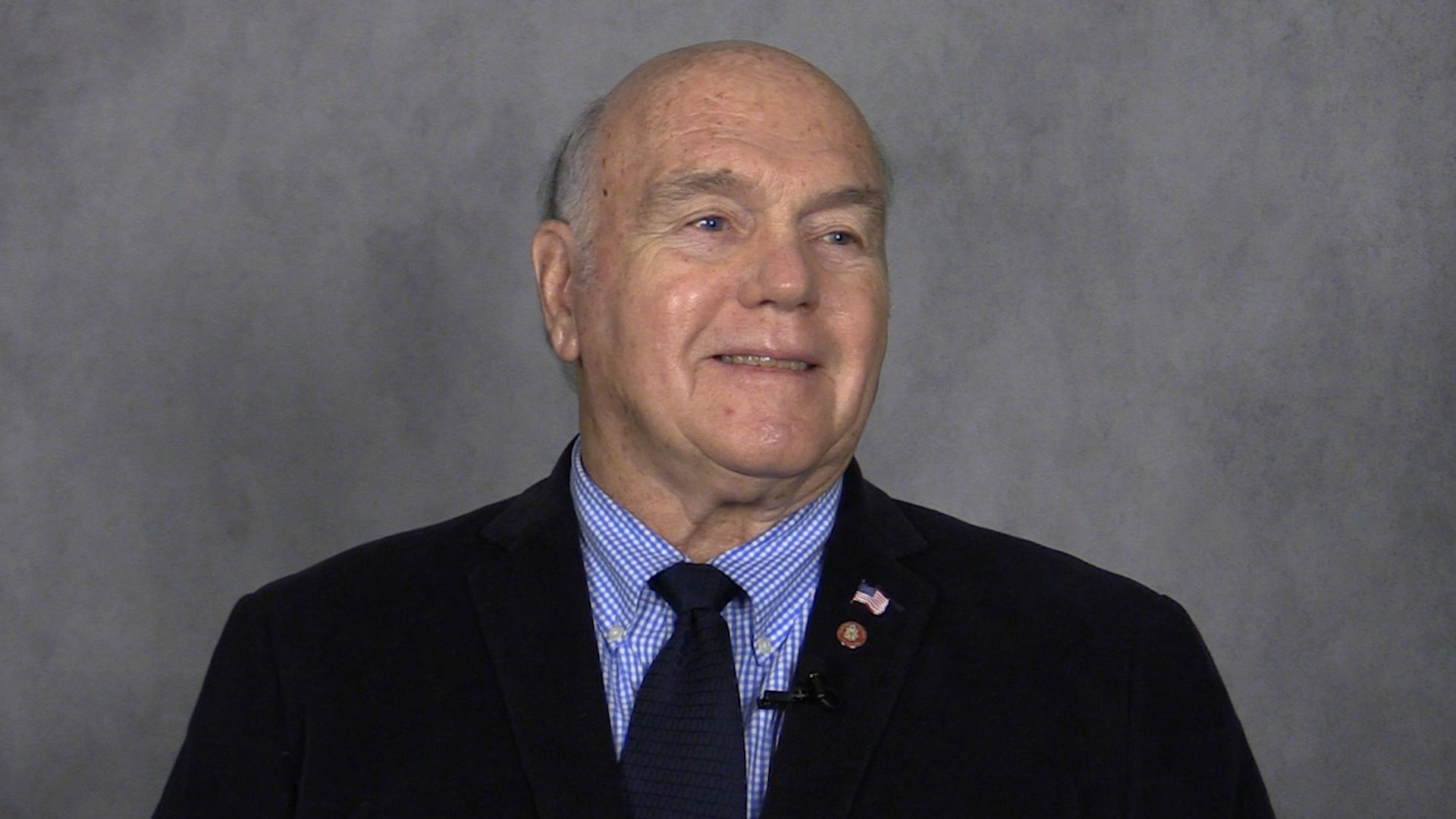
BIO INFO: Terry Wiley was born and raised in Middletown, DE. He attended school in Middletown. He attended college after serving in the military in Vietnam. Terry worked at DuPont and continued to serve in the military. He married Gwendelyn Walmsley and had three children. They also have grandchildren and great-grandchildren. He retired from the military as a Brigadier General. Farming a part of his life as a resident of Middletown.
TOPICS AND SUBJECT MATTER KEYWORDS: Family Heritage, Farming, Religion, Military Service, Integration, Education, Social Activities
Recording Inventory Sheet: Terry Wiley
Digital Collections Sheet: Terry Wiley
Middletown Historical Society
Middletown, Delaware Oral History Series
Speaking of the Past: Conversations
With Long-Term Residents of
Middletown, Delaware, 1900 – Present
Interview with Terry Wiley
February 4, 2026
Middletown Historical Society Oral History Transcript
Terry Wiley – Youtube – 02042026
Interviewer: Pat Maichle
Pat: Okay, good morning.
Terry: Good morning.
Pat: I’m Pat Maichle. I’m a volunteer with the Middletown Historical Society and we’re here with Keith Schneider who’s our videographer and we are in the Appoquinimink Community Library. Thank you to them for letting us use their studio. Um, and we are here to talk to you, Brigadier General, retired, Willie Terry Wiley, about your experiences in Middletown as a resident in Middletown and seeing the changes over time, what, if any, effect it has had on you and your family and um hopefully some positive things uh that you’ve experienced here in the town. I’m sure there are. But um so what is your full name and do you have a nickname?
Terry: Uh Terry L. Wiley. And I don’t have a nickname. I just go by Terry.
Pat: Okay. Uh h when and how and where were you born?
Terry: I was born on Anderson Street in Middletown on March the 8th, 1948. I was the second son to Howard and Aretta Wiley. And then later on I had a younger brother five years later Daniel Wiley. So, the we grew up um for the probably the first five or six years on Anderson Street and then my father moved to Georgetown on a Navy contract at the air base down there. So we moved down to Georgetown for two years and then when we returned, we actually lived in an apartment above the Milhouse at Bunker Hill Pond for about eight months and then we moved into 117 West Main Street in Middletown and that’s where I grew up uh until I went into the service after high school in 1966. And then my mom and dad uh actually built a house out in Townsend and moved there in 1971. So, they moved out of town. Yes.
Pat: So, although you’ve been moved around several times, you’ve been in the Middletown area for all of your life.
Terry: That’s correct. And uh other than being in the service, uh I’ve u raised my family once I got married to Gwen W. Walmsley Wiley. Okay. Um, we grew up outside of Middletown on the Rumsy Farm. Okay. As where we raised our children for 13 years and we now live on Middle Neck Road, which is on the west side of Middletown near Warwick.
Pat: So, you’re seeing the development as it’s happening right now. Yes. We’ll talk about that. Um, how did your family come to live here?
Terry: My mother um grew up in the coal mines of West Virginia, Gary and Davey, West Virginia, outside of Welch. And my father um was born down in Earlville, but his family was from Massachusetts. So, um dad, uh graduated from Middletown High School and then he went into the Navy. My mother uh was moved from West Virginia with her girlfriends at the solicitation of the explosive plant over in Elkton to work in the plant during the war. And so they she lived in Middletown uh with her girlfriends in an apartment and that was furnished by the company and they bussed them from Middletown to Elkton to work in the ammunition factory. Pat: M.
Terry: So that’s how mom and dad met. Mhm. And they settled right here in Middletown.
Pat: Okay. So, do you have any other family members who live in the area or is it just your your immediate family?
Terry: Yes. My immediate family. Um their uh cousins on my mother’s side. Um their their mother and father uh came north um to get jobs at General Motors and Chrysler and so forth. So, they’ve settled around the area and my father’s family still lived mainly in uh Massachusetts.
Pat: Okay. You explained a little bit about the houses that you lived in and apartments. Um your house on Anderson Street. Let’s just start with that one. Okay. Um uh describe it for us. How many rooms were in it? Did you have running water? Did you have electricity?
Terry: Yes. Um uh it was a single house. There were row houses on Anderson Street. Okay. But we had a single house. Uh it was a two story. It’s still there. Um it’s um a little white uh bungalow. Uh but we had all the facilities, modern facilities in the home that we needed. And um the row houses uh we had many friends that we grew up with that are longtime Middletown residents that still around. And uh so we were all there on Anderson Street together. Yes.
Pat: Okay. Sometimes people think…
Terry: The closest u convenience store at that time was Shivery’s Market which was on the corner of uh Anderson and Broad Street. And uh that was a little grocery store that had everything you needed. And uh across the street from that was uh Grimminger’s Bakery. And then next to it was Sadoff’s uh department store. And um let’s see. Uh uptown you had the Five and Dime uh that was run by Mr. Sheats. And then you had uh across the street from that was uh Buckworth’s.
No, not Buckworth’s. Um what was his name? Uh I forget that right now, but
Buckworth’s Hardware was also on Main Street. Yeah, those were the big stores.
Pat: They were back then. Yes. Um what is your earliest childhood memory? Good or bad? Positive? negative. What’s from living in Middletown?
Terry: I can I can remember living on Anderson Street as as a young child. Um our family doctor was Dr. Crutchley which was on the corner of Broad Street and Crawford Street. Um his family practice was there and unlike today uh when you when you walked into his office, his pharmaceutical supplies were on shelves there. You didn’t have to go to a drugstore. He issued everything you needed, including injections. So, it was a hometown doctor and he did house calls. So, I remember house calls from him. Yes. Yes.
Pat: Okay. What kind of games did you play growing up and who did you play with?
Terry: Outside games. Uh uh usually hide and go seek tag. Um bicycle riding. Um sand lot baseball. Sandlot games of all types. Marbles. Used to play marbles. Those type of things. Yeah. Not not many board games. I don’t remember playing many board games. We’re usually outside all the time.
Pat: So, and you played with the kids uh that lived around you. Is that typically what happened?
Terry: Everything was family back then. Everybody was family.
Pat: What was your favorite thing to do for fun? Like the movies, go to the beach.
Terry: Um Silver Lake during the summer. Uh Mr. Shaegran owned the Silver Lake um uh picnic area and uh the the uh swimming was available from early June till late September and uh Sunday was a big day to go to Silver Lake. There was a uh H-shaped pier there with two diving boards, one on each end of the of the deeper side. And uh there’s a concession stand there. There was a changing facilities there. And um the what is now the Middletown Historical Society was then called referred to uh by us kids as the Old Academy. And the Old Academy had the town office in it. And uh during the summer um the town would sponsor a camp um a day camp for kids and they had all kinds of crafts and games to play and so forth. And then they also ran a school bus out to Silver Lake for swimming. Uh but most of the time we just rode our bikes out to Silver Lake from town. Yeah. Yeah.
Pat: What was school like for you as a child? What were your best and worst subjects? Where did you attend grade school, high school? Did you go to college?
Terry: Um, I attended Middletown High School from first grade to 12th grade, which is now the Everett uh Middle School. Um, before it was uh revitalized. And um I remember uh basically being in the same class with the same kids until I reached the eighth grade. And then we had the influx from the Townsend kids that came in for junior high school and high school. Um, uh, we also did the integration, uh, back then from Louis L Reading and Middletown High School. We integrated in my junior year and, uh, that was there were no issues with that. Um we had all played ball together and grew up together and um so there were no issues with that compared to other places throughout the state like Wilmington and so forth. But uh my worst subjects were everything but arts and uh crafts. Um um wood shop was my was my favorite uh class. I did that all well from seventh grade on I always took wood shop every year as an elective and I enjoyed that very much. Yeah.
Pat: Um I was just thinking did you in Yeah. In grade school you were all at the same school?
Terry: Yes.
Pat: It was all at one place. Okay. Uh and did you go to college?
Terry: I did. Um I I went into the service directly out of high school. Um I did three years active duty uh which um allowed me to be able to exercise my GI bill to go to college. So once I came home from uh my active duty time I started going to school at Goldey Beacom College and achieved my associates degree in 70 1977 and then um later on they started a bachelor’s degree. So, I went back and and uh reach achieved my bachelor’s degree in 84 and I did all of that through night school while working at DuPont and serving in the Delaware National Guard at the same time and raising family. So.
Pat: So, do you remember any fads from your youth, popular hairstyles or clothes or music?
Terry: Um.
Pat: So that was the 60s and 70s, I guess.
Terry: White Wrangler jeans were very popular at that time. And, uh, penny loafers, which I still wear today.
Pat: I saw your pennies.
Terry: Yeah, I still wear my penny loafers. Um Um, other than that, I I don’t I didn’t achieve any any fad things. I didn’t recall any fad things.
Pat: So, did you play sports while you were in school?
Terry: I did. I played football and I ran track at Middletown High School. So, did that uh started with the JV teams uh in the seventh grade and uh ended up playing varsity football. And then uh I guess my sophomore, junior, and senior year uh I ran track and uh I enjoyed that. Okay. I wasn’t very good at it. I wasn’t fast. Um I’m a big guy. I was a Clydesdale, so I didn’t run very fast, but I could go the distance.
Pat: So Okay. Yes. Um what were your favorite songs and music while you were growing up?
Terry: Well, the Motown hits were were big. Um, but um, other than that, I wasn’t really into music much.
Pat: Yeah. Okay. Did you go to dances?
Terry: I did. I did. I went to the prom. I went to uh the big dances uh during the summer. Um, White Crystal Beach was a hopping place uh um back then. Jerry Blavett and and the whole music scene down there. A lot of kids uh were down in the Bohemia uh area during the summer at the summer cottages and Buttonwood Beach, White Crystal Beach, Crystal Beach. And on uh Fridays and Saturday nights were big gathering times down there. Um, so we always tried to go drive down for a Saturday night visit with uh people we had met from Philadelphia. Boys and girls we met from Philadelphia.
Pat: Did you have any pets? If so, what kind? And what were their names?
Terry: Uh, we always had a dog. Um, different periods of times due to their life expectancy. Most of them were mutts and um but yeah, we always had a dog. Not many cats, but we had dogs.
Pat: Okay. What was your religion growing up? What church did you attend?
Terry: I was uh born and raised with my parents in the um uh Grace Orthodox Presbyterian Church on Pennington Street, which was the street behind the Everett Theater.
Pat: Mhm.
Terry: Uh it was built in 1938. It was a presbyterian subdivision of the Forest Presbyterian Church on Main Street where the main clock town clock is. And uh the congregation had a split and um uh Reverend Graham uh started a u I guess what we refer to today as a um um storefront church. Uh they met at the Everett Theater uh for about a year and a half until they had money to build the the church on Pennington Street and um that was built in 1938 and opened up and uh stayed with that congregation until they closed just recently on uh June the 30th, 2025. And that property and the the uh pastor’s house were sold to Daniels and Hutchinson which had been big supporters of our church over the many many years and they now have another church that they’re renting to there.
Pat: So, okay.
Terry: The ministry continues to go on.
Pat: Were you ever mentioned in the newspaper or other publication?
Terry: Uh yes. uh um for uh sports and then uh some of my military uh career was uh uh reflected in the newspapers.
Pat: Yes. You were I think you told me you were in Vietnam. Is that was your active duty?
Terry: Yes.
Pat: When you started?
Terry: Yes. I uh I volunteered for airborne infantry and for Vietnam out of high school. Uh I arrived in Vietnam in July of ‘ 67 and uh stayed through 69. I fought with the 101st Airborne Division um second 327 no slack battalion and uh then I came back and served at Fort Bragg with the 82nd Airborne Division, the um um second of the 508th Red Devils. And I enjoyed that very much. The life of a soldier, airborne infantry soldier. Yes.
Pat: When you came back from Vietnam, how did you find the welcome home at that point in the 60s?
Terry: Not much of a welcome other than the family and friends. Um, but that was okay. Uh, I was busy and I continued my military career, so uh, what was going on u really didn’t bother me much. Um I actually um when I was assigned to the 82nd Airborne Division, I had the opportunity to be sent to West Point as an instructor for uh five months. And during that time they had Woodstock up in
New York. And uh so uh my friend and I, a battle buddy of mine, we went up to Woodstock
Pat: Oh, did you?
Terry: for spent the spent the day up there uh just admiring the uh different lifestyle. Completely different from the regimental military lifestyle that we are accustomed to. So but it was entertaining.
Pat: Yeah, that’s exciting for you. I was too young to go. My parents wouldn’t let me go.
Terry: What world? You didn’t miss much.
Pat: Oh, no. That’s not what I hear. I hear I missed a lot.
Terry: From my perspective, you didn’t miss much.
Pat: What world events had the most impact on you while you were growing up? Did any of them personally affect your family? So, obviously the war.
Terry: Well, before the war, um I remember uh being in high school uh when John F. Kennedy was killed. Um, that was a um an interesting uh period of time uh with all of the conspiracy theories and so forth and what was going on. But I remember uh the word of mouth going through the hallways of Middletown High School at the uh uh assassination of the president. That was significant. Um, I remember being in fourth grade uh in Mrs. Townsend’s class uh when the um Short and Walls Lumber Company caught on fire and that was down on Wood Street. Well, that was the big lumber company in the area. And um all the fire trucks from everywhere uh Smyrna and Clayton and Townsend in and Odessa, I mean the fire sirens just kept going all day. Well, that was only a block from my home. So after school was let out and we started home, there was a lot of chaos uh with all the fire companies trying to pump water and and put the fire out. So that was that was an experience in town. Yes. So.
Pat: I guess you were frightened to find what you would find when you got home.
Terry: Well, not frightened, just fourth grade curiosity, you know, as a boy. So yeah.
Pat: Okay. Okay. How how um do you celebrate holidays, birthdays, Christmas, Easter, whatever holidays you celebrate? And um do you have family traditions that you do each year?
Terry: Um just family gatherings. Um all of our birthdays, we all try to get as much of the family together as possible. and um Christmas or tra uh traditional Christmas, you know, going out and getting a Christmas tree and bringing it in and the decorations and preparing for decorations and so forth. Um when I was growing up as a teenager on West Main Street, my father started a bicycle shop and um myself and my brothers worked for my father down in the basement of the house and we uh sanded and painted and decorated bikes and resold used bikes uh especially during Christmas time and new new bikes that my father would pick up in Wilmington at um Dunbar’s Bicycle Shop. He would buy them at wholesale and bring them down and and reprice them. And we would actually put them out on the porch of 117 West Main Street. That home no longer has a wraparound porch on it, but we’d put them out there for display. And uh so it was all good. Good.
Pat: How is Middletown different from what it was like when you were a child? How has it changed?
Terry: Well, the um the expansion of the town by annex uh to different uh uh parts. I was asked just yesterday what the if I knew what the boundaries of Middletown were between Middletown and Townsend and I I I couldn’t answer that. Um but I do know that it’s it’s grown quite a bit. Um, when I was growing up, uh, you had Jack Green’s farm on one side of town on the east side of town and you had Huckle Farm on the west side of town and, uh, then once you got past Sharondale, Middletown High School, Everett School now, uh, that was the end of town and then out to Frog Frogtown uh, cemetery. The Forest Cemetery was the other end of town. So that’s what it was back in the day and it’s gradually expanded with industry and uh it’s changed a lot. Um I wasn’t um impacted by that much um since I was away in the in the military and then when I returned um from the military I lived in Townsend for a while when my parents wasn’t directly in town and uh then when I started working uh by the time I would leave town at 6:00 in the morning to go to work and I wouldn’t return home till 7:30 and the town was closed and things were happening and really just didn’t pay much attention to the expansion until it started surrounding us so much. So the opportunities that we have today with big stores were Dover was um the big mall when I was growing up, Blue Hen Mall um which has now closed and is a corporate center I think. And um then we would go to Concord Mall if we went north, but then Christiana Mall came in and now we have all the big uh retail stores around town that we have. So, you don’t have to go far to get anything you need today. So yeah, but um I remember growing up with um uh Hopkins Men’s clothing store, Sadoff’s clothing store, um um couple ice cream parlors and that was about all we had in Middletown back then.
Pat: So, what do you know about your family surname?
Terry: My family’s what?
Pat: Surname. Your last name. Your last name.
Terry: Uh, not much. Um, uh, my grandfather, my grandfather, uh, Dan Wiley, uh, was a security officer at the, uh, Washington College down in Chestertown. Um he and my grandmother had divorced and um uh I remember um there was an Uncle Art that was my grandfather’s brother that lived down in Texas and I think I only met him one time during my life. So I I don’t know much about the surnames. No.
Pat: Is there a naming tradition in your family such as always giving the firstborn son the name of the paternal grandfather?
Terry: No. No.
Pat: Considering that we’re about to celebrate our 250th anniversary as a country, what stories have come down to you about your parents, grandparents, more distant ancestors who have lived here in America?
Terry: On my mother’s side. Um, uh, I think most most of them were, um, of an Irish im immigrant or from, um, Anglo-Saxon and they came in to work in the mines and all her family grew up in the mines down in West Virginia. My father’s um mother’s side, the Brogens from Massachusetts. Theoretically, I have no proof of this and I I’ve never investigated it, uh was uh supposedly had the first rake producing company in New England up in Massachusetts uh near Boston. So that’s the only claim to fame I have from the revolutionary times.
Pat: Were they here during the Revolutionary times? Do you know that?
Terry: I don’t know that. No. No. No.
Pat: Okay. So, the Irish Americans, they came over here because of the famine or
Terry: I have no idea.
Pat: Okay. Are there any stories about famous or infamous relatives in your family?
Terry: No.
Pat: Just you?
Terry: Not even me.
Pat: Well, you were in the newspaper. Um, are there any special heirlooms, photos, Bibles, or other memorabilia that have been passed down in your family?
Terry: No.
Pat: Nothing at all?
Terry: No. No.
Pat: Wow. Okay. What was the full name? What’s the full name of your spouse, your siblings, your parents?
Terry: Um, my full name of my uh wife is Gwendelyn Grace Walmsley. Um, her father was born in Crumpton, Maryland. Uh, her mother’s family were all dairy farmers down in the Millington Galena area. So, they were all farmers down there and that and um my mother-in-law’s um maid name was Van Zant. So, yeah, there’s quite a few of those down in that area.
Pat: Okay. And do you have siblings?
Terry: Uh, my siblings are my older brother, Glenn David Wiley, that’s deceased.
He passed away in October of 2024. And then, um, my younger brother, Daniel Luther Wiley, who’s named after my dad’s dad, um, he lives out at Spring Arbor. So he lives right here in town uh near me. So yeah.
Pat: Okay, that’s good. Yeah. Where and when did you get married?
Terry: That’s interesting. Uh we got married in uh Galena Methodist Church in 19 in June 7th, 1972 on a Wednesday night because my wife’s family were all dairy farmers and they wouldn’t take off work on Saturdays from farming to go to a wedding. So you got married during the midweek service uh of the church on Wednesday night. So that’s that’s where we were married at.
Pat: Was there a big family celebration then after that or how did you
Terry: No, it was mostly uh friends, friends and family. Uh it’s not a very large church. We had a small wedding. We had the reception in the social hall of of the Galena Methodist church and we honeymooned in Virginia. I went I took my wife down to introduce her to my mother’s side of the family down in Virginia.
Pat: Okay. How would you describe your wife? And don’t just say she’s got brown hair. Talk about who she is.
Terry: She’s a She is a a blessing. A true blessing. She’s a superb army wife from coming from a military of non I mean a lifestyle of nonveterans and adapting to a military life. And she is very very supportive uh throughout my whole career and uh devoted mother uh very helpful uh to anybody and everybody as far as organizations go. Um business minded, thank God. And um I think we were married three months when she took the checkbook away from me and started managing the money in the house. Um, so she she’s u a devoted wife, a devoted mother, and devoted to all of her family.
Pat: And you have grandkids?
Terry: We have uh
Pat: as well.
Terry: Yes, we have uh four grandkids. Uh two on my daughter’s side and two on my son’s side. And we have seven great grandchildren. So, five great granddaughters and one great grandson that’s referred to as the prince in the family.
Pat: What do your family enjoy doing together?
Terry: Uh, day trips. Uh, we enjoy going on day trips to local area uh uh entertainment things. Uh, Sight and Sound or um Lancaster area. We love going to the beach together as a family and uh we always try to spend at least a week together at the beach. We prefer Bethany Beach and we rent a a place down there for the family. Um every three or four years we go as a family to Disney World and uh spend four or five days down there together and so forth. But there and mainly just birthday parties and pumpkin car carving parties or whatever the occasion might be. Yeah.
Pat: What was your profession? Well, you pretty much talked about that. And how did you choose it? You worked for the military. What else? What other jobs did you have?
Terry: Okay. I um because of u injuries I’d received uh in in the military um I really had a desire to be a physical therapist. Um but uh the Lord had different plans for me and uh as I pursued uh my military career uh when I came off active duty um I hired into the DuPont Corporation. I worked in a Glasgow site uh for about uh eight months or so. Then I ended up over in Chambers Works uh for the rest of my career. So I had 32 and a1/2 years uh military uh Du Pont career uh over at Chambers Works, 15 years in the construction division as an iron worker and then uh the remaining of my years I they did away with the construction division and I pulled out my degree from um college and uh went into research and development in the labs at Jackson Lab over at Chambers Works. So I had a split career. The whole time simultaneously I was serving uh in the uh Delaware National Guard as a signal officer doing uh satellite communication work for them. And um that um gave me opportunity for command positions as I moved up in rank and uh ultimately uh retired from Du Pont in 2006 when I was uh uh selected as uh a Brigadier General uh assistant uh Adjutant General for the Commander of the Delaware Army National Guard. And uh I retired from Du Pont and took that job uh as a General and I did retire in 2010 uh from that position. And uh then in 2013 I was appointed as the Civilian Aid to the Secretary of the Army. So, I served 10 more years in that capacity. So, um I love the military. I love doing what I can for all the veterans. I belong to I think every veterans’ organization there is in the state and out of state. So, uh that’s my passion, my my love.
Pat: Yeah. Obviously, after all those years. What accomplishments were you most proud?
Terry: Being a father.
Pat: Good answer.
Terry: Yeah. Um, I I was simply blessed. Um, uh, I I served in the in the church as a trustee. I served in the church as an elder. Um, I was involved in in Boy Scouts. Uh, I love being a mentor to the the future of America. That’s what I consider Boy Scouts. Uh, I started with my son in Cub Scouts. I’m currently uh working with my grandson as he accomplishes his Eagle project. Uh, my my son made Eagle in 94. Um, I was only a Boy Scout to the rank of first class uh when I was about 13 years old. And I left the Boy Scouts and went to the Civil Air Patrol Squadron in Middletown. And uh that was the basis of my military career, I think. And uh always wanted to to be in the military. So whenever we were playing games as kids, always wanted to they wanted to play football, I wanted to play army. So you know, so it was just something inherited in me, I guess.
Pat: Well, it paid off, it sounds like.
Terry: Yes, it did.
Pat: How has the recent development in Middletown affected the area? Have you seen any like in the culture?
Terry: Um I I think
Pat: Transportation
Terry: the the thing that impacts us most is when when years gener decades ago when you went to town everybody you saw you knew. And today when you go to town you can spend the whole day in the in Lowe’s or in one of the shopping stores and not see anybody that you know. And uh I think that’s the the um the thing that um I noticed the most that you you just don’t have, you know, your friends around. And um of course I’ll be 78 next month and um I guess I don’t have many friends left. We’re um I graduated in 1966, so I’m working with a a group of classmates right now to uh have our 60th class reunion. We’re going to have that out at Back Creek uh Country Club um in June. And we’re going to have it midday because none of us want to drive at night anymore. And um uh we hope to have good turnout. Maybe uh we have one every five years and uh for the last couple we’ve been bringing in about 40 45 uh classmates. Some are married each other but uh others haven’t and we’ve lost 19 classmates so far that we know of. Okay. Out of a class of 97. Um so um we’re excited about that to see who who will show up again this time. But uh those are um some of the areas that that we miss most. And typically um when someone from my generation passes away and we have a funeral, that’s the only time you really get to meet the the people that you grew up with, you know. So, I I think that’s the biggest change as far as the number of stores and eateries and so forth. Uh we don’t eat out a lot. Uh my wife’s a great cook and she likes to cook. So, um we do go to dinner every now and then. Uh but um there are many establishments here in town now that we’ve never been to and um don’t have a desire to go to them just to to seek out um what cuisines they might have, you know. So yeah.
Pat: Okay.
Terry: We don’t go to the movies much. I I probably go to the movies once a year if you know and that’s usually for an animated uh Disney show or something like that.
Pat: Is that uh as a result of COVID or did you never really go to the movies?
Terry: Um I never really had time to go to the movies. um uh working the way I did and um being involved uh in the military so much. I wasn’t always around. Um so we we we just never got in the habit of going to the movies even though I worked at the Everett Theater my junior and senior uh years in high school on uh Thursday, Friday, and uh no sat Friday, Saturday, and Sunday nights. I was an usher and uh filled the candy machine and the coke machine and put the um marque signs up for the next coming week and so forth. Um but I I just never got into movies and so we didn’t do it.
Pat: Okay.
Terry: Yeah. Oh, the one big thing in high school you asked for a dramatic change in Middletown was when they built the bowling alley, the bowling alley on Green Street. Um uh they would actually join a Phy Ed class. Uh they would bus us up to the bowling alley to introduce people into bowling as a sport. And uh it was a very popular place uh when when it initially opened. Um the Middletown Bowling Alley that they have now is busy. When I go out there, it’s always busy and um um that’s good to see. Uh but uh when when it was introduced to Middletown uh when I was uh probably 15 16 years old, that was a big deal for Middletown.
Pat: Didn’t they do something else in there, too? It was a bowling alley and something else.
Terry: I don’t recall anything else in there. No.
Pat: What do you want people to know the most about yourself, your family, their business, etc.? What do you want your legacy to be? I guess that you want to share in this video.
Terry: I don’t I don’t know uh that I need a legacy. Um, it’s not a a goal of mine. Um, uh, you know, they say, uh, you you die twice. You die physically and you die again the last time somebody mentions your name. So, um, we don’t know when that’s going to be or how it will happen, but, uh, I think if I wanted to be remembered, it would be that, um, I try to live to my goal of when you’re blessed, you have to give back. And when you’re blessed, you have to give back. And that’s why I continue with scouting to to give back to the future of America. Um, with the veterans’ groups and so forth, you know, you you want to maintain their legacy, what they’ve done to to give America 250 years of quality life that we have today. So um that that’s would be my contribution as a public servant would be something that I would hope would would be remembered.
Pat: What do you want people to know the most about Middletown’s past if you had to sum it up?
Terry: just to remember the um well, they can’t remember it because they never saw it. Today’s kids can’t you can’t go back and try to remember or have remembered um what the town used to be, what it started out as. People come here for the peach festival, but they don’t understand the nature of the peach festival and why why it’s we have that every year to commemorate what Middletown used to be working with Odessa with the peach festival of peach orchards and um how it transpired you know the old time town uh the farming town they have no no concept of what farms are. You know, today dairy farms are going by the wayside. Um uh we do have a lot of chicken uh industry in the area. Um but that’s different completely different from the the old farm towns that we had. Um, when I was growing up, um, a summer job was was going around to different farms on your bike when they were, uh, cutting hay and straw and and helping them bail that up or picking tomatoes or, uh, helping them, uh, get corn in after a storm. When the when the weather, the hurricanes, and the rain had knocked the corn down, they couldn’t run the corn pickers. And you’d go out in the fields and pick up corn by hand in order to help the farmers um uh get their crops in and get some money out out of their crop. Um working at the uh uh the canary uh facilities here in Middletown, which were um down off of Green Street and uh South Cass Street. Um they had uh truckloads of cucumbers would come in from the farms in baskets and you you would work there as a as a young boy or a girl um emptying the baskets on the conveyor belts and and having people size the cucumbers for pickles or slicing or whatever and tomatoes would come in after that, you know, and those are those are the things that that made Middletown my youth great, but kids have no idea of that today. And the uh 150 acre farm across from me, they plant um barley, uh they plant wheat, they plant soy beans, they plant corn, and uh when it comes harvest time, where they they get up the straw, that would be a job for five or six boys. Today with automation on the farm, a farmer can do that simply sitting in the tractor and running the balor and and the the um different uh rakes and so forth that they have. And those are automation has cost those kids the experience, not so much the job, just the experience of of uh being able to to work. So, I think that’s um that’s the things they won’t remember because they never saw it, but that will be the things that were that made Middletown what it was for me as a youth. Yeah.
Pat: Very good.
Terry: Yeah.
Pat: Is there anything else you want to say?
Terry: No. I thank you very much for this opportunity and uh look forward to seeing the finished product.
Pat: It will be great. Believe me.
Terry: Okay.
Pat: Thank you very much for doing it for us.
Terry: Well, I hope I hope your other uh interviewees that come in uh can all contribute to spaces I left out.