
2026.005.010 Patty Walker
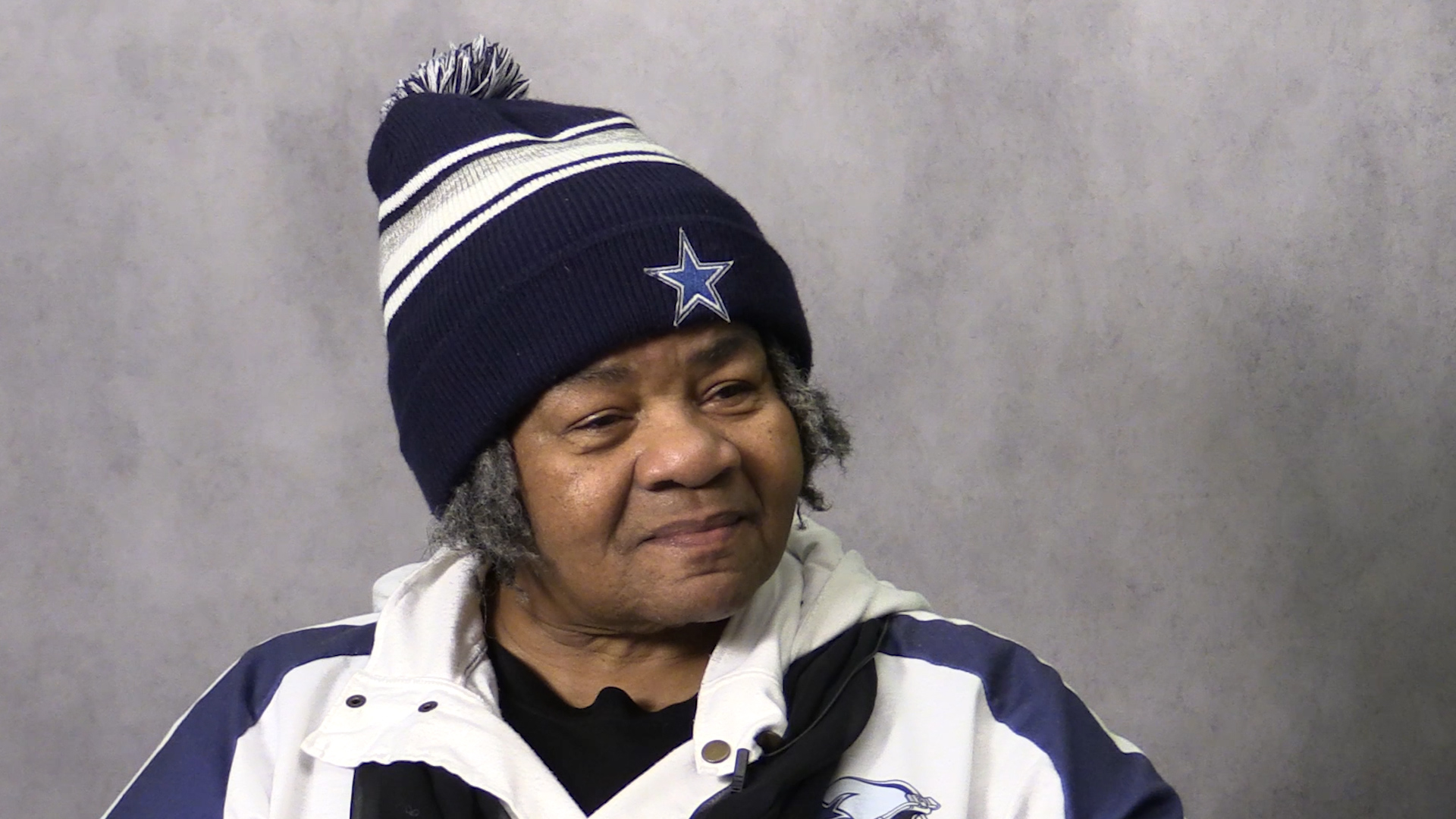
BIO INFO: Patty Walker was born in Lansing, MI, but soon moved to Middletown, Delaware with her parents who were born in Middletown. She lived her life in Middletown, married briefly and had a son. She worked for DuPont, DNREC, and is a Preacher. She attended school at Louis L Redding while it was a segregated school and then attended Middletown High School when integration was mandated by federal law.
TOPICS AND SUBJECT MATTER KEYWORDS: Education, Religion, Integration, Social Activities, Farming, Family Heritage
Recording Inventory Sheet: Patty Walker
Digital Collections Sheet: Patty Walker
Middletown Historical Society
Middletown, Delaware Oral History Series
Speaking of the Past: Conversations
With Long-Term Residents of
Middletown, Delaware, 1900 – Present
Interview with Terry Wiley
February 4, 2026
Middletown Historical Society
Middletown, Delaware
Oral History Series
Speaking of the Past: Conversations
With Long-Term Residents of
Middletown, Delaware, 1900 – Present
Interview with Patty Walker
March 16, 2026
Middletown Historical Society Oral History Transcript
Patty Walker – Youtube – 03162026
Interviewer Patricia L Peirson Maichle
Pat: Good morning. How are you today?
Patty: I’m fine. And yourself?
Pat: I’m good, thank you. And welcome. I’m Pat Maichle. I’m a volunteer with the Middletown Historical Society in Middletown, Delaware. And I’m here with Keith Schneider, who’s our videographer. And we’re in the Appoquinimink Community Library in Middletown, Delaware. And what we’re doing with this video is to document the history of the town of Middletown.
Patty: All right.
Pat: through your memories and experiences so that um we can get a good picture of what everyone experienced living here.
Patty: All right.
Pat: Okay. So, we’ll get started. What is your full name and do you have a nickname?
Patty: My full name is Patricia Lorraine Walker and my nickname is Patty.
Pat: When and where were you born?
Patty: I was actually born in Lansing, Michigan while my father was in the United States Air Force. I was born November the 30th, 1952.
Pat: And how did your family come to live here?
Patty: Well, my father and my mother were both Middletonians. They both lived in Middletown. Matter of fact, my father lived where uh the Neighborhood House is now, which used to be called uh Red Row. And um my mom, she lived on Anderson Street with my great grandparents, Eddie and Annabelle Fields.
Pat: So, they just wanted to come home.
Patty: Yes.
Pat: Were there other family members in the area at that time?
Patty: Yes. Yes. Um, my grandparents, uh, Roseanna Jones Walker and Lee Llewellyn Walker, Senior. So, yes.
Pat: What was the house you grew up in like? Did it how many rooms did it have? Did it have electricity? Did it have running water?
Patty: Well, originally, we had well water and we had an outhouse, but after Lynden Baines Johnson um signed the Civil Rights bill in July of 1964, the town of Middletown made us a part of the town of Middletown. Prior to that, we were called Brown Town and after that, uh, the people who lived on the latter end of Lake Street and it was called Ham Town. And so, yes, we we had a good time.
Pat: So, yours was your section was called Brown Town. Was it was it further outside of town than Ham Town or what was the distinction?
Patty: Ham Town was further towards uh 299 going um east like going towards Odessa. That’s the that’s where Ham Town was. It was what that we know as New Street and it was um Elizabeth Street and Jefferson Street. That was known as Ham Town. So, Cox Street, North Cox Street and uh Lock East Lockwood Street, we were called Brown Town. So yes, we were pretty good.
Pat: And all of that changed once the Civil Rights legislation
Patty: Yes. Once the Civil Rights legislation took place, then the town of Middletown, we became uh available for running water and all of that. And that latter part of 64, say around September, that’s when my dad put in a bathroom.
Pat: What was your earliest childhood memory?
Patty: My earliest childhood memory was living what I know to what I know to be what we called Red Row, which is where the Neighborhood House is now. And it was near the the sand lot and all of that. And um in 1959, the hurricane came and we were outside having fun and all of a sudden that wind blew up and my grandmother said, “Get in here.” She made us get in the house and we had to sit down and be quiet because she said God was talking. I always wanted to know what was God saying.
Pat: What kind of games did you play growing up?
Patty: Hop hopscotch. We played marbles. We played um checkers and we also did um bingo and all of that. So, it was pretty fun as a kid.
Pat: Did you play outside games?
Patty: Oh, yes. Hide and seek. Red Rover. Red Rover. Uh, send Patty Walker over. ‘Cuz nobody never called me just plain Patty. I was always Patty Walker. And I’m like, come on. Just say Patty. No, it’s Patty Walker. I said okay.
Pat: What was your favorite thing to do for fun? Did you go to the movies? Did you go to the beach?
Patty: Well, we would go to the movies ‘cuz at that time it was only like a quarter. We had to pay a quarter. Now it’s outrageous. I But uh every yeah. Every now and then it was could go into the Everett Theater, especially at Christmas time ‘cuz they gave you an orange, an apple, a tangerine, and a little box of uh rock candy. Oh man, that was the bomb.
Pat: Did you ever go to the beach?
Patty: No, I didn’t go to the beach until I was actually an adult and I um gave birth to my son in 1976. Matter of fact, he’ll be 50 years old this year. Um and uh I used to take him to the beach. My father wouldn’t take us because he said we would drown. He he was adamant. He wouldn’t even. And, we used to say, “Well, let us have let us do swimming lessons.” He wouldn’t do it. And And not only that, he wouldn’t allow us to uh ride bicycles ‘cuz he said you would be out in the street and get ran over by a car. So.
Pat: Did you have family chores when you were growing up? And what were they?
Patty: Oh, my goodness. Yes. Uh, one week we would have to press clothes, the next week we had to clean the house. And then, uh, my grandmother also taught us that as girls, we had better learn how to cut the grass, trim the bushes, and pull the weeds. And then she would also make the boys iron the clothes, do the wash and everything because she said, “If you don’t get a uh somebody to provide for you, then you’re going to have to provide for yourself.” And that’s what she told my brothers. She told them, “Suppose you don’t get a wife, you got to know how to cook and clean.” Yes.
Pat: What was school like when you were a child? And what were was your worst and best subjects and where did you go to school?
Patty: Well, I attended uh Louis L Redding uh from grades 1 through six and uh after the signing of the Civil Rights then the mandate for um for us to no longer be separate but equal. That’s when my father said that since we’re paying the uh property taxes and all of that, you will go. So yes, I wound up going to Middletown High when they were grades 1 through 12, which is now Everett Meredith Middle School. So yes, I um and my best subject was history. I was historian. I loved it. And uh my history teacher at that time was Miss Bradley. Oh my gosh. And I had living history ‘cuz my great grandfather at that time was in was 100 years old. And so therefore I um took my book where he had taught told told us all the stories about the horse and buggy days and all of that. And uh so I was able to put in in Miss Bradley’s hand a book that my grandfather had taken notes wrote about his life as growing up as a child ‘cuz he was 13 years after he was born, 13 years after um Abraham Lincoln signed the Emancipation Proclamation. So, it was good. It was It was a nice life.
Pat: Did you go to college?
Patty: Yes.
Pat: Where’d you go? I went to Delaware State. At that time, it was Delaware State College. It’s now Delaware State University. I graduated May the 16th, 1976 with a degree in Secondary Education and I was had the ability to teach it uh grades 7 through 12 and junior college in history. I also have a Master’s Degree in divinity, Enlightened Bible College and Seminary. So, I did.
Pat: Do you remember any fads in your youth? Like popular hairstyles or clothes?
Patty: Oh, the popular hairstyle in my day was the afro which is the big bushy hair and all of that and the clothing was the bell bottoms and the dashikis and all of that. So yeah, it it was pretty cool.
Pat: What were your favorite songs and music?
Patty: Well, my favorite songs at the time uh was um My Girl by the Temptations and um Gladys Night and the Pips and uh after that um gospel for the most part. It was gospel music ‘cuz my brother, uh the late Donald E. Walker Senior, he played the piano and and when my father began preaching, um he played the piano and the organ for the church. And so, we grew up gospel basically.
Pat: What church was that?
Patty: My father was his first pastoral charge was Mount Olive AME church uh in um Magnolia, Delaware and then he was moved from there to Mount Friendship AME church in Smyrna. And his last charge was Emanuel AME Church in Hartley, Delaware.
Pat: Did you have any pets when you were growing up? And if so, what?
Patty: No. No. My dad, my dad said, ‘cuz I wanted so bad a St. Bernard. I wanted a St. Bernard. And my father said, “A dog? It takes all I got to feed y’all? How in the world? Come on, feed a dog.” And then my mother, she wanted a cat. Well, guess what? No. My father went out one Christmas and bought my mother two ceramic cats and said, “That’s all the cat you going to get in here.” ‘Cuz I never will forget one day Mrs. Spearman, my third-grade teacher, she lived two doors from us. Well, my parents, my father and my uncle was bringing in the Christmas tree and the cat came in with with the tree. And my father said, “Alice, Alice, Alice.” Oh, he was screaming to the top of his tongue, “Get the cat! Get the cat!” Mommy had to crawl up underneath the Christmas tree and and and and grab the cat and she called Miss Spearman to come over and get Nubby. Nubby was the name of the cat ‘cuz it had a a a a tail that didn’t grow out. And Mom said, “You scared of a cat? Ain’t that something a grown man?”
Pat: That’s funny. Um what well I what was your religion growing up? You kind of talked about this a little bit.
Patty: Religion is we’re actually Methodism mythology but the A is for African and the E is for Episcopal because we’re African Methodist Episcopal because Allen, Richard Allen who is our founder, he thought that Methodism was easy for those of us to follow because there is a method to it and African is because of our society of people and Episcopal is because we elect bishops every four year four years and those bishops are at we have now 21 districts all over um Canada uh Africa B you know Bermuda and all the and some of the um other countries and that’s what we do. Uh so yes. But Methodists, we’re really that’s what we are. And
Pat: Were you ever mentioned in the newspaper or other publications?
Patty: I I was when I uh graduated. I was listed in the Who’s Who of American Students uh when I was there at at college. And um I did have a couple of publications with poetry, but other than that, I’m good.
Pat: In a book or?
Patty: No, they were actually um I don’t know if it’s in a book anywhere, but um it was a pamphlet. They sent it out to me and asked me if I would do it, and I I did. I I wrote um “I dream a dream”. And then I also “Who are we?” and that and that was you know it wasn’t much but it was okay.
Pat: Uh who were your friends when you were growing up?
Patty: Well, my closest friend she lived next door. Her name was Cynthia. She was Cynthia Perkins. Uh, and the lady who then my other friends were Jennifer Jennifer Fulman who lived two doors from us and then on um Anderson Street uh Nelson Waters and uh Bertha Brinkley. There were a couple of other people, but I didn’t do a whole lot of socializing simply because I spent most of my time in church. My father said, “I’m not everybody else’s father and neither is your mother. But as for me and my house, we going to serve the Lord.” So, every Sunday if there were two services, we were at church. We couldn’t do the movies and.
Pat: What world events had the most impact on you while you were growing up and did any of them personally affect your family?
Patty: No, not that I can recall because my um the only thing that I really was excited about was when they had the uh World the World’s Fair and it was in New York.
Pat: One of them.
Patty: and one of them was in New York and my um my mom and my aunt my Aunt Virginia they went and took pictures and all of that. So, we got to see the big globe of the world and everything. So that was it for me.
Pat: How are holidays, birthdays, Christmas, whatever other holidays you celebrate celebrated in your family? And did you have special family traditions?
Patty: Oh yes. When I was growing up, every birthday, my grandmother would fix each of us our favorite meal. And my favorite meal was hot dogs, baked beans, applesauce, and and shortbread. And my sister would get mad at me. My sister Deborah, she would get mad at me because she would say, “Trisha, why don’t you ask for steak and baked potato?” “Because I don’t want steak and baked potato. I want hot dogs and baked beans and shortbread. That’s what I want.”
Pat: How about Christmas? Did you celebrate?
Patty: Now, on Christmas we celebrated. And every Christmas we were to get one big gift and one little gift. And so, my 16th birthday, I don’t know if you remember, but on my 16th birthday, we um my my grandmother made my parents buy her ‘cuz I wanted a maxi coat, which is the coat that went all the way down to your shoes. And I wanted a pair of black and white saddle shoes ‘cuz I was like, “Oh yeah, we got this.” So, my mother, my mom and my dad, they gave me $50. That was big money. $50. And so, I wound up going to um up on Kirkwood Highway to the to the store. And uh I think Robert, remember the store? Robert Hall?
Pat: Yep. Mhm.
Patty: I bought my maxi coat there for $29. And I got my saddle shoes for $12. And I was like, uh oh. I was excited, you know. I I was all happy ‘cuz I was able to get my maxi coat and my saddle shoes. And I went back to school proud. Yes, ‘cuz I was in 11th grade. I was almost graduating.
Pat: How is the world today different from what it was like when you were a child?
Patty: Uh there was more peace when I was a child. And my um family seemed to have had an ability to to keep us you know you know uh happy. I mean you know for me all you had to do is cook me something eat I was Gucci. The food was at I was, you know, but um to me it’s it’s a lot of chaos right now. It’s a lot of confusion. Um, so I don’t know. For me, the family was the was the dynamic. There was more family um gatherings. there were more family uh traditions to go by and to do. ‘Cuz every year, New Year’s, every New Year my grandmother put the spread on the table that nobody I mean you know we had a little bit of everything food galore. And my father said I’m glad I only had to feed y’all once a year now that you’re grown.
Pat: Those are good memories though.
Patty: Yes.
Pat: What do you know about your family’s surname? Like your your maiden name? Do you know anything about the history of that?
Patty: Yes. Uh my um grandmother’s uh surname was uh Jones. And Samuel and Eliza Jones were my great grandparents. And they are instrumental in um holding the first services of Ringgold Chapel, African Methodist Episcopal Church in their home. And then my great grandmother’s sister Mabel, she had um the property where the church is now. She donated the property so that the church could be moved. It was moved in 1942 to where it is right now on on 71, 5017 um Summit Bridge Road. That’s the church. And my great-grandfather on my mother’s side, which is James Edward Fields, Senior, and my great-grandmother Annabelle White Fields, uh Trinity AME Church on Lockwood Street. My great great-grandmother her she is uh the Missionary Society is named after her Annie White Missionary Society. So always my family has been able to be a part of the his history of Middletown especially in the African-American community. My great-grandfather also served on the school board for Louis L Redding. He was the um chairman of the board and my grandfather, Lee Llewellyn Walker, Senior, he was instrumental in Louis Redding being built. Governor Carver asked my grandfather after he got elected ‘cuz uh Governor Carver was elected basically after my grandfather. Oh, my grandfather was a straight-up Democrat. And so, he um asked uh Governor Carver after he got elected, he asked my grandfather what did he want to happen? And he told him said, “Uh, I would prefer that you build a school that my children could attend.” And sure enough, Louis L. Redding was built in 1952. And my grandfather, Lee Llewellyn Walker, Senior, made that happen. So, I was happy.
Pat: I can see why. Is there a naming tradition in your family such as always giving the firstborn son the name of his paternal grandfather?
Patty: Say that again.
Pat: Is there a naming tradition in your family such as always giving the firstborn son the name of his paternal grandfather?
Patty: Yes, because my brother is Luther Lee Walker III. My dad was Luther Lee Walker Jr. and my PopPop was Lee Llewella Walker Senior. So, yes.
Pat: That fits the bill.
Patty: And now it’s five of them because my nephew is the fourth and my great nephew is the fifth.
Pat: I know it’s pretty impressive. Considering that we’re celebrating the 250th anniversary of our country this year, what stories have come down to you about your parents, grandparents, more distant ancestors in relation to their involvement in keeping this country, starting this country or keeping it going?
Patty: Okay. Well,
Pat: Do you go back as far as the Revolutionary War, Civil War?
Patty: I’m not for sure because I my great-grandparents never talked about that. And I don’t remember my great-grandfather on my father’s side, Jackson Walker. I don’t remember because all I know is that he migrated from Georgia up to Virginia and after that all I don’t know anything about whether they were in any in any any of the wars whether it was Revolutionary or Civil War I’m not for sure.
Pat: Did they move from Georgia dur after the Civil War?
Patty: Yes. my my great-grandfather uh Jackson Walker.
Pat: So, you don’t you don’t know further back than that?
Patty: No.
Pat: Are there any stories about famous or infamous relatives in your family? Well, besides your grandfather, great-grandfather starting the Louis L Redding.
Patty: No, not that I know of. No.
Pat: Are there any special heirlooms, photos, Bibles, or other memorabilia that have been passed down in your family?
Patty: Yes. My um my mother uh passed down dishes, a set of uh china, fine china from my great great-grandmother Annie White and um my grandmother uh Anna Walker, which is my father’s mother. Um, she passed down the um, oh gosh, a set of dishes that um, they were like I the little remember the dishes that had the the uh, blue and white and all, you know, it was so
Pat: And who’s got those now?
Patty: They’re in the in 109 East Lockwood Street in the buffet. Uh, and my sister right now it’s in where she’s living. Lois, my baby sister.
Pat: Okay. But nothing to document your families.
Patty: No.
Pat: Yeah. Okay. Like sometimes the the families put information like that in the Bibles, the births and
Patty: Well, we did have a Bible, but I don’t I don’t know where it got to ‘cuz I know my mom had one that was that actually belonged to my great great-grandmother, Annie White, but I don’t know what happened to it.
Pat: Okay. What was the full name of your spouse? And tell us a little bit about him. Whatever you want to say.
Patty: Okay. Well, he was his name was Marian Leroy Henry, but we weren’t married long enough for me to even get to know him because I got tired of the foolishness. I did. I got tired uh because quote unquote, we came from two different worlds. I was raised, you know, “church girl”, as he put it, and he just we just didn’t we didn’t jel. I married him on July the 29th, 1988, and divorced him on January the 30th, 1992 ‘cuz I just I couldn’t deal with the craziness because what I told him was, I don’t know how to fight. My parents didn’t argue in front of us. So, I didn’t know what to do. I didn’t know how to even get angry ‘cuz I never saw that as a child. So.
Pat: Okay, enough said. I was going to ask you how you met him.
Patty: Well, I met him because my best friend Cynthia, she was married to his older brother, Arthur. So, that’s how I met him. And uh it was like oh wow tragedy.
Pat: Where and when did you get married?
Patty: I got married uh well I went to Elkton to the that little chapel over there and I got married there on July the 29th 1988.
Pat: They have a cu couple questions here about your spouse, but um, what did your family enjoy doing together? You and he and your children’s at least.
Patty: Well, well, basically going to the amusement parks. I know a couple of times we went to uh King’s Dominion, which was pretty cool, and a couple of times we went to uh Crystal Beach. So, yeah, it it wasn’t too bad. But like I said, I was looking forward to growing old with my husband, but he had he just didn’t seem to want to do that, I guess. So, he wound up when we after we got the divorce, he wound up marrying someone else. So, I’m good.
Pat: What was your profession and how did you choose it? You’ve had a couple professions, but
Patty: Yes, I did. My um oldest profession was I worked for Dupont as a lab technician, a level four lab technician. And then I uh when I left from there, I worked for the Department of Natural Resources and Environmental Control, DNREC as they call it. And I worked for them as a secretary ‘cuz that’s what got me in. That’s what got me into Dupont’s also my secretarial skills because I do short hand and you know I could translate translate it all and all of that. And then uh after I left them DNREC I went to work for the Boys and Girls Club and that was my greatest joy ‘cuz I was working with children again. Working with children has always been my my my blessing because I also taught church school or what they call Sunday School. I taught that and so yeah working with children has always been my great joy.
Pat: And you were a preacher as well, right?
Patty: Yes.
Pat: Are you still, do you still?
Patty: Well, I I’m I still have the license to preach. And so having the license to preach, they say, you know, they call me Sister Walker because all I have is the license. I have not been officially ordained an elder in the AME church, but I was ordained an elder on March the 24th, 2013 at Greater Life Christian Church, which is a non-denominational church um under the uh leadership of Bishop James Alden Ashley, Senior. So, yes. And yes, I still preach.
Pat: You’re probably good at it. If you could have had any other profession, what would it have been? And why wasn’t it your first choice?
Patty: you I don’t I I don’t think I if I could have had any other profession. I actually I’m telling you what I actually would have loved to have done was have been to played softball professionally or even played little league. I was angry that they didn’t allow girls to play little league when I was a child. Now they’re letting little girls play little league. I had a I mean, you know, my brother taught me well. My brother Luther, well, we call him Sai. Sai taught me well how to scoop up the ball and all of that.
Pat: And they wouldn’t let you play.
Patty: They wouldn’t let me play ‘cuz I was a girl.
Pat: When did that change? When did they start letting girls? Do you know?
Patty: They, yeah, they started letting uh girls play. Oh, I want to say oh maybe in the latter ‘90s because when my son was playing Little League, he played for the mites. They didn’t let girls play then either, but I’m I’m almost certain at the middle of the 90s, that’s when girls started because I remember watching um the the little league Allstar game at um in Williamsport, PA, and they had a girl pitching. I was like, “What? How come I what’s going on?” But yes, I would. Yeah, I really would have wished they had it ‘cuz I wanted to play professional baseball.
Pat: What accomplishments were you the most proud?
Patty: One, being a mother, two, being a preacher, and three, being me. ‘Cuz I felt as though uh there was a point in time where, you know, I felt that that everybody would have to like me because of who I was. But then my pastor when I was 39 years old, the Reverend Virginia Lynn Foster Sanders, she said, “Sister Walker, you I hope you do know everybody’s not going to like you.” I said, “What?” I went home and cried for days because I didn’t understand why wouldn’t you like me? I give my best. I give everything to people. I would I shared sandwiches with people who were hungry and everything. But I found out she was right. Nobody everybody doesn’t like.
Pat: How has the recent development affected the area in Middletown?
Patty: A there aren’t enough roadways. I remember going from Odessa to over the railroad tracks in less than five minutes. Now, it takes me from going from Odessa to over the railroad track 40 minutes. Come on. It’s too many people here and not enough roadways. If you don’t know the back roads, you stuck. If you don’t know how to navigate between um like going okay like I can go from um my house now go straight across and and go down Lake Street and and then I can make it out to the Middletown Shopping Center what to the farmers market. If you don’t know how to do that you up you trouble. you going to be really mad.
Pat: Anything else besides the roads?
Patty: Um,it’s a whole lot of choices. Before we had uh we had what the 301 which was at that time called Money’s. Now we got IHOP. We got uh all kinds of restaurants and and uh we got the Hobby Lobby, we got Michaels, we got. To me at this point, it’s congested. It’s It’s no longer the ease of flow. And I I don’t know, maybe I’m being selfish, but I like my quiet little Middletown.
Pat: Well, you pretty much answered the next one. How has the community changed? Um, what do you want people to know the most about yourself, your family, your business, etc.?
Patty: M what I want people to know most about my family was that there was two sides to my family. Either you were a preacher or you were a teacher and uh we produced out of six siblings there were four of us who are Reverends. Then out of as far as my grandparents and all of them, their families, there were four teachers. So, ‘cuz yeah, ‘cuz my Aunt Ardy, my my Uncle Earl, my Aunt Virginia, and all of them, they were all teachers. And my mother’s brothers, they were teachers. So, we all had that family.
Pat: What do you want people to know the most about Middletown’s past? And and you had mentioned to me your experiences during when integration occurred.
Patty: Yes. When in when integration took place, uh it was almost unthinkable the names that I was called every day or the way that people treated me. They all they knew was that I was black or African-American. And of course, the the words were instead of black, negro, it was nigger. I’m not going to sit next to a nigger. I I remember actually I was in English class. Miss Fontaine was my English teacher and the young man told said to me, “I’m not sitting next to no nigger.” And guess what I did? I slapped him on the face and left my handprint on his face ‘cuz I was determined that my name was not nigger. My name was Pat Walker. And either you call me that or you don’t call me anything. But uh after I want to say after about maybe my 10th grade, things seem to get better because I I guess they were not accustomed to us being in the school. So, I don’t know, but my community-wise, things seemed to to me get better. The only thing that I really at the time when I was that age was that we couldn’t come to the center of town. The only time we could come to the center of town was if we were going to Mr. Tommy George’s Subshop and we had to get our food and then get back home. We couldn’t linger. We couldn’t talk or anything. So, but other than that.
Pat: when did that all change?
Patty: In the mid ‘80s, I want to say around 1984, 1985, things seemed to get a whole lot better. And I don’t know if it was because the changing of the dynamics of the Council because I believe at that time, you know, we had uh uh several African-Americans that served on the Town Council. So, yes.
Pat: How about with farming? Obviously, the farming was big in this area. Did did people from your community work in the work on the farms?
Patty: Yes, my a matter of fact, my grandfather uh worked on the farm for Mr. Armstrong and my dad, he worked on uh on the um with uh Mr. Money’s farm. We picked tomatoes. We would go out there too, pick tomatoes, pick the strawberries.
Pat: I think all the kids did from the town.
Patty: So, it was happy. And then um when I when I got a little older, Rutkowskis, the potato farm, we used to work there for the summer months ‘cuz I used to work for it so that I could get ‘cuz I wanted to pay my way through college. So that’s what I did.
Pat: And and um obviously that’s gone by the wayside.
Patty: Yes.
Pat: For the most part, farming. What did the what do the kids what does the town have to offer the kids today that it’s not the same as what you experienced?
Patty: No, it’s not at all because
Pat: are they better off these days as far as opportunities?
Patty: As far as I’m concerned, no. Cuz they don’t have anything to do. They really don’t. And um unless you have a certain grade point average and all of that, you can’t work these, you know, the McDonald’s and all of those places at the age of 15 and 16. Because when I was growing up, you know, you could work as long as you had, you know, a C average and you were you were able to, you know, uh get summer work. Uh but uh what really anger me was that when I try to work summer jobs in the school, they told they told me I couldn’t work because my parents made too much money? What? What are you talking about? They made too much money. I’m broke. And evidently they broke too ‘cuz they don’t. So, I wound up I um so I wound up uh doing day work 3 hours a day working with my Aunt Thelma, Thelma Queen, who is my mother’s oldest sister. Uh so yes ‘cuz they had the same father but different mothers. But anyway, Aunt Thelma, she would take us up in Newark to the various homes and everything and we would clean, you know, scrub floors and clean bathrooms, make beds, and all of that. And I thank God because my grandmother taught me how to make a bed wherein you could throw a quarter on it and it would bounce. And I was like, “Wow.” So, yes, it was. It was. So, I did I I grew up pretty balanced.
Pat: Well, I don’t have any more questions for you. Do you have anything else you want to add to this story? This
Patty: Well, I do I do know that my father, the Reverend Luther Lee Walker Jr., happened to have been the first African American Building and Grounds Superintendent for the Appoquinimink School District.
Pat: Well, there’s somebody famous in your family.
Patty: Yes. Yes, he was. He was. And and I I thought, wow, that’s an honor. That is truly an honor. So, other than that, all was life was great coming up.
Pat: Well, that’s good. Is there anything else?
Patty: No.
Pat: Okay. Well, we we I really appreciate the stories that you tell about the past of the town and your past.
Patty: Yes.
Pat: It’s very interesting, I think, and and I’m sure that the Historical Society will be pleased. All right. With the information that you provided. So, thank you very much.
Patty: Thank you for having me ‘cuz that was really fun.