026.005.013 Mary Borecki
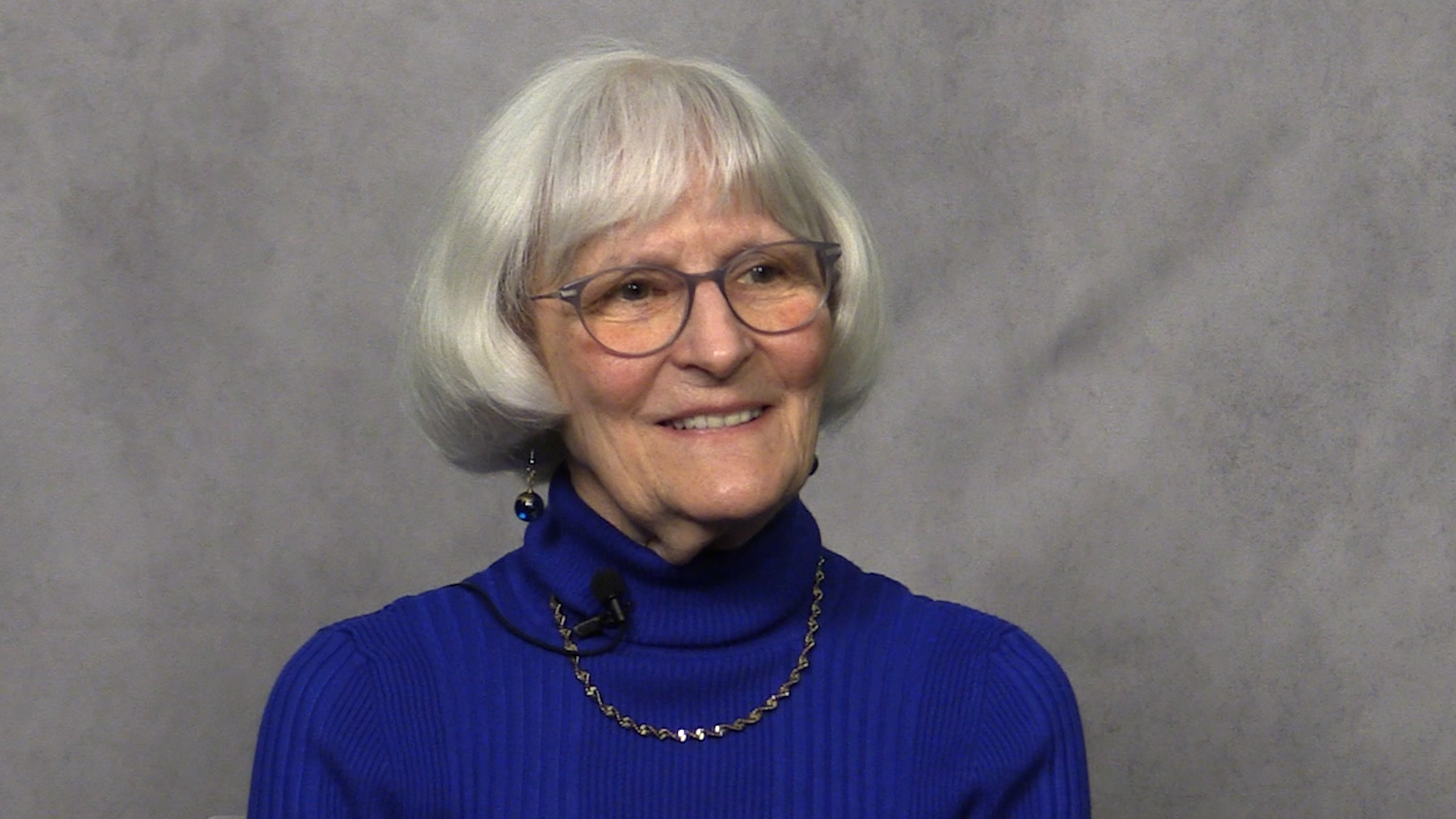
BIO INFO: Mary Borecki has lived in Middletown, Delaware for most of her adult life with her husband Tom and her two children. She has worked as a lab technician for Dupont Company and has spent 36 years as the Middletown Librarian. Mary enjoys reading and her children have brought her a sense of pride as they have grown to adulthood. Her children were active in the productions at the Everett Theater.
TOPICS AND SUBJECT MATTER KEYWORDS: Community History, Career, Family Heritage, Religion, Education, Social Activities
TO VIEW SUBTITLES, PLEASE SELECT THE CLOSED CAPTIONING (CC) ICON AT THE TOP RIGHT OF THE VIDEO.
Recording Inventory Sheet: Mary Borecki
Digital Collections Sheet: Mary Borecki
Middletown Historical Society
Middletown, Delaware Oral History Series
Speaking of the Past: Conversations
With Long-Term Residents of
Middletown, Delaware, 1900 – Present
Interview with Mary Borecki
April 22, 2026
Middletown Historical Society Oral History Transcript
Mary Borecki – Youtube – 04222026
Interviewer: Patricia L Peirson Maichle
Pat: Good morning.
Mary: Good morning.
Pat: How are you today?
Mary: I’m fine, thanks.
Pat: Good. I’m Pat Maichle. I’m a volunteer with the Middletown Historical Society and I’m here with Keith Schneider who is our videographer and we’re here at the Appoquinimink Community Library in Middletown, Delaware. I want to thank you for coming in. The Historical Society is trying to through your memories and experiences demonstrate the history of the town of Middletown from the 1900s through today. Um, and so relax, be comfortable, and um, share your memories um, and your experiences with us.
Mary: Okay.
Pat: So, what is your full name? And do you have a nickname?
Mary: My name is Mary Borecki and no, I don’t have a nickname.
Pat: When and where were you born?
Mary: I was born in Wilmington. Uh my family lived up up near Claymont um at the time. And uh we moved to Newark when I was about eight. So, I consider that my hometown. And then then we moved to Middletown. My husband and I bought our house here.
Pat: Um how did your well how did you come to live here? Was there a reason that you came?
Mary: We were looking for a house. Um, and we uh we fell in in love with the Victorian house that we bought on Broad Street. So, that’s why we came.
Pat: Okay. Were there other family members in this area?
Mary: My uncle and aunt lived in the next block down. Uh, they had moved there a few years before.
Pat: Okay. And um what was the house that you grew up in like? How many rooms did it have? Did it have electricity? Did it have running water?
Mary: Where I grew up?
Pat: Yeah.
Mary: Um we had two, well, when I was real little, I I don’t, we lived with my grandmother for a while, but um we had a house uh in Brookside, which was a a ranch house with three bedrooms. And uh then we moved across town to Fairfield which also had u three bedrooms. There were six of us so everybody had two to a room.
Pat: Um what is your earliest childhood memory?
Mary: My earliest.
Pat: Good or bad.
Mary: I think one of my earliest ones was when I was about four years old and we lived in Elsmere at the time. Um, and I had three younger siblings. One of my youngest one was a baby and my mom uh sent me to the store which was about three or four blocks away. Um, and she I think she called the store told them that I was c coming and I don’t know what it was that she needed. I don’t remember that. But um she sent me there and I was so proud. I was so proud that I went and you know got whatever it was she needed from the store and got back home again.
Pat: How old were you?
Mary: I was about four.
Pat: Wow.
Mary: Nobody would do that now.
Pat: I know. That would be unheard of. What kind of games did you play growing up?
Mary: We did a lot of board games. Um, and then we played uh when we were in elementary school, we we played um outside. We played uh fort. You know, my brothers had these uh fake rifles and you know, they they were defending the the fort. We used to pretend that we had a um covered wagon. We had we had a wagon. We’d put a blanket over it, put this our teddy bears and stuff in it, and then we would go around the block. And when we got on the other side of the block, we would uh climb up on top of the uh fire hydrant and, you know, kind of look around like this. So, and then I had two friends uh girlfriends in the neighborhood that I used to get together with, and we would play we played mostly board games. Oh, and Jacks.
Pat: What was your favorite thing to do for fun? So, things like go to the movies, go to the beach, or something else.
Mary: I I used to read. I’ve always been a reader.
Pat: That’s a surprise.
Mary: My mom said at one time that from the time I was very little, I was always carrying a book around. I don’t remember that. But uh that was my favorite thing.
Pat: Did you have family chores? And if so, what were they?
Mary: Yeah, we helped with the dishes. Um that was mainly we we help with the dishes.
Pat: What was school like for you as a child? What were your best and worst subjects? And where did you go to school? Grade school, high school, and college if you went.
Mary: Um in grade school, I went to several schools in the Newark School District. Uh because we moved to Brookside, Brookside School was still being built. So, I was in the third grade then. we went to Medill um School. Then I grew up I went to um Brookside Elementary and then uh the Central Middle School which at that time was um seventh eighth and ninth grade. Um and then I went to Newark High graduated from Newark High and went to Delaware University of Delaware for a while.
Pat: What did you major in?
Mary: Uh, I was just in arts and science. I was studying to be a nurse.
Pat: Okay. Do you remember any fads from your youth such as popular hairstyles or clothes?
Mary: Um, yeah, teased hair was big. I didn’t do it because I didn’t like that, but um and um skirts that you could swirl. That’s mostly what what I remember.
Pat: Okay. What were your favorite songs and music?
Mary: I didn’t get into popular music until um till the Beatles came along and that was later. Um because I I would in the I was in the school band and I really liked more um not I won’t say classical music but I liked more um what would have been called adult music.
Pat: Show tunes?
Mary: Yeah, that kind of thing.
Pat: Did you have any pets? And if so, what kind and what were their names?
Mary: Oh, we always had pets, you know. Um probably to the you know we had we had dogs, we had cats, we had a rabbit for a while, my brother had a chameleon for a while. Um so we we always we always had pets and I won’t give you their names because it’s list about this long.
Pat: And, were they in the house?
Mary: Yes, usually. We had one we had one dog that was supposed to be my dad’s hunting dog that stayed outside, but she couldn’t hunt anything. So.
Pat: What was your religion growing up and what church did you attend?
Mary: Um, our family’s always been Catholic and uh attended um St. John’s in Newark and Holy Angels which is outside of Newark and then at St. Joe uh Joseph’s here in Middletown when we moved here.
Pat: And, talk a little bit about that how how that has progressed and um the history.
Mary: St. Joseph’s was a little is a little church. It’s still here. It’s on Cochran Street. Um, and everybody, you know, everybody fit in that little church then. We’ve since moved to a much bigger church out on Ma uh East Main Street. But at one time, you know, we knew every, you know, you knew everybody. If somebody got married, if somebody had a baby, if somebody passed away, you knew exactly who it was. and you knew them. And that’s one change that’s that’s a little hard about about the way Middletown has grown, I think.
Pat: And at this point, do does the big church have enough room for everybody that’s moved here?
Mary: I think so. Yes. Um, of course, you know, Christmas and Easter things are are pretty crowded, but other than that, yes, I think it I think it does.
Pat: How has the town um, has there been any um backlash that you’ve experienced or heard about because you’re Catholic in the town that historically had been Methodist?
Mary: Uh not personally, but I did hear a story about someone who had moved moved to the area long before well before we did um who hadn’t been allowed to buy a house. Um, actually it was not in Middletown, it was in Odessa because he was Catholic. His family was Catholic. Um, that’s the only that’s the only one I really know of, but and it wasn’t personal.
Pat: Okay. Were you ever mentioned in the newspaper or other publications?
Mary: Uh, only because of um doing story time at the at the library. There were several times that I there was an article about programs that we had done uh at the library, either story time or the summer part of the summer reading club.
Pat: And you work at the library?
Mary: I do.
Pat: That’s how long have you worked here?
Mary: 30 uh I always forget. I think it’s 36 years.
Pat: And this library hasn’t always been here in this building.
Mary: No, it’s moved several times. It started out on well I don’t know where it started out but it when I went there it was in the Old Academy building. We had two floors on one half of the building. The town office and council chambers was on the bottom floor of the other half and the New Castle County Police were upstairs on the other half. So, but it was a neat it was neat. I think people really liked it. And when we moved from there to the high school, some people said, “Oh, we’ve lost all the, you know, the charm of the old place.” So, we moved to the high school and we were there uh for I think 15 years. Then we moved to North Broad Street in a rented building, uh the Pentanara Building up there. We were there for 15 years before we moved here. The county built us this this terrific new library and we moved in.
Pat: That’s neat. I didn’t think they had been at that rented building for 15 years. That’s good history. What world events had the most impact on you while you were growing up? And did any of them personally affect your family?
Mary: You know, I think I didn’t pay a whole lot of attention when I was growing up. There was this was was just you know the evening news kind of thing um until the Kennedy assassination. Um, I was I was a senior in high school then and it affected me very much because I was um I was a very big fan of Kennedy and uh you know you saw them all the time. You heard him heard him speak. I used to listen to his press conferences even because they were so fun. And uh that really um that really hit me very hard. And uh but nothing that I know of that um affected our our immediate family.
Pat: Were you any of your member family members in any of the wars?
Mary: My dad had been a airplane mechanic during World War II. He was stationed at Fort Dix in New Jersey and uh worked on the airplanes, keep kept them flying.
Pat: How are holidays, birthdays, Christmas, Easter, whatever you celebrate celebrated in your family? And did you have special traditions?
Mary: We just had it was just usually family uh for for those holidays. Uh we didn’t used to have you know big amount of company or anything like that and we still do the same thing we just have you know immediate family for meals. And the one the one um tradition that we held is we always used to get stockings when we were kids with you know fruit and uh little toys and things in it. And we’ve we kept it up until till about two years ago, I think. My h it was one of my husband’s favorite things. That was his favorite thing. As soon as Christmas was over, he would start shopping for stocking stuffers for the next year. Um, and for the kids, and he and I got one, too. His was always smaller than ours because he didn’t buy himself as much as he bought for everybody else. But um we had to stop doing it a couple years ago because we couldn’t get he couldn’t get small things for a small amount of money. You know, everything was just too expensive. It just wasn’t worth it anymore. So, but even after our kids, because our kids are middle-aged now, and up until just a couple years ago, they had a stocking every year.
Pat: Do you have grandkids?
Mary: No.
Pat: Okay. Yeah, they like that kind of thing, too. That’s why I was wondering. How is the world different today than it was when you were growing up, specifically around Middletown, you know.
Mary: Yeah. You hear everything all the time, you know. But in around Middletown, you mean?
Pat: Yeah.
Mary: From when I was growing up?
Pat: Well, I know you didn’t grow up here, but you’ve experienced change.
Mary: Yeah. Um, I grew up in Newark, and when we went there, Newark was a little town. Um, Main Street was two-way. Um, there were shops and stores, you know, downtown. So, when we came here as adults, it was very much like middle Newark had been when I moved there as a as a child. That’s one of the reasons why we really liked it here. And uh, so every and everything was was kind of compact. The churches were all in town, the post office was in town. There was a a variety store where you could buy, I was a sewer so I could buy thread and zippers. There was a another a little department store where you could buy clothing and I always used to buy my son’s Buster Brown shoes there. And, uh the everything you could walk to everything the Acme and A & P were both within walking distance of our of our house. Um, and now everything’s sort of it’s like the big bang theory, you know, everything’s expanding from the middle. There’s those things are still here, but they’re farther away. We’re we’re still within do walking distance because we’re my husband and I are walkers, but um it’s not like it used to be where you could just walk across the street to the Acme, that kind of thing.
Pat: You had told me a story about u when you moved into your house and you wanted to get some things delivered.
Mary: We went to the lumber yard that was at a where the across the street from where the firehouse is now and we had to buy some wood. We didn’t have a vehicle that you could put it in. So, we asked them if they could drop it off. And they said yeah, they could do that and asked us where we lived. So, we told them our address and the the young man was there. He was going and he just could not figure out where it was that we lived. So, I said, “We lived in Madeline Crumpton’s house and he knew right exactly where it was and within a within an hour they came and delivered the wood. I thought I that was just a really really great story.
Pat: Yeah.
Mary: I uh I thought that was just terrific. So, we used to do that know when people would say something we’d say we live in Madeline Crompton’s house and everybody knew where that was. She had been a she had been a school teacher here and a lot of you know my kids’ parents had her as a as a school teacher so they all knew where where we lived.
Pat: Old town. Old town Middletown.
Mary: Everybody knew everybody and that was really cool.
Pat: What do you know about your family surname? your maiden name.
Mary: My my what I know about my family name?
Pat: Yeah.
Mary: My f uh my uh my maiden name was Schneider. Um that’s German and it means Taylor uh in German. Uh I don’t know whether we had any any tailors in the family, but that’s you know that’s what it means. And then my my mom’s maiden name was Flynn. So, uh, they’re Irish. And my great grandparents came from Ireland.
Pat: Where did the Schneiders come from? I mean, when did they come here?
Mary: Um, my grandfather. But yes, my grandfather and no, my my great-grandfather and grandmother came. Um I’m not exactly sure when, but they came over on the same boat. U but he was on a higher deck than she was and but they did meet on the on the boat and that’s how they uh got together.
Pat: Oh, that’s neat. Is there a naming tradition in your family such as always giving the firstborn son the name of his paternal grandfather?
Mary: No. No. My my brothers are like that. Um but it’s not a tradition that was carried on. Um my my brother’s my brother, one brother has my father’s middle name. Um and my youngest brother had my father’s first name as his middle name. So, they weren’t named after him, but they were. So, but that’s the only one.
Pat: Considering that we are celebrating the 250th anniversary of our country this year, what stories have uh come down to you from your parents, grandparents, or more distant ancestors about their history here?
Mary: You know what? They didn’t talk much about it. They they really didn’t. Um my my dad I don’t think my dad was unusual. He did not talk about the war. Um my mother worked for the um, my dad was stationed for a while at New Castle Airport uh working on airplanes there. And my mom was a civilian secretary working working there. That’s how they met. So, she used to talk about that um about how she you know she met dad there. And uh then they that’s after they got married then they went to when he was stay stationed at Fort Dix. They lived over there. Um she said that the house that they lived in then had no running water. They used to bathe in the creek and uh you know that’s not so long ago that that um that was that was happening. She said it was a cedar creek so it it smelled good. Um, but other than that, they didn’t really talk about about that uh much.
Pat: Okay. Are there any stories about famous or infamous relatives in your family? Anybody that crossed the line?
Mary: I don’t think so. I don’t think so. Um supposedly in my husband’s family um there was somebody who left Poland under um trying circumstances. He I think he was wanted and he left left the country but I don’t know who it who exactly it was and it might just be a rumor. We don’t know.
Pat: Okay. I think every family has a family member that crossed that line. Are there any special heirlooms, photos, Bibles, or other memorabilia that have been passed down in your family?
Mary: I have my grandmother’s um china. Um it was given to her as a wedding gift and she I’m not sure what year they got married, but it um I believe it was probably around 19 I don’t know, 10, something like that. So, it’s um it’s it’s pretty old. Um and it I always liked it because it um the pattern on the on the china. There’s only a few plates left. There’s seven plates, I think. And uh only only like four or five teacups because they used to use it every Sunday my mom said um for Sunday dinner and and she had four brothers so it took a beating. But it’s, I still have piece and some of it the serving pieces are really neat they have it’s a soup terrine with a a lid and a covered dish you know serving dish with a lid um. They’re really kind of neat. A gravy, oh, a gravy boat that has a saucer and the gravy boat, but the gravy boat is attached to the saucer. And they tell my mom, my mom and dad tell used to tell stories about the the first time my dad came to have dinner with um with them to meet the family. Um her brothers, you know, were passing the gravy boat like this and as soon as my father took a hold of it, they let go and of course gave my father a heart attack. Yeah, my uncle’s uncles were they were characters.
Pat: That is funny. Um let’s see. What is the full name of your spouse and uh how did you meet?
Mary: Uh, Thomas Andrew Borecki. Uh we met at um we both worked at the Dupont Experimental Station as as lab technicians and that’s how we met.
Pat: Okay. A number of people uh worked there. Uh when and how did you meet your spouse and what kind of dates did you go on?
Mary: He had an he had an Austin Healey. Uh, so we used to spend a lot of time driving around um the country roads up near he lived he lived in North Wilmington. And uh so we used to go out to what’s called Brandywine Valley um and out there all those stories uh roads and things around u Brandywine Creek State Park and and the uh that was one of our favorite things to do in the Austin Haley.
Pat: In the Austin.
Mary: In the Austin Healy. Yes. With the top down when it was warm enough.
Pat: When and where did you get married?
Mary: We got married at St. John’s um uh church in Newark in uh June of 1970.
Pat: And was it a big celebration? Did all of your family
Mary: No, it was just it was just um there were like 25 people. We didn’t want a big wedding. So, uh, we had a just immediate family and a few friends.
Pat: How would you describe your spouse? More than just what color his hair is.
Mary: Tom is one of the nicest people I’ve ever met in my whole life. He would do just about anything for anybody. Um, and he has been such a support to me. He’s allowed me to do all kinds of things that I probably never would have been able to do if I didn’t have his support. Um, he doesn’t have much hair now, but he used he used to have um really really pretty hair, but uh I think it bothers him more than it bothers me.
Pat: Did he stay at DuPont or did he
Mary: He did um he was a Dupont for um 40 years and retired about 12 years ago.
Pat: What did your uh fam your family enjoy doing together? You and your husband and your kids. What kind of things did you do?
Mary: We were kind of home bodies. Um we used to I don’t know. We used to watch TV. We do play in the yard. Gee, we must have been really dull.
Pat: Um, did you ever go to the beach?
Mary: Not often. No. And uh,
Pat: How about the Everett Theater?
Mary: My both my kids were um were involved in the Everett Theater. They went to the um the summer camps that they had and got involved in the in the shows and both of them really liked it. My son still he went to college for um and got his degree in fine arts and theater and then he worked in backstage in several theaters. He’s in the Boston area. And so, he doesn’t do that now but his his experience um really helped him with what he does what he does now.
Pat: Okay. It all started at the Everett.
Mary: Yup..
Pat: What? Oh. What was your profession? Talk about your profession and why did you choose it?
Mary: I didn’t choose um working at the library really. It sort of fell into my lap. We used to take the kids to the library every week for um story, you know, to pick up books and things. And they were looking for somebody to work in the library. And my husband was on the board of directors at the at the time. And and I felt kind of weird about uh applying for the job. So, I but I told you know the person that then was in charge I said I told him that I was related to you know to Tom. And uh nobody else applied for the job.
Pat: So, you got it.
Mary: So, I got it. And uh back then I was handwriting um overdue notices to to people and uh shelving books and those were my main my main jobs. But then I also did story time uh for kids and ran the summer reading club. We uh, we used to have, one of our favorite programs when um in January was called Pizza Saturday. Uh would we would do story times about pizza and then make um little English muffin pizzas at the library. That was that was one of the you know everybody’s favorite favorite programs. We like that.
Pat: And now everything is digital.
Mary: Yeah. Yeah.
Pat: Just Yeah.
Mary: Which was which was good because you know at back back then if somebody had a book that came you know came for them we used to have to call them on the phone and if you didn’t get them this was before pe most people had message machines too um so you had to keep calling back and calling back and calling back trying to get people. So, when when you started having you know answering machines and things like that. And then when we went on the computer which was around 1995. Um, that made a huge difference in the in the way the library worked with. It made things it made things easier for us to to contact people and get things out for them sooner.
Pat: Okay. That’s been big progress in in Middletown. If you could have had another profession, what would it have been and why wasn’t it your first choice?
Mary: I started out wanting to be a nurse. Um, and things for one reason or another didn’t work out while I was in college. And so, um, then I so I didn’t do that. I went to work for Dupont as a lab technician. I think I mentioned that earlier. And, uh, I really liked that job. I really did. Um, so I probably would have stayed if I ever if I hadn’t had my kids. That was the that was the reason that I left.
Pat: Did they make you leave?
Mary: No.
Pat: There was a time where they would have.
Mary: There was a time that like that. But uh and I was really one of the first um lab technicians who was female. Um there were a lot that were coming at that time, but I was one of the first at least in the Central Research Department where I worked and uh you know a lot more came. But.
Pat: Was that in the ‘60s around that time or ‘70s?
Mary: The ‘60s. I start there in ’66. And there was an older lady who had been there for a long while and maybe, you know, a couple of others in the u in the Bio what they call the Bio section, but um in the in the Chemistry section, uh I was pretty early in on that.
Pat: Okay. What accomplishments were you the most proud?
Mary: My kids. Um, both of them I think turned out to be pretty good people and to me that was really important. Um, I love I love working at the library and I really feel like the library is mine. I I know I shouldn’t, but um it’s my library. So, I want it to be good. I want it to, you know, give people a lot of, you know, help. And uh so I think that’s that that’s my accomplishment.
Pat: Now back to the town.
Mary: Okay.
Pat: How has the recent development affected the area?
Mary: Well, it’s really crowded in town on you know trying to get kept through town. But that’s not really as new as people think because when we came here on Friday evenings and on Sunday evenings, we could not get across the street um because beach traffic. Um people going to the beach on Friday evening and coming back on Sunday evening. Literally, you couldn’t cross the street. There was that much traffic. So, people think that it’s, you know, it’s only on Main Street now that, you know, things are backed up, but it’s been that way for a long time.
Pat: And you mentioned earlier about um um we used to know each other, we all knew each other, the people that we went to church with or people we went to school with. Can you talk a little bit about that?
Mary: Um.
Pat: Your experience.
Mary: You know, I don’t know. It’s kind of hard to, you know, kind of hard to explain, but you kind of felt like you were part part of it, part of town, even though we were newcomers. Um, we eventually got accepted probably because we had kids and once we had kids, you know, we were John and Laura’s mom and dad, so so we were acceptable then. Um, but you know, people were are were very friendly. Um, and you could I don’t think anybody, you know, was in each other’s houses and things like that all the time. We weren’t doing that, but everybody talked over the, you know, the back fence and you you talk to your neighbors and all that kind of thing.
Pat: Um, and has that changed?
Mary: Not a whole, you know, somewhat. Somewhat. Um, I think one of the things that is good about Middletown’s growth that I didn’t see in Newark was we have held on to some of that. The community feeling that um we had back then was stronger than it is now, but at least we still have it. Um, I think about the um the Big Ball Marathon and the and the um I forget what they called it the walk-a-thons that they had. It was that was those were community um activities that everybody participated in one way or another. Um, and I think we still have some of that um, in in the in town. And I think that’s really one of the really good things about Middletown that we haven’t completely lost that.
Pat: Uh, well, you just kind of talked about how has the community changed. Do you want to say any more about that? Any other aspect of that?
Mary: I can’t think of I can’t think of anything that.
Pat: What do you want people to know the most about yourself, your family, their business, etc. Something that you want to document in this video so that those who come after us?
Mary: Um, we’ve we’ve loved living here. Uh I and I am reluctant to ever think about moving away, which is why we’re still in our big old house. Um I think it’s interesting that my kids being, you know, being teen when they were teenagers could hardly wait to get away, you know. Um they both went away to college. But now they both admit that Middletown was a good place to grow up. I think that’s, you know, I think that says a lot.
Pat: Yeah. What do you want people to know the most about Middletown’s past?
Mary: That that it was a friendly, you know, little town. Um, and I hope that it doesn’t completely change.
Pat: Okay. Do you have, that’s all my questions. Do you have anything else that you want to add? Anything you want to say?
Mary: I think I can’t think of any, you know, anything else.
Pat: Okay. Well, thank you very much for being part of this.
Mary: Yeah. I’m anxious to see the finished product, you know, not mine, but uh uh the other people that have talked to you. I think it’s going to be really interesting to see.
Pat: It will be.