
2026.005.014 James Reynolds
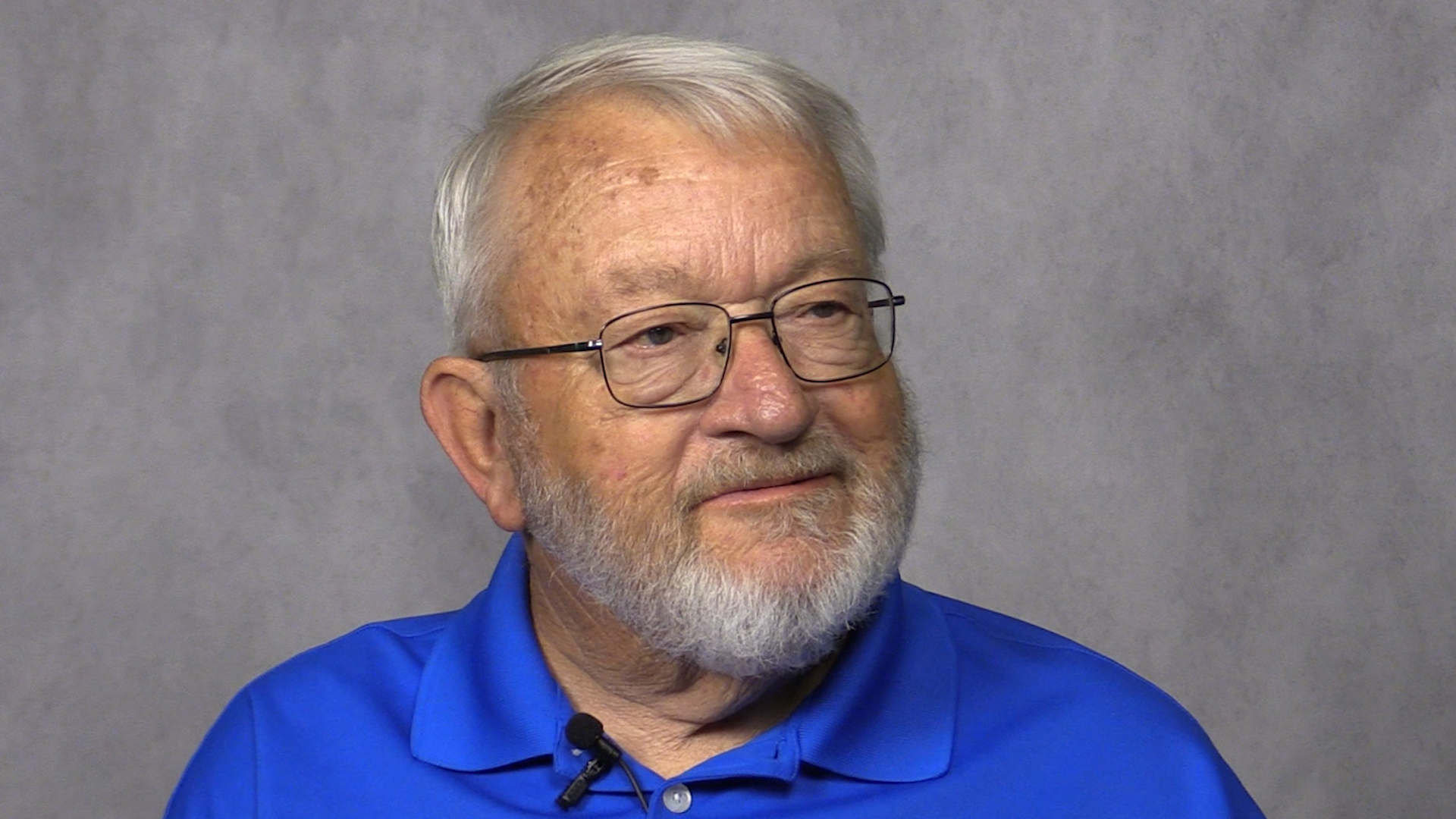
BIO INFO: Jimmy Reynolds was born and raised in Middletown, Delaware as was his wife. He attended Middletown High School from 1st to 12th grade. He played sports during his school years, especially football. He worked for the state of Delaware for 36 years as a Soils Technician and when he retired he worked for a private company for 23 years. He and his wife have two sons who live locally and one granddaughter. He has devoted his life to volunteer work for his community including serving on the Town Council as Vice Mayor.
TOPICS AND SUBJECT MATTER KEYWORDS: Middletown Heritage, Volunteerism, Community, Integration, Education, Social Activities
TO VIEW SUBTITLES, PLEASE SELECT THE CLOSED CAPTIONING (CC) ICON AT THE TOP RIGHT OF THE VIDEO.
Recording Inventory Sheet: Jimmy Reynolds
Digital Collections Sheet: Jimmy Reynolds
Middletown Historical Society
Middletown, Delaware Oral History Series
Speaking of the Past: Conversations
With Long-Term Residents of
Middletown, Delaware, 1900 – Present
Interview with Jimmy Reynolds
April 27, 2026
Middletown Historical Society Oral History Transcript
Jimmy Reynolds – Youtube- 04272026
Interviewer: Patricia L Peirson Maichle
Pat: Good morning.
Jimmy: Good morning.
Pat: How are you today?
Jimmy: Great.
Pat: That’s good. I’m glad. I’m Pat Maichle. I’m a volunteer with the uh Middletown Historical Society and this is Keith Schneider who’s our videographer. And we’re here to for the Historical Society to demonstrate through your memories and experiences the history of Middletown, Delaware. And we’re here at the Appoquinimink Community Library in Middletown, Delaware. So, we’ll get started. Just relax, take it easy, and uh we’ll we’ll search through your memories. First of all, what’s your full name and do you have a nickname?
Jimmy: James Leroy Reynolds and just Jimmy is
Pat: When and where were you born?
Jimmy: Well, I was born in hospital in Wilmington, but I’m a lifelong resident of Middletown.
Pat: How many years?
Jimmy: Uh 1949. I’ll be 77 in July.
Pat: Okay. And how did your family come to live here?
Jimmy: My family uh are mostly all from Maryland and they uh my grandfather grandmother moved over here from Maryland in the ‘20s I think it was. And uh that’s really about as far as I can go back. I mean
Pat: Why did they move here? Do you know?
Jimmy: I probably for work. I’m not sure.
Pat: Okay.
Jimmy: Um, we have no I have no family on the Reynolds side that I know of. My grandfather was adopted by people named Reynolds. So, we don’t really, you know, back in those days, they didn’t keep records, you know, I think. So.
Pat: Okay. Were there other family members living in this area at the time?
Jimmy: Uh, I think my father had a couple uh sisters and other siblings live lived in the area.
Pat: Okay. What was the house that you grew up in like? So, how many rooms did it have? Did it have electricity? Did it have running water?
Jimmy: Yeah, it was a duplex and it had uh three bedrooms, three ba three bathrooms and no, not three bathrooms, excuse me, one bathroom, three living living rooms and a kitchen. And uh so we had running water.
Pat: And telephone. Did you have a telephone?
Jimmy: Yes, we did.
Pat: Okay. You were lucky. What is your earliest childhood memory?
Jimmy: My earliest childhood memory probably just as a six or seven-year-old kid just uh playing with my neighbors, my you know kids that lived down the street from me. And just I was playing ball and and riding bikes around town and uh just you know. Taking my grandparents lived down the street from me. Memories were of course my both my parents worked. My those early memories was my grandmother come coming to our house which was down the street and kind of watching me while my parents worked.
Pat: Okay. You just kind of hinted at this, but what kind of games did you play growing up?
Jimmy: Mostly uh baseball and whiffle ball was was only a couple I was playing. And we played football and just ba basketball when we could get into the armory. That’s where we used to ‘cuz I lived over by the armory. But mostly uh mostly baseball because uh it was funny we would have where I lived on the u west side of town northwest side of town there’d be a group of us boys and Sharonale was just just built and there was a group there and we’d call each other and it’d be us against Sharondale. We play different places. So.
Pat: Okay. What was your favorite thing to do for fun? Like go to the movies, go to the beach or something else.
Jimmy: As a as a child as a before I was a teenager was go to the movies or, you know, play sports. But, uh, and then I got older, it was, you know, go to the beach or, you know, things like that.
Pat: Where’d you go to the movies?
Jimmy: At the Everett.
Pat: That’s what everybody says. Did you have family chores and what were they? And what were your favorite things to do?
Jimmy: Other than my chores, I have no favorite chores I like to do. Um cut the grass and just, you know, take the trash out was about about it. You know, my father was very particular about his grass. So, you know, it was under constant supervision when I was cutting grass. So.
Pat: Did you have a a gas-powered mower or
Jimmy: Yeah. Yeah.
Pat: Okay. What was school like for you as a child? What were your best and worst subjects? And where did you attend school?
Jimmy: Well, I attended to Middle Middletown High School, which was at that time was all grades 1 through 12. Uh, my best subject was probably math, I would think, or history. I love history. So, and that was my younger days. And you know, uh, of course, as I got into high school, it just I had a lot of fun in high school.
Pat: Were you ornery?
Jimmy: Uh, I think so. But I was always I was very most humorous or class clown or whatever you want. So, I had a lot of fun in school.
Pat: That’s good. Did you go to college?
Jimmy: For a very short time.
Pat: At the…Where’d you go?
Jimmy: University of Delaware.
Pat: Do you remember any fads from your youth such as popular hairstyles or clothes?
Jimmy: Well, back in those days, we all had what we call flat tops. I don’t know what they call them now, but you just hair sticking straight up and you know, I mean, that was a thing. And you got used to have this wax that you put on it to make it stick up and stuff. I mean, that’s you know, that was a big fad. Yeah. And I can’t remember. Of course, everybody had to have uh Chuck Taylor Converse sneakers and you know that was a little hard to get. Uh you had to get them in Sadoff’s, you know. But you know, I mean that was the big fad. You had to have Converse and you had to have you know.
Pat: So Okay. What were your favorite songs in music?
Jimmy: Oh jeez. Well, I like the I was I like the the Temptations and and you know Jerry Butler the Iceman and and all those uh groups that were you know Diana Ross and the Supremes you know all those Motown groups. I really I really like that kind of music then.
Pat: Did you go to the dances?
Jimmy: Oh absolutely.
Pat: Where where did they have them when you
Jimmy: Well, they would have them at the gym. But our big thing was when we were teenagers to go to the Etna Fire House in Newark and they had dances up there on Saturday nights and we would all go up there.
Pat: Did you go to Crystal Beach?
Jimmy: Oh yeah, we’d go to Crystal Beach. That was, you know, but that was in the summer mostly in the summertime that we’d go to Crystal, but you know during during the school year we would always go to to Newark.
Pat: Did you have any pets? And if so, what kind? And what were their names?
Jimmy: Never had never had any pets as a as a child. So.
Pat: What was your religion growing up? And what church did you attend?
Jimmy: I went to uh Bethesda with Methodists.
Pat: Where was that at?
Jimmy: Right on Main Street.
Pat: Did you go every week? Did you
Jimmy: For a while. Not. I went more as a teenager than I did as as as a young as a youth. I did I mean I went more as a teenager.
Pat: Do you still go?
Jimmy: No.
Pat: Were you ever mentioned in the newspaper or other publications?
Jimmy: Oh, absolutely.
Pat: Yeah. Tell tell me tell me about that.
Jimmy: Well, I was mentioned in the newspaper for a few things; for uh for playing football at Middletown on the football team had mentioned this. And, of course, all my time on council whenever there would be uh some kind of uh issues or or anything people would interview you know we would be interviewed and ask our opinions on things. And uh a couple times I think just pictures or something of I was I’ve been a volunteer I was a volunteer fireman. So, you know, if there was a fire, they’d sometimes put pictures in there just locally, you know. So.
Pat: Tell tell me about the your service on the council, what your role was and how long you
Jimmy: Well, I first served uh in the in ‘72. I served two terms in ‘72. At that time, I was the youngest elected official in the state of Delaware. I was like 24 years old or something. And then I ran again. I came back again in 1990 and I served there for uh 34 years. Uh 30 of them uh I was appointed Vice Mayor and I’ve always been uh in charge of what that time it was uh Streets Department but now it’s called m Municipal Services.
Pat: So, who were your friends when you were growing up?
Jimmy: My friends were guys like uh as a as a as a child. It was like Chucky, guy named Chucky Grewell, guy named Pee-Wee Price, and all the guys that lived in my neighborhood. We were all the the the Burris boys, Charlie Burris, Danny Burris, and Dave Burris. And then in my high school years, I became, you know, from probably long before my freshman year, but you know, Kenny Branner and I were always good friends at brother Johnny. And uh my probably my best friend in high school was a guy named John Henderson who didn’t grow up in Middletown, but we became friends. And and then uh uh a guy named uh Ernest Saunders, Hard Rock Saunders, uh who I’ve known him from Little League all the way up and we were very good friends.
Pat: Okay. Are you still friends with them? I know some of them you are.
Jimmy: John has passed away. Hard Rock has passed away, you know, and some of them you just don’t see anymore, but uh Kenny Branner.
Pat: And I still very close and you know, and you served on the council together.
Jimmy: Yes.
Pat: Yeah. What world events had the most impact on you while you were growing up? And did any of them personally affect your family?
Jimmy: Well, I think at time in my life that the most impact on me was when JFK was assassinated. Uh I was in ninth grade I think it was and I can remember that that day being in class when they came and told us that the president had been assassinated. So, uh it didn’t really have an effect uh family wise or anything like that but it was just uh it showed how vulnerable some people are. Uh we can you know you never think about you you’ve always heard of assassinations when you were a kid of Lincoln being assassinated stuff but you never thought that my president is not going to be assassinated. So, that was you know. And then later on as a kid probably that’s the only uh national event that really you know draw my attention.
Pat: Did any of your family serve in the wars?
Jimmy: Yes. Uh my my uncle did. My father didn’t uh my father broke his back when he was very young. So, he couldn’t couldn’t serve. But he uh you know. My my the uncle that I’m named after served in the war.
Pat: In which one?
Jimmy: World War II.
Pat: Did anybody serve in Vietnam?
Jimmy: No.
Pat: No. How are the holidays like birthdays, Christmas, Easter, whatever your family celebrates celebrated in your family? And do you have special traditions around those holidays?
Jimmy: Well, Thanksgiving we always had uh was always like every place else around here traditional Thanksgiving dinner where you know my sisters and their husbands and kids and and and later on their kids’ kids uh we would have Thanksgiving dinner at my parents house. But uh while dinner was being prepared all the guys would go out in the street and we play touch football. I mean that was a family that we did it every year even as we getting older. Finally, it was just hey I’m too old to do this you guys go out and play it I’ll I’ll watch it. But that was a big tradition. And Christmas was I had a lot of relatives my father came from a big family and we had quite a few relatives that lived in Wilmington at that time and that was a big thing Christmas to New Year’s week we get in the car we go visit this aunt and uncle one night and then we go to the ne next one the next night so that was a big big tradition that we had. Easter was no big tradition. Just, you know, it was just got candy. That was it. So. So.
Pat: Do you still do those things?
Jimmy: We don’t do the dinners anymore. Just got well got too big and it got, you know, we all got older and my parents passed away. So, we we don’t do that. And same thing with Christmas. We we don’t do a lot of visiting because now my my children come to come to see us at Christmas time. So.
Pat: Do they live close?
Jimmy: Uh, I have one son that lives right here in town and the other one lives in Smyrna down in Garrison’s Lake.
Pat: Okay. Not too far.
Jimmy: No.
Pat: How is the world different today from what it was like when you were a child in any respect?
Jimmy: I think the word that comes to mind to me is it’s it was friendlier when I was when I was growing up. I mean that was I mean friends with so many different people and uh we didn’t uh I mean it was you knew everybody uh in town and of course that comes with the growth that you don’t know everybody but uh it was just a friendlier and a better life I you know. I grew up in the ‘60s I’m much you know and life was a lot freer and a lot easier back back then so.
Pat: than it is today.
Jimmy: Yes, absolutely.
Pat: What do you know about your family’s surname? You kind of said that earlier, but do you want to say anything about that?
Jimmy: Not really. Like I said, I you know, I I really don’t know what our family name is. Uh like I said, from all accounts that I’ve ever heard, uh you know, my grandfather was adopted or taken in by a family named Reynolds. That’s that’s as far back on that side of.
Pat: Nobody ever talked about it?
Jimmy: No. Uh my grandfather was I was probably only five or six when he passed away. So, I never really talked to him. And my my grandmother now her family uh was from around here. I mean uh she had family around here but I don’t you know they she was a Burris with the Dicky Burris and all that bunch and that was all. So Dicky Burris’ father and my grandmother were brother and sisters.
Pat: Okay.
Jimmy: So, and then my mother’s side. I really don’t know much about them either. I mean they they were much older and we didn’t see them much. So
Pat: Okay. Is well, you might not know this either. Excuse me. Is there a naming tradition in your family such as always giving the firstborn son the name of his paternal grandfather?
Jimmy: No. No, not really. My my father’s my father’s name was everybody called him Tatty, but his name was Harmanson. So, I wasn’t going to hang that on anybody.
Pat: And that was his first name?
Jimmy: Harmanson. So So, I wasn’t going to hang that on anybody. And I’m sure he didn’t want me to either.
Pat: So, was that the name he was born with or did they?
Jimmy: Yes. Yes.
Pat: I’ve not heard that one before.
Jimmy: Some sometimes it was Harmanson James and then you got other documents that we found it was James Harmonson. So, we don’t know if that Harmanson was a a family name or somebody from his from his past or from the family that that adopted him, but that’s never heard that name before. Harmanson. there.
Pat: Considering, excuse me, considering that we’re celebrating the 250th anniversary of our country this year, what stories have come down to you about your parents, grandparents, more distant ancestors and how they served our country?
Jimmy: Not really that many stories. I I mean my father wasn’t one to really dwell on the past or you know. Uh I I did have we had one I had one he had one sister that uh we always said she she knew where where all the bodies were buried. I mean I mean she had all the the gossip and stuff and she would you know if you talk about Aunt so and so she’d go well let me tell you about her. But that you know that’s about it. I mean it was no, you know.
Pat: She didn’t write it down?
Jimmy: No, no, back there, they didn’t write it down. So, but I did have my mother had a brother who at one time years and years ago, I guess in the ‘30s was a middle town police officer. So.
Pat: He must have been the only one.
Jimmy: So, probably was I mean, uh I think it might have been two like part-time guys or something and their last name was Connors. So.
Pat: Okay. That’s interesting. Are there any stories? Well, kind of like him. Are there any stories about famous or infamous relatives in your family?
Jimmy: Not really.
Pat: Nobody crossed the line?
Jimmy: No, not that I know of. I mean
Pat: okay.
Jimmy: I can this part I can remember seeing a picture of my uncle my father’s brother on a horse and I said you know why would he have a horse and he goes “well he was a trustee in in the workhouse”. Was? I said “he was in jail?” And he said “yeah they for drunkenness one time he got got sent to jail but he was a trustee and they took a picture of I guess watching over everybody else working.” That’s about the only story.
Pat: Did we have workhouses around here?
Jimmy: That’s I guess so. Back in those days. I I don’t really know. I mean, it was that’s what that’s what they always said.
Pat: Maybe that’s just what they called it.
Jimmy: Yeah.
Pat: Are there any special heirlooms, photos, Bibles, or other memorabilia that have been passed down in your family?
Jimmy: Just I have a great picture of my my grandfather, my grandfather Reynolds uh that my mother made sure I got. Was, I mean just a great picture of him standing up. Uh I can never remember seeing my grandfather walk. He was in a wheelchair when I was a kid and uh but uh just picture him standing up in front of all these old cars. I guess it must have been at a family function or something that somebody took and so. And just little knickknacks and stuff that my mother had that we kept, you know. Uh uh and then some of us some of the stuff uh like the Bibles and things like that. The Bible uh I think my sisters got that. My neighbor was kind of like take what you want and then you know go from there. So.
Pat: So, she has the Bible.
Jimmy: I somebody has it. Can I tell you something?
Pat: Yes, you can.
Jimmy: My father probably never looked at a Bible held a Bible in his life. One time he was he was going through the desk looking for something and picked the Bible up. Well, money fell out of it. That’s where my mother would hide her mad money. So, So, and money fell out. I think after that I think about every week my father opened the Bible to see if there’s any money in there. So.
Pat: That’s funny. That is funny. Your mother was smart grandmother. Mother.
Jimmy: Yeah.
Pat: What was the full name of your what is the full name of your spouse? And what is she like?
Jimmy: My full name, her full name is Yvonne Johnson Reynolds. Uh like what do you mean? Like what she like?
Pat: Well, more than just What color is her hair? Like um did she work?
Jimmy: Yeah, she worked.
Pat: Did she get awards? Did she volunteer?
Jimmy: She went uh she went to Goldie Beacom. When she graduated from there, she went to work for Mrs. Richard Dupont at Woodstock Farm and served as her secretary. And then she worked there for even after Mrs. Dupont passed away. She worked there for 50 I think 52 years. She worked there. So, she recently retired last year and uh she’s
Pat: Did she volunteer like a lot of people in town volunteer?
Jimmy: She she was active in uh with Paws for Life and then the horse rescue over in over Maryland. And, of course, she was always involved when I was coaching little league and stuff like that. But, you know.
Pat: How did you meet?
Jimmy: Uh I just always knew her family. She was three years four years younger than me and I just you know I mean we knew each other and we just started dating.
Pat: What did you do on dates?
Jimmy: Go to the movies.
Pat: Where did you go to the movies?
Jimmy: What do you mean when
Pat: I mean where did you go? Was it the Everett?
Jimmy: Yes.
Pat: Yeah.
Jimmy: The Everett. Sometimes we would go to Newark, you know, to the old cinema center or something, but you know.
Pat: How about the restaurants? Did you go to dinner? Tell me about
Jimmy: No, not then. We were young. Very young. I mean, we went to a lot of the we went to the dances that they had. You know, they still had used to be so different organizations like the Moose Lodge or somebody would have dances. We’d go to those. So, never very rarely we went out to dinner. We didn’t, you know, we young didn’t have any money. I h
Pat: How long did you date before you decided to get married?
Jimmy: Probably about six months.
Pat: Wow, that was quick.
Jimmy: Yeah.
Pat: Well, you knew each other anyway.
Jimmy: Yeah.
Pat: And when you got married, where did you get married? And what was it a big thing?
Jimmy: We got married. No, it wasn’t a big thing. We got married in Elkton. It was just one of those things. Let’s go. Let’s go get married because uh. And we didn’t go on a honeymoon because I had to coach a little league game the next day. So, uh we went to Elkton, got married, the next morning I got up and coached the little league game.
Pat: I don’t know if that’s commitment or craziness.
Jimmy: It’s commitment on her part. Yeah.
Pat: Okay. I did some of these. Um what do you admire most about her?
Jimmy: Her patience, you know. Uh she’s been very patient with all the things I’ve been involved with, you know, to say, you know, I won’t be home for dinner tonight or we could have dinner late or, you know. Because I’ve got a either at one time when we first got married, it was I was real involved in the fire company, was vice president there for like nine years. And I was always been coaching little league with little league football and then with the town and now I’m involved with the senior center on the board of the senior center. So, you know, she she’s very patient when it comes to that. I mean. So.
Pat: How many years have you been married?
Jimmy: We’ve been married 53 years. Be 53 years.
Pat: That’s pretty good. Yeah, pretty good. Especially these days. What did your family enjoy doing together? You and your wife and your kids.
Jimmy: We well we now our son is a a football coach at Middletown. So, we enjoy going to uh we go to all the football games whether they’re playing in Ohio or wherever they’re playing. We enjoy that and makes it we we make a long weekend out of it or something like that. We enjoy that. And uh and my two sons and I, we we enjoy as a family. Our big tradition is Super Bowl Sunday. They come around and everybody cooks and uh that and uh you know. We enjoy going and watching our granddaughter play volleyball and play basketball and stuff. And uh you know you know now that we’re older and I you know I played softball for many many years and you know she was patient about that ‘cuz we travel all over playing softball and now we just enjoy watching the granddaughter do things. So.
Pat: Tell me a little bit about the fire hall. I know it’s moved uh several times in the town.
Jimmy: Right.
Pat: Do you know the history of that? I’m sure you do.
Jimmy: Well, originally the fire house was on Lake Street on uh East Lake Street on the corner of uh Cox and Lake there where the old water plant is the stand pipe there. That was the original uh fire house there. And then they moved up to on Main Street on Broad Main Street. Broad Street. And uh then moved to where they are now where which was where the Little League Diamond was when when I played and when you when your son played and uh but that was always owned by the Fire Company. That was the old uh they had a fair every year, a carnival carnival grounds. And then when it stopped having carnivals, you know, they gave out to little league and with the idea that they would always own that. And then, so.
Pat: Did they own that whole block there?
Jimmy: They owned well from the alley behind there what they call I don’t know what that alley is called but where the telephone building is.
Pat: Yeah.
Jimmy: They own that whole corner that was all all the fairgrounds which I can remember going there to the you know the carnival grounds as a kid. I mean that was so I think they built that little league field and in the ‘50 ‘53 or something like that. So, but uh and then you know the fire company just kind of outgrew the the building where they were and it was it kind of congested there anymore getting in and out there but you know that was an old building so but had a lot of good memories there. Learned a lot.
Pat: Being a member.
Jimmy: Yes.
Pat: What was your profession and how did you choose it?
Jimmy: Well, my profession I was what they call a Soils Technician with DelDot Materials and Research and I didn’t really choose it. I just needed a job and applied for a job and uh by the grace of God and Sherman Tribett I got a I got a job with the state and I stayed there for uh 30 36 years. M. So.
Pat: And then you got another job.
Jimmy: And then I was I was wasn’t even planning on retiring and then I was approached by uh the company I work for now about coming to work for them and I was like hey I can retire tomorrow and you know so went there and been here for 20 23 years almost 23 years. So.
Pat: If you could have had any other profession what would it have been and why wasn’t it your first choice?
Jimmy: I would have been a teacher.
Pat: Why didn’t you pursue that?
Jimmy: Well, I didn’t have the opportunity uh to uh to go to school. Uh I I’ve I was married before. I was married right out of high school. Got married and uh and uh you know at that time I was young and and struggling trying to make a living and raising a son. And then you know uh after that we were only married a couple years and I got divorced and you know just trying to get my feet back on the ground. So, but that yeah I would have definitely been a teacher.
Pat: That’s interesting. What a change that would have been. What accomplishments are you the most proud of? All of the things you have done in your life, which are many.
Jimmy: My two sons.
Pat: Good answer.
Jimmy: That’s, you know, that’s the most to me. I got two great kids, so.
Pat: Okay. You’ll know a lot about this. How has the recent development affected the area of Middletown?
Jimmy: Well, of course, most people say it’s it’s uh it’s too populated, too uh too confusing, too congested. But, you know, it’s affected Middletown that uh the town itself has been able to grow and build an infrastructure that they can handle everything. People don’t think they can, but they can. And if you realize town of Middletown has not raised taxes, property taxes, uh, in 40 years, something. I mean, the tax rate as of last year was lower than it was or the same as it was in 1972. And where in the United States or anywhere that that happens. And it’s because people don’t realize that all the developments come in, we make them or the town makes them. I’m not we anymore. Makes them uh you know, they pay for the improvements. Say, you know, you want to come to us and you build you build to come to us or you you pay to come to us. You pay for to hook to our our our sewer lines, our water lines. Uh you know, and you contribute to uh the improvements in the road say on 301 same way on 299. So, I mean, it’s, you know, it’s, you know. I always said that, uh, you know, people think that we shouldn’t, we shouldn’t have annexed all those properties, but, uh. I always thought that Kenny and I had a a a vision uh, at that time when we started annexing, like there’s an old thing in the Butch Cassidy and Sundance Kid movie where he says, you know, I’ve got vision and the rest of the world wears bifocals. Well, to to me it was like if we don’t annex this property, then we’re going to end up like Newark and Elsmere are here. They didn’t annex in between. So, what do they have? They have the Kirkwood Highway and neither one of those towns have any say on what’s going on before you get to them. Or or around there. Where Middletown has has to say, you know, they can control uh.
Pat: How much have they annexed over the years?
Jimmy: Oh my gosh.
Pat: From when, well, I mean I you know because I the reason I ask is we’ve had a number of people talk about the they obviously grew up here and how small it was and they could say this was the beginning of town and that’s the other side of town and a number of them have said that at this point in time they can’t even tell you where the the ends of the town.
Jimmy: Well, what we used to consider that what I used to consider that was uh Frogtown Crossing railroad tracks and then uh right before uh St. Ann’s Cemetery there was, you know, uh that way. And you got going towards Odessa going east, uh you had the the the Cleaver farm or Fennemore Farm, which was, you know, right almost where we said. This was the Green property and then you had the Fenimore farm or Cleaver Farm. Go. That was kind of where the town never stopped. And to the west, uh, where the old road, the old, uh, Main Street came to the old 301, which was the Ukele property. That’s I mean, that’s I mean, I don’t know the distance or anything, but you know, we used to always say that it was always my thing. It was Middletown was a mile long, mile east and west, a mile north and south, but you know, that’s what we’ve always told.
Pat: So, you don’t know how many or you haven’t. I don’t know if there’s documentation of how big it is now.
Jimmy: Oh, yeah. There’s a documentation how many acres it is, but I have no no clue.
Pat: Um, how has the community changed? So, culturally, you know, the places we can go. Well, I think access
Jimmy: You know, I I think there’s uh there’s more there’s more things available to the to the people, you know. Uh you know, people always say, “Well, it took me 15 minutes to get from my house to Walmart.” Well, my thing is, well, how long did it take you to go to Dover Walmart? You know, uh it’s convenient. I I love it that it’s uh that you can shop anywhere. I kind of missed the small stores some of them, you know, but uh and that’s changed. I mean, we have when I was a kid, we had they only had the uh the Acme, which was on Pennington Street, and the old A & P, which was right uptown. That that was that was it. And uh you know, you you had a couple local stores where you could buy your shoes like you had Berkman’s and you had Sadoff’s and and then you had Leo’s Variety Store and you know, all those things that that’s that’s changed. And uh it’s like I say, it’s not it’s not as friendly now as it was. Uh you go to used to be when I would go to the grocery store, uh I you know, my wife always said that I’d be a half hour longer than usual because I’d be talking to everybody. Now I’m like I don’t know a whole lot of the people there. But you know, and when you know, you probably know yourself, when when used to be. So, when you go to the Acme, you you knew all the cashiers, you knew the guys cutting the meat, you knew the guys doing the produce, you knew them all by name, you know, I mean, and uh now you you don’t have that. I mean, still there’s some local people that don’t work everybody was a different atmosphere. So, but I just I don’t know if people’s not as friendly. It’s people just aren’t familiar with anybody that you know they we’ve gotten so many people move in here, you know, uh that uh you know, from out of state or not from around and they just they only know the people in their development or something. They don’t get out, you know. I mean, that’s that’s the biggest change that I’ve seen. So.
Pat: What do you want people to know the most about yourself, your family, your business, if you have one? What do you want people to remember about you and your family?
Jimmy: Well, I would like people to know that uh I’ve kind of I don’t want to pat myself. I’ve kind of dedicated my life to volunteering in so many things and you know uh you know people like being on the council. I don’t see that as a political thing. I see that as you know a um a servant a servant to to the people of the town. And uh uh I would just like people to to remember you know what I’ve tried to give back to the town. My support for all the organizations and uh and just that uh you know I know I always say and I’m not tooting anybody’s horn but I’ve always said there’s only one person that I know loves Middletown more than me and that’s Kenny Branner.
Pat: I knew you were going to say that. I don’t know. There’s lots of people that love it.
Jimmy: Yeah. Oh, there is a lot of people love it, but I don’t think there’s anybody that loves it the tradition and the town itself and everything that goes back to, you know, when we were kids to right now to to him and I.
Pat: What do you want people to know the most about Middletown’s past?
Jimmy: Just that we’re a we’re a growing town. We’re a community uh in the past that stuck together. I mean, I can remember uh when when I was in a high school playing football, the town would close down on Friday nights. I mean, that was the support that that we had. And I still see that now when we travel to Ohio to watch football games and stuff. I mean, we have more fans in some of these big schools that we’re playing in out. They other teams can’t believe the way we travel. And uh you know we’ll go places and we’ll fill we’ll fill hotels up because you know and and most and the majority of these people that have children playing now they’re not you know they’re not born and raised Middletown people. They moved here for you know whether for jobs or for for education in the Appoquinimink School District or you know I mean that’s that’s a good thing about Middletown. That’s what I love about it. So, that you know we’re still kind of family thing and even though we might not know you get to know people through little league through you know sports and stuff like that and that’s you know I think I kind of got off the question.
Pat: No that’s fine. It’s fine. So that’s all the questions I have. Excuse me. Do you have anything you want to add? Any other
Jimmy: Yeah, I was thinking about this.
Pat: Tell us. Tell us.
Jimmy: When, like I said, I I grew up and was a teenager in the ‘60s and my going into my senior year was the first, we were the first our class, graduating class of ‘67. We were the first class that was fully integrated. That’s when Redding shut down and came over. And I’ve always said that what helped we I thought we had a great transition because what helped was especially the the boys. We knew each other through little league. We grew up with those guys since we were 9 years old. So, we knew so it was a pretty good transition. I’m sure it was hard on the girls coming over but you know and some people had a hard time, definitely. You’ve got to remember, a teacher of color, we never had a black teacher, Mr. Frisbee came came over. Everybody loved loved that guy. It’s tremendous. And uh just I think I always said like in 1966, you know, when that year started, you know, there was turmoil all over the country, but we never had any problems like I mean, you know, everybody had teenagers have skirmishes and stuff like that, but we got along fine. And you know uh and I think between Jim Johnson who was a Superintendent and uh Dr. Waters from Redding they helped merge it together. And you know, I mean they did you know I think it was a great smooth transition. We had we had a lot of teachers at that time that were not a whole lot but some were from from West Virginia and North Carolina and stuff. Uh they had never they had never taught or uh even coached a a black a black and but that transition was great. And they we had some some young guys my age that uh you know uh Hard Rock Saunders kind of made it you know he kept he kept the rein on the guys and you know and uh but it was just between the school board, Mr. Fenimore, and Mr. Wading, them and Jim Johnson as Superintendent. And then you had like I said Dr. Waters and Otis Jefferson, you know, from from the Redding side. And it was it was a great I mean, it was smooth. I mean, it was problems, but not like not like it was going all over the place, all over this nation. So, and I I thought it was it was great relationships. I thought. And some that I still have today with, you know, some of those guys. I see them, you know, but most of the most of the guys were bonded through football. I mean at that time and
Pat: So the sports the sports in town were more um accepting of interracial players.
Jimmy: Yeah. I I never looked at it as, you know, I mean I I just wanted to be on a team with the best players. Well, I don’t care who they were, what they were, or where they came from, you know, and that’s and sports as far as the boys go, you know. Sports got us together and helped that transition, I think. So.
Pat: I’m glad you talked about that. A number, everybody actually, has talked about it and their experience, their perspective on on how it went and um pretty much everybody has said the same.
Jimmy: Yeah. I mean, I’m sure that many didn’t have the uh the close relationship that that that I did and my class did. I mean, we’re uh we’re just, you know, my wife says all the time she never seen him. We uh we have a reunion every five years and you know, we’re the most reunion bunch she ever saw. And that, you know, we were a tight nip and knit and still are. But uh you know I’m sure that uh you know some people had some problems with it but I I thought it was you know really good. I mean you know plus you had not only teachers that’s deseg you had guys like uh uh the custodial. You had Mr. Norman Todd who my father I knew all my life. My father him a good friend and it would be like he’d see you messing up and it wouldn’t be like you know I’m not going down and tell Mr. Meredith or or Mr. Johnson. You I’m going to tell you father, you know. And that’s the way. You know and everybody knew him and and uh and Luther Walker I mean they were we knew we knew those people we knew that you know they were going to they were going to put the hammer down on us whether we were black, white, green or yellow. I mean that’s the way it was. I mean, he respected those guys and uh so they they they brought.
Pat: A couple they’re well-known names
Jimmy: Yeah.
Pat: in the history of Middletown. So, so I just uh have one more question that I normally don’t ask, but you’re the, I think, you’re the only person we’ve interviewed who hasn’t mentioned farming in some regard. I mean, a lot of the either the families were farmers or the kids worked on the farms like in the summertime.
Jimmy: Well, I I worked on that when we were teenagers. That was the only work you you could get. I mean, we would go out and bale hay for some somebody, you know, we’d pick up the hay. And and uh uh one summer I worked for Green Giant uh when they were big in town. And uh uh they had some experimental crops around over in Maryland and stuff and it would be my job to go over there and you know run a roto tiller there and all. But I mean and we we’d work on uh uh potato farms when they were rating potatoes. I mean that was the only job that teenage boys could could really get back in. I mean I mean I wasn’t a farmer and we had even though other schools always called us farmers said we were all farmers but you know we weren’t. That there wasn’t that many farmers on a football team or playing sports but I mean the farmers we had were all family farmers. I mean they were people that had been farming for generations. So. But.
Pat: Yeah, that’s what we used to be named uh when the when the football team traveled in Delaware, like to go play Sally’s or go play wherever they played. That’s
Jimmy: Well, here here’s how that got started. I’ll tell you when my senior year was the first year we played Sally’s, right? And and we played them in Middletown. We when we walk from the gym going out to the out to the field, there’s all these Sally’s people standing there and they’re ringing bells and they’re singing Farmer in the Dell. Farmer in the Dell. So, and that’s how really the cowbells got started that that they have Middletown games, now. ‘Cuz later the next couple years people were like, well, they say we’re farmers and we’ll start bringing cowbells. And that’s exactly how it started. People have a lot of different versions of it, but I know I was there. I know exactly what. But I can remember you know and we luckily we silenced those bells that night but you know that was a big thing every we were the farmers and you know and uh you know one time people say oh it’s the farmers versus the Catholics I mean that was the big thing they used to say all the time too. But.
Pat: But, it was in a derogatory sense at least that was my perception.
Jimmy: Yeah. yeah.
Pat: It was it was it was looking down on us as farmers.
Jimmy: Even though our area was feeding their. But yeah.
Pat: So, um that has changed a lot.
Jimmy: Oh, absolutely. Just the farming industry.
Pat: What are your thoughts on that?
Jimmy: Well, you know, people complain about uh the building developments here and there and uh and farmers selling. You know, farmers, they struggle, you know, sometimes. And and if you farmed out all your life, my father-in-law owned a farm up above the canal and uh years later, he sold it and uh well, after he passed away, his wife sold it, but he sold it to a developer. And but they’ve worked that farm all their life. And if they got a chance to make some money and retire or. You know there’s very few that goes that keeps a you know you got you got the Emersons that are what four or five generations and you got the Clays which the same I mean there you know but very few of them are left around here you know and uh but I have no problem. You know if if you don’t want that farmer to sell his property and have a development on there then you buy it. I mean, if if you lived in town and wanted to sell your house, nobody’s going to come to you and say, “Oh, you’re bringing new you’re bringing strangers in town here, uh, you know, we don’t want you to sell your house.” Well, buy it. You know, that farmer has the right to sell.
Pat: Okay.
Jimmy: That’s my view on.
Pat: But it just has changed the culture. That’s why.
Jimmy: Oh, it definitely it definitely has. I mean, well, farming’s a lot different now. I mean, you look around, you never I don’t ever remember seeing all these irrigation pipes and all these tractors that are so big and you know, I mean, just, you know, I mean, it’s it’s changed, but everything changes and gets better. New technology. So. But.
Pat: Is there anything else you want to tell us? Any stories? They make the the video much richer when you
Jimmy: Yeah, I can. Well, we talked about the change downtown. I mean, I want when I was a kid, you could go uh to uh like I said, Leo’s Variety Store. You go to Burkeman and get that penny candy. And then there was a guy had a little uh like a news stand, Mr. Price. You could go in there and buy, you know, uh buy you just to go uptown. You could walk around uptown, ride your bike uptown. You didn’t have to worry about, you know, your your parents didn’t worry about your uh getting lost or anything. You just you went outside and you played and and you went uptown and usually when the street lights were on you had to be home. Or you know we we always we had like a little field where textile mill was at one time which is where the armory is now or was there was a field there we’d play there and I only lived two blocks from there. And everything was I could play there all day long and then, my father could whistle louder than anybody I’ve ever seen, and when I heard him whistle that meant it was time to go home, you know, and so did everybody else that was was with us. And uh you know, but it was, you know, it was it was a lot it was a lot laid back. I mean, you know, uh I can remember you you go to the barber shop at that time. You go to Chopper Charlie and I’ve been in there a couple times as I was older and people would say, “How long you been cutting hair, Charlie?” And Charlie say, he’d ask me, said, “Jimmy, how old are you?” And I’d say, you know, say 56. He go “50 years”. He said, “I remember he was first grade. I I cut his hair when he was six years old.” I mean, that’s I mean, you know, you you knew everybody, you know, that was good. You know, to go to go to the old Buckworth’s store and, you know, you could go in there and say, “you know, I got a my wife bought some paint last year, but I can’t remember what kind”, you know, the Buckworth’s “Oh, it was this kind” or you know, and if you needed a another bolt, you could just buy one. Now you got to buy a whole pack of them. And stuff and it was, you know, and you you had a couple stores. You had Pleasanton stores and a Hopkins store uptown that sold clothes and stuff and and all was just it was different. , I miss it, but I don’t miss. I I welcome all the all the the growth to some extent. You know. Everybody say we have too many pizza shops and sub shops, but you know, I I think uh not not a we have as many nail salons as we do. You you ride around and look at that. I mean, so it’s not just, you know, sub shops and pizza shops. It’s and we’ve gotten some some really nice stores around. I mean, it’s nice to to be able to go to different restaurants and stuff and and to go to a Target and go to, you know, you know. We thought we were really something when we got Walmart. I mean, that was like we’re big time now. We got a Walmart. So. So.
Pat: Is there anything else?
Jimmy: I don’t think I can’t think of anything. I just, you know, uh,
Pat: Rolling down memory lane.
Jimmy: Yeah, I just, you know, I I I’ve had a great life in Middletown and uh you know, from uh from my youth and little league football and I mean little league baseball and and everything and uh you know. Of course, you know, people a lot of people won’t talk about it, but you know, uh Middletown football was a big part of my life and it still is, you know. And and a lot of us guys that grew up and you know that that is a a part of our life, you know. So, it taught me how to be a winner.Pat: So, well, thank you very much for being part of this. I really do appreciate what you’ve done and I know that the Historical Society will as well.