2026.005.004 David and Alison Matsen
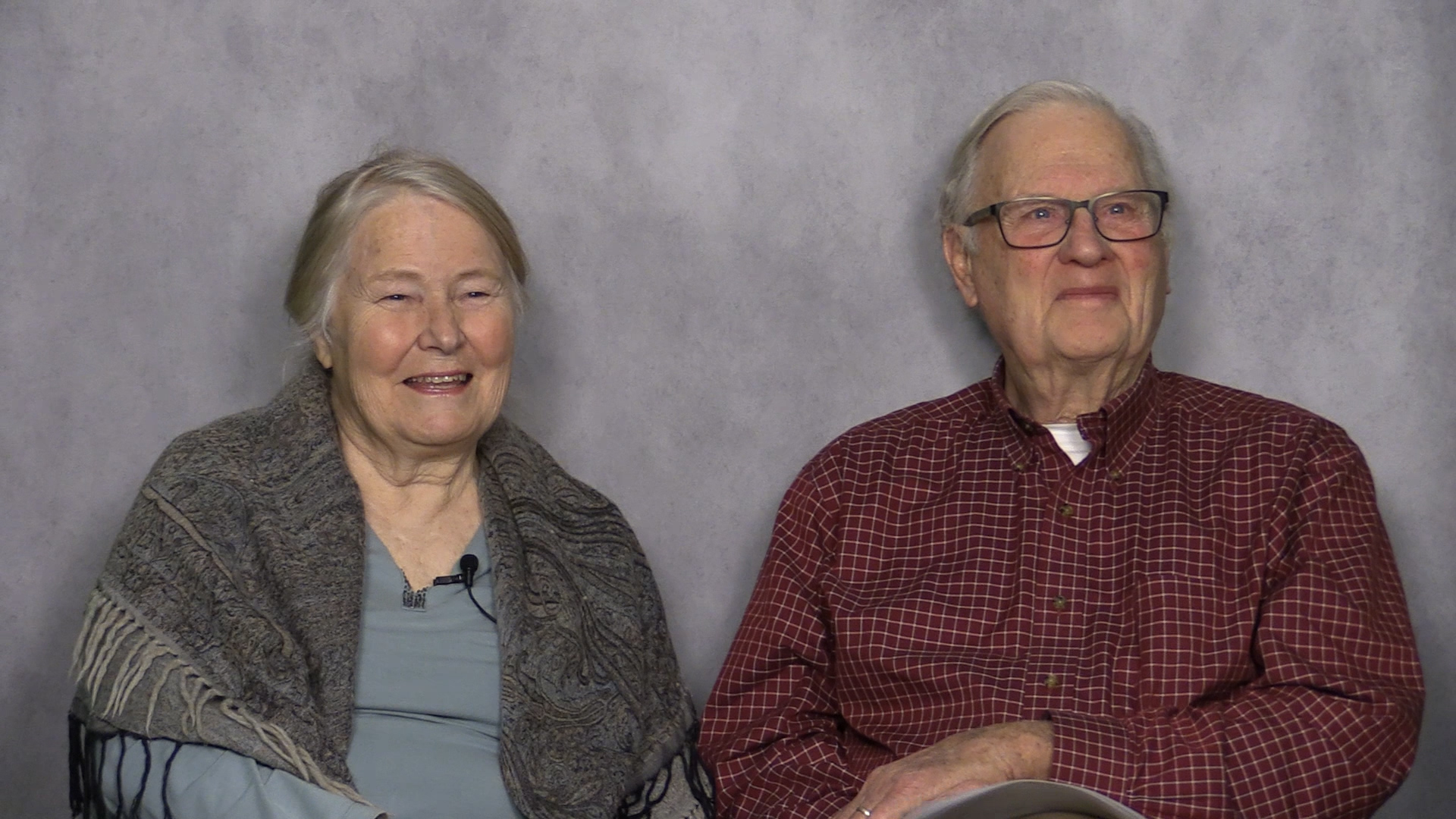
BIO INFO: David and Alison moved to Middletown in the 1970s and raised their two daughters here. They have had three homes and preserved two of them for historical reasons. Alison was a Teacher in Middletown as well as at the University of Delaware and David worked for the Department of Transportation as an Engineer. They volunteer in the community and are active in their Presbyterian Church. Their ancestors extend back to the 1600s and 1700s in America.
TOPICS AND SUBJECT MATTER KEYWORDS: Genealogy, Family Heritage, Education, Historical Preservation, Religion, Social Activities
TO VIEW SUBTITLES, PLEASE SELECT THE CLOSED CAPTIONING (CC) ICON AT THE TOP RIGHT OF THE VIDEO.
Recording Inventory Sheet: David and Alison Matsen
Digital Collections Sheet: David and Alison Matsen
Middletown Historical Society
Middletown, Delaware
Speaking of the Past: Conversations
With Long-Term Residents of
Middletown, Delaware, 1900 – Present
Interview with David and Alison Matsen
February 11, 2026
Middletown Historical Society Transcript
Alison and David Matsen – Youtube – 02112026
Interviewer: Patricia L Maichle
Pat: Good morning. How are you?
Alison and Dave: Just fine. Just fine.
Pat: I’m Pat Maichle. I’m a volunteer with the Middletown Historical Society and I’m here with Keith um Schneider who is our videographer and we are uh coming from the Appoquinimink Community Library in Middletown, Delaware. We’re here to talk about the change in Middletown over the years as you’ve experienced it and um find out some information about you and your families. So, I’m here with Alison and Dave Matsen, and they’re going to interview together. So, we’ll get started. Each of you, what is your full name and do you have a nickname?
Alison: Okay. I’m Alison Keeney Matsen and No, I just go by Alison.
Dave: And I’m David Whit Matsen and I go by either David or Dave.
Pat: Okay. When and where were you born?
Alison: I was born in 1949 in Passaic County in Patterson, New Jersey and then I grew up in uh Bergen County until I was 10 and then moved to Delaware.
Dave: I was born in uh Wilmington in the Wilmington General Hospital on Washington Street July 10th, 1938. And uh we lived in a suburb well initially in Wilmington itself on Getty Street and then moved uh to a development on Belleview Road in near Belfont and uh then when I was about 11, we moved to Chester County, Pennsylvania to a farm and finally I moved back to Delaware with Alison and uh we’ve lived here in Middletown for 53 or four years
Alison: since 1972.
Pat: Okay. And how did your families come to live here? Why did you come here?
Alison: Our parents went to the same church in in Newark, Delaware, the Unitarian Church in the Unitarian Fellowship in Newark, Delaware. And uh so we got to know each other through church activities up in Newark.
Pat: That’s why you moved.
Dave: Well, I think the reason we moved was I was working for the Department of Transportation in Dover and Alison was teaching at the time in Newark at the University of Delaware. So, uh, we were looking for a place which split the commuting distance for both of us and, uh, we settled on Middletown.
Pat: Were there other family members that came to the area or was it just you, your immediate family?
Alison: Uh, just our immediate family.
Pat: No one else lives around. Okay.
Alison: Well, and now our three daughters all live in New Castle County, and one of our daughters lives on East Cochran Street in in Middletown.
Pat: What was your house, your original house here? How what was it like? Like how many rooms did you have electricity? Did you have running water?
Alison: When we moved here in 1972, we lived at 309 North Broad Street, which was Bertha Allen’s uh old house, and it’s now a strip shopping mall that the a developer bought up all of the houses on the 300 block of uh North Broad Street. It’s now where Pat’s Pizza is and uh the Chinese takeout uh place is. But um yeah.
Dave: The house we really loved the house and spent uh hours and hours uh fixing it up, rewiring.
Alison: We added a bathroom downstairs.
Dave: Nice features like a little uh entryway which had red and blue glass uh etched windows.
Alison: I I don’t even remember. I mean, it was great for keeping out the cold. It was unheated, but it like when you go into stores now where they might have a door closing behind you and then a door opening in front of you to keep the keep the cold air out. Had nice plaster work in the ceiling on the um in the uh front living room in the parlor. We did add a downstairs bathroom and um but it was darling. We had uh three bedrooms upstairs um and basically three rooms downstairs, the parlor and then the dining room and the kitchen. And then a back porch, sort of a back side back slash side porch uh which we used in the winter time when our refrigerator didn’t work. We just put the milk and things out on the back porch that.
Dave: Yes. was unheated and uh we
Alison: but enclosed closed
Dave: and glazed. So, it was very light and the house still exists. We’ll talk about that a little later, I guess. Uh, it was moved. So, it still exists.
Pat: What is your earliest childhood memory? Each of you, good or bad, positive or negative?
Dave: I remember um I was born when my family lived on Getty Street in Wilmington and we lived there for the first uh let’s see first five years of my life but I can remember standing at the uh front window of the house looking for my father, waiting for my father to come home. And uh I think that’s the first memory I have of the house and earliest memory I have.
Alison: I was one of three girls and uh we all shared the same uh bedroom which was lovely. I mean, it maybe now it’s not even allowed in in, you know, to have that many kids in one bedroom, but it was lots of lots of fun. I was in the top bunk and we would I’d have all my um stuffed animals there next to me and hardly any place for me to sleep because I’d want them all to have a piece of the pillow. And uh anyway, my my sisters and I would uh about every month or so, we’d have our three little sisters meeting where we would discuss about, you know, what we were going to get mommy for Christmas or something. Our father had died when I was one year old. But uh the thing that’s amazing is those three sisters are still alive and we still have our sort of three little sisters meetings. Uh now we’ll meet all meet in Washington DC for you know three days and two nights or something like that. So, it’s great.
Pat: Good memories. What kind of games did you play growing up?
Dave: I’ve uh from the time I was uh five years old, I lived on Belleview Road in u in Belafonte and uh all of our waking hours were spent outside.
Alison: Mhm.
Dave: U we had a double lot and it had a fairly level spot on it which we used for a baseball diamond and uh never remember breaking any windows in the house which was not that far away from the home plate. But, uh, we always were out climbing on what was called the big rock on, uh, the road next to us. And, uh, we built uh, tree forts in the woods. Uh we we just spent all our time bicycle riding, sledding on Belleview Road, and uh outdoors. We we often didn’t see our mother except at lunchtime if we were hungry and at dinner time when we came in. And it was it was an outdoor life. And all all the children in the neighborhood, I think every house on our block had children. It was a wonderful place to grow up.
Alison: I remember going ice skating in the winter and that was lots of fun. Uh where it was not at some rink. This was really out on a on a pond or uh you know part of a small river or whatever. And uh I remember uh in the summer it was a terribly hot day. I remember actually enjoying going outside and taking a little stick and popping the little bubbles on the tar that was that would be uh have been put down for on the cracks in the road or whatever. It was fun to do that anyway. But uh was and then when I came to to Newark in 1959, I remember my best friend taught me how to play jacks. And we played jacks every place, you know, any place that had a floor, we could get down on the floor and play jacks.
Dave: I remember skating at the Finocchios has owned a lawn cutting and lawn mowing and uh um landscaping business uh next to the uh Seaton Villa uh orphanage for girls and uh we would skate on the pond there and uh just had a great time.
Pat: What was your favorite thing to do for fun? Did you go to the beach? Did you go to movies?
Alison: In uh my life, we went camping a lot. We were living on a very thin shoestring and um but during the summer then my mother would take us camping. She had read an article in the New York Times, I think, about how you could have a really enjoyable vacation where the kids had a lot of things to do um but on a on a on a budget. So she got us a tent and some sleeping bags and air mattresses and all. We we went uh camping a whole lot in just in the middle Atlantic places and uh you know various state parks.
Dave: Yeah. Uh we always looked forward I had uh two brothers, a younger brother and an older brother. And we always looked forward to going to Missouri and Wisconsin in the summertime where we would spend about one month uh between our two grandparents who lived in St. Joseph, Missouri and Oregon, Wisconsin. And uh I think those times on the farm in Wisconsin and living in town in St. Joseph were really my favorite memories.
Pat: What was school like for you as a child? What were your best and worst subjects and where did you go to school?
Alison: Well, when I was from uh kindergarten through fourth grade, then I was in New Jersey in in a little town called East Patterson, New Jersey, which is now called Elmwood Park. And I remember walking to school, coming home for lunch, then walking back to to school. It was a very nice uh safe neighborhood. Um I loved the reading. I was bored, silly with math. I remember my second grade teacher taking forever to teach us stuff like, you know, two apples time plus four apples. And she would do pictures of each of the apples up on the board. And I remember thinking, “Oh, God, please, you know, I’m so bored by this.” But I did love um actually well, especially English. And then I went on to teach foreign languages because I loved foreign languages so much in high school. And then I also went to Europe. So that that kind of solidified my love of foreign languages.
Dave: And I began school uh in the Mount Pleasant school district in uh in Wilmington or north of Wilmington. And at that time there was only one Mount Pleasant school on Duncan Road which contained all grades of the district. And shortly after that there were three uh three other elementary schools built and uh relieve the pressure on the school building. But uh I don’t remember having any really favorite subject. I put up with all of them. Um and through I went to Mount Pleasant school through 7th grade and then my family moved to Chester County, Pennsylvania. you’re new in uh between Kemblesville and New London near Newark. And uh when I was there, I went to junior high school at um Newark High School
Alison: in Newark
Dave: because uh our our township didn’t have a uh school. So they had to pay tuition to uh whatever school we went to. Most of my friends went to either uh Avon Grove School or um Oxford High School.
Alison: And he’s talking about the Newark High School that that was on Academy Street in Newark. The building is still there, but it’s owned by the University of Delaware.
Dave: So in uh 8th grade I started at uh Newark school on Academy Street. Um I was there three years and then went two years to Phillips Exeter Academy in Exeter, New Hampshire.
Pat: Is that a college?
Alison: No, it’s a prep school.
Dave: Prep school. Okay. A boarding school.
Pat: And you’re the first person who’s mentioned that.
Alison: Well, sort of like St. Andrews is now.
Pat: Yeah. Do you remember any fads from your youth? Popular hairstyles, clothes.
Alison: I remember my eldest sister. Okay. She’s five and a half years older. And I remember her love doing all the the uh kind of rock and roll type things and you know teasing her hair and uh um learning all the new all the dances and she taught me how to jitter bug. I remember that. I remember when I came to um uh Newark then wanting to have my hair in a kind of a flip uh style. It wasn’t a page boy. Kind of the opposite of a page boy. It was flipped up. But uh anyway, she was my go-to person for how to put on makeup or whatever and uh you know, how to deal with boys and it was it was lots of fun having her as a mentor. And for hairstyles.
Dave: I was always pretty traditional, always part of my hair, but uh some kids had flat tops and the notorious
Alison: Yeah. crew cuts.
Dave: And crew cuts and the notorious hair haircut style was the DA, duck’s ass.
Alison: And uh I had a cousin who a boy cousin who would spend hours in front of the mirror combing his hair up and then around and it would come as a as kind of a I don’t know almost like a it looked like a tube or something in the front of his his uh like over his forehead because it came up and swirled around. But he would spend hours on getting his hair just right. That would have been in the late 50s.
Pat: What were your favorite songs and music?
Alison: Oh, I loved rock and roll and I still do. I It’s so, you know, so good for getting the blood going and the heartbeat going and all that. It’s just uh lots of fun and usually kind of upbeat, but uh but but I had a lot of classical music in my in my background. My father uh had had uh bought a huge collection of the old records of all the uh famous you know Bach Beethoven and Brahms and Mozart and all that. So I listen to a lot of that as a child and I still that’s still my favorite kind of music but to get up and exercise I love rock and roll still and music from the 70s and 80s and things like that.
Dave: Records of Alison’s father were all 78 RPM, very heavy, and a symphony would take five records or so. It was a different uh style. I loved musicals ever since my grandfather gave me a uh copy of Oklahoma. He was from uh Kansas City. So he gave me Oklahoma, which had a very famous song about “Everything’s Up To Date in Kansas City.” And I must have been 11 years old at the time. My parents had just got an amplifier and speakers and a turntable, so we were up to date. And uh I I collected musicals ever after that.
Pat: Did you have any pets? And if so, what kind were they and their names?
Dave: Woody was our uh English Springer Spaniel, liver and white. And uh she was my father wanted a Springer Spaniel because they were very good bird dogs and he was he was a great hunter in his youth but uh after he came to Wilmington he didn’t hunt very often but uh he wanted to train Woody to be a good bird dog.
Alison: We had just one cat. I remember when I was when I was little and uh I I loved my as I said my stuffed animals had one that was named Fluffy and that was that had real uh rabbit fur on it. So that was my go-to pet but not really alive and now we have uh lots of animals to take care of.
Pat: What was your religion growing up and where did you go to church?
Dave: Uh, we were Unitarian. Can we take a break? I want a glass of water.
Alison: Do you want to continue with me or no?
Pat: Go ahead.
Alison: Okay.
Keith: Pause about two seconds.
Dave: And then do you do you usually like me to be facing you or the camera?
Pat: You can look around.
Dave: Look around.
Keith: But basically, everyone’s talking to the questioner. That’s what we’ve been doing before. So, okay, good. Anytime.
Pat: What was your religion growing up and what church did you attend?
Alison: Well, my mother had us go to the Unitarian Church in uh Paramus uh New Jersey and then when we came to um Delaware then um we belonged to the Newark Fellowship in Newark, Delaware and that’s where uh my mother met his parents. But then once uh we moved here then I became a member of the um Presbyterian Church here what used to be called Forest Church and now it’s called uh Church on Main and David was not technically a member of that but he supported the church in lots of ways as treasurer and on the uh you know uh maintenance committee and all that.
Dave: And uh I uh I grew up um in the Unitarian Church in Wilmington, which was located in the city at that time. and uh our uh Sunday school programs and the church uh itself was really Christian oriented which the Unitarian Church in its present form has uh kind of drifted uh away or it’s begun to include um many other world religions and teachings but Uh we uh always went to Sunday school.
Alison: Um didn’t you go to the Presbyterian one when you were first out in Pennsylvania?
Dave: Yes. After we moved to Pennsylvania, I went to a Presbyterian church and uh my mother was uh for a while was uh one of the Sunday school teachers. And I remember she uh finally quit teaching because uh the teaching book that she was given to teach from um required her to say that she believed in the devil. And uh she uh she thought uh that uh um there was of course evil in the world, but she said uh she told the uh Sunday school um super superintendent that uh no, she couldn’t teach if she had to say that she believed in the devil. But uh otherwise I had a well-founded uh Traditional.
Alison: He does really well with on Jeopardy when it has some category about the Bible. So, he does well.
Dave: Yeah, we uh I was well grounded in the Old and New Testament.
Alison: And my mother had become uh Unitarian, I think, as a backlash kind of against her family. her grandfather had been terribly strictly um congregationalist and gave hugely long uh graces like prayers before they would have their dinner and everything would get cold and and he would give her uh money for memorizing uh Bible verses and stuff like that. And when my mother, you know, got out of the house, she just figured no more of that. But her sisters and brothers still kept with the traditional, you know, Christian denominations.
Pat: Okay. Were you ever mentioned in the newspaper or other publication?
Alison: Do you mean in the Middletown one or
Pat: Well, that’s where we’re headed. Yeah.
Alison: Right. Well, yeah. I in fact I uh since I am often at the Middletown Historical Society, I looked up the name Matsen in our searchable um Middletown Transcripts and it came up a lot mostly with our kids having been on honor role or something like that. But sometimes with me doing something for AU or David doing something for the uh Appoquinimink Library, um the Friends of the Appoquinimink Library, things like that and the church.
Dave: I think if you grew up in Middletown in the 70s and 80s, your name would appear in the Transcript. That was a place where we recognized
Alison: it was sort of like Facebook is now.
Dave: so many names in the community and uh
Alison: but you could really kind of keep up with what was happening and who was going with whom or who had whatever who was on what sports team or something like that through the Middletown transcript.
Pat: What world events had the most impact on you while you were growing up? Did any of them personally affect you?
Alison: Well, my father was in World War II, of course, that was before I was born, but my father and mother were only married for 10 years, and two of those 10 years that he was off at war. So, that I mean, that sort of affected me. But I remember um when I was in probably fifth grade, maybe sixth grade uh in Newark at the uh on Academy Street at the uh elementary school there. We had to go down into the basement and have all these drills when uh Kennedy had the confrontation with Cuba. It was the Bay of Pigs. Is that it? Anyway, where we were afraid that we were going to have some nuclear bomb dropped on us. And I remember crouching in there. We had to be in the dark with our knees up by our chins and our heads uh tucked under with our heads hands like this. And uh I just remember feeling scared about that. And then of course 9/11 was totally devastating. We were expecting our first grandchild then and my our daughter said, “What am I bringing him into?”
Dave: I was seven years old when probably the most significant u historical event occurred and that was the use of the atomic bomb in Japan. My father worked for Du Pont which was the principal contractor for developing the atomic bomb. And uh he never talked about any of the work that he was doing uh connected with it. We just knew that he went to Wilmington every day and traveled to Hanford, Washington and White Sands, New Mexico and uh places all over the country where uh parts of the development of the bomb were occurring.
Pat: That’s pretty significant.
Alison: Right. And then afterwards it would he would talk about it like with our children or something. He would he would say but this you know it was terrible but it was to have dropped the bombs on Nagasaki and Hiroshima. But in the really looking at the overall war it really saved lives to have the war end then rather than um you know having more and more people get killed.
Pat: How are holidays, for example, birthdays, Christmas, Easter, whatever you celebrate, how did you celebrate in your family? And do you have special family traditions in relation to these?
Alison: Well, when I was a kid, I remember uh thinking, here’s one more way that we are odd in our very Catholic, very um Italian, Polish neighborhood. uh we were Protestants and I realized later it’s because my mother’s mother was German that we always opened our Christmas presents on Christmas Eve and that is when the Germans opened their Christmas presents. So, it had gone down from like the female line down to my mother that we would always open our Christmas presents on Christmas Eve and then we would have our stockings in the in the uh morning of Christmas morning. But uh I and we still do that. I still I think it’s prettier, more festive to have your uh Christmas presents on Christmas Eve. And then for Easter, we do various uh things. Um us but you know, usually have the Easter egg hunt and all that around uh around the house. But um and for Thanksgiving, we always have the usual turkey and get out the good silverware and um ironed napkins and things like that. It’s pretty traditional.
Dave: Thanksgivings are the holiday that I uh remembered and almost like the most. Of course, I liked receiving presents in Christmas time, but uh Thanksgiving was when um my great Aunt Helga Matsen, who had immigrated with her family from Norway in 1873,
Alison: 1882.
Dave: 1882. Uh do you want me to begin again?
Alison: No. Just keep going.
Pat: Just keep going.
Dave: Oh, and uh um so my great Aunt Helga who lived in Brooklyn, New York would always come. She was a real raconteur and would spin stories about her world travels and um my Aunt Helen who was my father’s sister lived in uh Elizabeth, New Jersey. So, she would pick up Aunt Helga from a railroad station and bring her down to uh Thanksgiving dinner. But uh we also often had uh other family relatives and uh friends of my parents. It was it was quite a quite a day.
Pat: How is the world today different from what it was like when you were a child? That’s a big one. I know it’s a big question.
Alison: Well, okay. I feel more stressed with modern life now. Like what I just did the other day was I said to David, I’m done with playing um uh Solitaire on my phone. I’m just going to go I found a an actual, you know, pack of cards in a closet and I said, “This is the way I’m going to play solitaire now because I get so stressed where there are all these popup ads and all the things where they want you to now subscribe to some different solitaire thing or whatever and it’s just I think it’s just kind of kind of stressful. And like here’s another example. I was trying to park in Wilmington at night the other day and I had brought along cash. I brought along credit cards. I had everything I needed, my tickets to the show and my driver’s license and my purse and everything. And I know Wilmington fairly well. Uh but my the place that I ordinarily park was closed for construction there. So, then I had to go to a different place. It said public parking up at the top. But then when I uh got in, you couldn’t just uh pull out a little uh stub, you know, little piece of paper or whatever, and then pay with your credit card as you leave like you do in most parking areas. No, they took a picture of your license plate and then you had to do it all on your phone. And I had my phone with me, but I didn’t have the darn QR code thing set up. So, so and I was trying to pay with my phone. Did ended up just leaving without paying. And then a few days later, I get a a um letter in the mail from San Francisco saying that I owed $68 for parking there. Then I got on the web sites that they give and there’s no way on their website that you can complain or call them or talk to somebody or explain what happened or whatever. So, I find modern life in lots of ways more stressful. On the other hand, two of our daughters are in England right now as we speak, and we are it’s thrilling to be able to get pictures from them right away as it happens. So, it’s certainly a double-edged sword.
Dave: Yeah. I think uh the main thing that’s changed with me is uh when I was growing up all the communications you had were face to face well or between your teacher and you or your friends and you and uh we did have newspapers of course but uh we didn’t have television until 1953 54 when I was uh I’d already been uh entered a boarding school. So, u I didn’t even have television growing up. But uh the that communication now has become so uh online zoom meetings u you know you don’t have the individual contact that that we used to have
Alison: and the skin-to-skin kind of you know the and and face to face it’s.
Pat: What do you know about your family surname, your last names, so your maiden name.
Alison: Okay, my last name is Keeney and I’ve heard that that is Scottish and uh sure enough that the Keeneys came over from either Scotland or Ireland. You know how there were a bunch of people from Scotland who had moved to Ireland at one point and then they ended up in a place in Connecticut, a little tiny town in Connecticut called Scotland. and David and I went and found this little tiny uh town. It’s no bigger than Townsend. Uh and there they have a historic uh marker saying that I think it was this was the only town in all of Connecticut where all of the men signed up signed up to be uh on the in the American army, you know, like nobody had decided, well, I guess I’ll go go and live in Great Britain now. So, they were all Patriots.
Dave: And um and my uh family name Matsen um came from Norway. My grandfather was born in Konigsberg, Norway. His father’s name who brought his family to the United States was Hans Jurgen Matsen. But before that uh date before that time uh the patrionymic uh name system was not used the father’s name and his father’s name was Nils Matsen uh Matsen Nielson
Alison: right
Dave: so Matsen Nielson’s son was um was Hans Jurgen Matsen.
Alison: So, what he means is Matsen means the son of Matt and then then that man’s father was Neils or whatever you know. So, it was like son of Niels or whatever son of Matt.
Dave: Yeah. So, the family name changed every generation but uh
Alison: if the father’s name changed
Dave: which tended to make um u genealogical research a little difficult with the name changing so often.
Pat: Is there well you kind of said this is there a naming tradition in your family such as always giving the firstborn son the name of the paternal grandfather you were just talking about that. I don’t know whether you know.
Alison: What I have found is that is an English tradition and I have done a lot of research on the families that lived around here in the 1700s and earlier and then in into the 1800s and it actually helps when you’re trying to figure out a genealogical tree there if you use that idea of, you know, they would say like the first son was always named after the father’s father, first daughter was named after the mother’s mother or whatever. They had a whole setup with that. So, you can kind of put the pieces together more easily.
Pat: Considering that we are celebrating the 250th anniversary of our country this year, what stories have come down to you from your parents, your grandparents, more distant ancestors about maybe their connection to our Revolutionary War, the beginning of our country. You kind of alluded to it with your Scottish, right?
Alison: Yeah. Yeah. I know that some of the Keeneys and then I’m also a Candee, they had also fought in the Revolution. So, a lot of my ancestors came to New England early like in the uh late se 1600s, early 1700s and then were part of that great migration west where they ended up in say um northern Pennsylvania or in the c in upstate New York. Um but u so anyway, I know a lot about my family. We’ve and one thing that’s marvelous is our middle daughter has taken up the uh the torch kind of and she’s done a lot of research on my family and his family. So, we know even more now and through Ancestry.com which is is great to have. One of the nice things about modern life is Ancestry.com.
Dave: One branch of my mother’s family had uh settled in uh Shenandoah Valley in Virginia and lived there maybe a generation
Alison: and they were Germanic.
Dave: They were they had come from Germany in 1780s or 1790s. Uh and then they moved uh they stayed in Shenandoah for a generation or so and then moved out to Missouri
Alison: and Tennessee
Dave: and Tennessee u but my father’s family was uh um Norwegian uh his father was born in Norway and his mother was uh belonged to an old uh German family who had been here since uh Revolutionary days.
Alison: Right. So, in his family they sort or his parents sort of reverse uh immigrated. They came from the Midwest to the east coast rather than going, you know, always going further west the way my family did.
Pat: But you can claim ancestors that were involved in the Revolutionary War.
Dave: No, not that I know of.
Alison: Yeah, actually it’s one of the things that that maybe we could research because he had very early uh ancestors in Swansea, New Hampshire on from his father’s mother’s side, I guess it was.
Pat: But might be something you can work on between now and July.
Alison: Right.
Pat: Are there any stories about famous or infamous relatives in your family that have been passed down?
Alison: I don’t think so. Relatively. you know. No.
Pat: Are there any special heirlooms, photos, Bibles, or other memorabilia that have been passed down in your family?
Alison: We have quite a few photos uh going back to maybe the 18 um 70s, something like that. Um and um my uh aunt my mother’s sister wrote up uh multi I think it was probably 20 pages about her grandfather and then another one about her father. So we do have quite a lot of uh genealogical material which I just love to read because it’s largely uh social history just you know nothing about wars and things but just like how they actually got their food or how they cooked or cleaned or you know whatever um had fun.
Dave: And the items which were passed down in my father’s family uh that had come from Norway were a um a mixie mortar and pestle.
Alison: Mortar and pestle, right?
Dave: Um which uh had been used in Konigsberg, Norway.
Alison: And that’s 1697 or something is the date on it. Very early. It is dated. And then we gave it to our youngest daughter who is a chemist cuz we figured well chemists used to use mortar and pestles.
Dave: So, uh had that and some silver spoons and uh
Alison: from probably the 1870s because they came in 18 82 and had had several children by then.
Dave: We had an old butter churn and bellows by the fire.
Alison: We had a horrible uh fire in our house. It was an attic fire uh in 2003 and that destroyed a lot of things including a lot of quilts that my great-grandmothers had made on both sides of the family. So, yeah.
Pat: What was the full name of well, I was going to ask of your spouse, but you’re here. Uh, what about your parents? What are the full names of your parents?
Alison: Okay. My mother was Halda Louise Ray and she married Roger Deo Keeney in 1940.
Dave: And my father’s name was Morris Matsen.
Alison: No middle.
Dave: No middle name. And my mother’s name was Bertha Rowena Wit. And uh then she married my father. So, Bertha Rowena Whit Matson, she always meant went by the name Rowena.
Pat: And thus, your middle name?
Dave: My middle name is Wit. Yes.
Alison: And our grandson is named Jacob Wit Matsen.
Pat: So, you do pass the name.
Dave: That’s true. That’s true.
Pat: When and how did you meet your spouse? When did you what did you do when you went on dates?
Alison: Um, I think our first big date was to go up to Philadelphia to see the lights at the Wanamaker building. That would have been in Christmas 1968. And then we were married on June 1st, 1969. But we had known each other for years. I think I was 11 when I first met him. But um, yeah.
Pat: At the church. Is that the
Alison: Yeah.
Dave: Right. I had a I was the um uh leader of a youth group at the Unitarian Fellowship in Newark. There were probably eight or nine children in that.
Alison: Right. And I was one of them.
Dave: Alison was one of them. So, uh that’s how we met.
Alison: Yeah. I mean, I remember going to his parents’ house before I ever thought of dating him. You know, we his parents had a great big barn where the where they uh several times had um square dancing. Uh and it was just marvelous to have a real square dance in a real barn.
Pat: Oh, yeah.
Alison: With all the hay, you know, uh and and uh anyway, just uh straw and all bales of straw and hay on the side.
Pat: Where and when did you get married?
Alison: 1969 June 1st at his uh family’s house in between New London, Pennsylvania and Kemblesville and it was out. We got married outside. It was good enough uh um weather and then had the reception around behind the house. It’s a beautiful house in colonial house.
Dave: Was the most perfect wedding I’ve ever been to.
Alison: And one of the cheapest, too. I made my own dress. Um, we did spend some money for the um uh the cake and some flower, you know, my bouquet, my sister’s bouquet, because she was my matron of honor, I guess you’d call it, because she was married by then. But anyway, we it was just basically a homegrown uh wedding kind of. We got the minister from Wilmington from to come out. Marry us.
Pat: That’s lovely. So, this one, how would you describe your spouse and what do you admire most about them?
Alison: Oh, wow. I didn’t realize these would be the questions. I thought I thought we were going to be talking about what we remember from Middletown. Um, oh gosh. Say it again. How what I describe him and
Pat: Describe your spouse and what do you admire most about him or her?
Alison: Wow.
Pat: By the way, I forgot to mention that you are married.
Alison: That’s right. Yes.
Pat: Um, put you on the spot here. I Dave, you can go first.
Dave: Um I think uh the thing I admire about Alison is well she’s a teacher. She came from a teaching family long tradition and uh she has always had a real desire to learn and to teach. So, uh I think those are the qualities that I really admire in Alison and that uh it has influenced uh our whole lives.
Alison: Wow. I hadn’t really thought about this. I guess what I could say was is partly how smart David is in lots of practical things and how reliable that makes him. Like I’ll talk about two two things. One time we were out west. This was in the 19 um 80s. We were out west in a camper with all our three daughters and we were stuck. It’s a long story, but anyway, I’ll cut to the chase. We were stuck in the middle of nowhere with a dead battery. And I mean really the middle of nowhere. David had the smarts and the in I was panicking. He said, “No, it’ll be okay. It’ll be okay.” He got some I he knew that we had some wire uh coat hangers and he jump started the engine from the refrigerator using wires around the outside of the refrigerator or the outside of the van. There was another time where we were actually in Middletown. I had just had my second daughter and uh she was maybe one week old or something and I started hemorrhaging. And the this was in 1973 when there was a horrible um time where with the um uh lack of of um gas I guess for the for the trucks or whatever. The trucks were going on strike. the trucks or the trucks would um uh drive in tandem like next to each other at a slow speed so that then the then even an ambulance couldn’t get by. So, I was in an ambulance with David and David said to the man in the ambulance, you know, the EMT or whatever, “Aren’t you going to put pressure on her?” And he said, “I’m you know where I was bleeding.” And so, David just elbowed him out of the way and put his fist into my crotch basically to to save my life and I almost died. I mean I mean by the time I got to the hospital I had lost a lot of blood but if I if he hadn’t done that I think I would have died you know. So, it’s just if you want him on your team when the chips are down kind of he’s always got a really brilliant way to solve problems. He’s a great engineer in in lots of ways. And he is an engineer, by the way.
Pat: Very nice. That’s a nice story. What did your family enjoy doing together?
Alison: Um, oh, we played lots of cards. I remember we do we played chess. Uh, we camped, as I mentioned, uh before. We sang. One of some of my favorite memories are my mother played the piano. Um, and we had an old piano that she would we just kind of made our own fun. She would play the piano and say, “Come on, girls. Let’s all sing.” And we’d sing around the, you know, sounds very Victorian kind of, but sing around the old piano. And we could say, “Can you now play, you know, something else?” or whatever. She had a bunch of different song books. So, we would sing some hymns, but largely actually Scottish um uh songs and lots songs from her uh I think it was called the Glee Club book or whatever where it was from when she was in a chorus herself and so we just sang lots of songs and it was it was marvelous. We made our own fun.
Dave: I remember we played a lot of board games with the girls with the children and um
Alison: things outside too
Dave: and uh we have a lot of snow on the ground, snow and ice. Uh
Alison: We did charades
Dave: We had a a little hill uh by our house and uh we’d take the girls out to go sledding and either sled or use uh flying saucers to slide.
Alison: Right.
Dave: It was really fun.
Pat: They always think the hill is bigger when they’re that size.
Dave: Oh, I know. I know. Yep.
Pat: What was your profession and how did you choose it?
Alison: I was a teacher my whole life in various schools. I had the last 17 years right here in at Middletown uh high school. Um and uh I chose it I think because I remember in high school I I had various thoughts of becoming a ballerina because I took a lot of ballet lessons. I wanted to become a dance therapist at one point. Uh I I did one of those uh tests, you know, in school where they they’re trying to uh funnel you into some profession and they told me I should be a dentist. I thought, “No, no thanks. Don’t want to be a dentist.” But I remember in high school, I was probably a sophomore and looking at my teacher in German class in front of me and thinking, I could do that. Like I could see myself doing that. You know, I had thought of being a nurse. My mother said, “Oh, no.” you know, it’s you’ll just be emptying bed pans the whole day or something, which was somewhat true back in the old days. But, uh, anyway, I’m glad that I chose, uh, teaching foreign languages. I just thought I could be comfortable in in front of some students and, you know, doing that.
Dave: Um, I was a civil engineer and worked for the Department of Transportation in Dover. Um I think uh when I was growing up it was just kind of expected that I would become an engineer because my father was a mechanical and chemical engineer and my older brother John had become a chemical engineer and got his doctorate at Columbia University. Uh so I was uh and my father’s cousins were all engineers. So, uh I think I was just kind of expected to do that. And uh I choose civil engineering because I was interested in uh city planning and um uh civic projects. And, uh.
Pat: And uh so let me ask you this next question individually based on your work and keep in mind Middletown for this one. You work for the Department of Transportation. As Middletown has changed, what statement might you make about how transportation has grown or expanded or what effect it has had on the town of Middletown and the area around us?
Dave: Well, and I started working for the planning department in uh the Department of Transportation and uh at that time Middletown was designated as a huge growth area for the state and uh didn’t have a lot of infra infrastructure, but uh it was on the state maps and state plans. Middletown was the area. Well, that didn’t actually occur until probably the 1990s when So,
Alison: Route 1 thing really started to expand.
Dave: Yes. Route uh Route 1 was built uh just two and a half miles from Middletown and now 301 and yeah now uh 301 and that maybe that hasn’t affected the size of Middletown very much but uh transportation became a lot easier. Commuting became easier from a distance. Uh a lot of people in Middletown were coming from Philadelphia area and uh commuting back to Philadelphia for jobs. Um, and for me, I when I started working for the Department of Transportation, um, I lived in New London, Pennsylvania, and commuted, uh, uh, probably 35 or 40 miles every day.
Alison: With a driving pool. Well, that you met.
Dave: We soon uh formed a driving pool. Um and that that driving pool was kind of interesting. Uh Bob McDowell was one of the members. Uh he lived on at 111 North Broad Street. his wife Ruth worked in the uh in the Library which at that time was in the uh the Old Academy building now used by Middletown Historical Society and um
Alison: Jack Sparks
Dave: Then uh another member of the driving pool was Jack Sparks Jr. who whose name was Sparky. And uh his father Jack Sparks was the really kind of founding father of the Middletown Historical Association. Gave a lot of things from his personal collection to establish the original uh artifacts and uh belongings of the Historical Society. Um also there was uh a woman named uh Carleen Foraker.
Alison: She was an Unruh. Her maiden name was Unruh and came from uh Odessa.
Dave: So, uh we had this driving pool for probably 20 years. It just continued on for a long time. And uh
Alison: Yeah, the 70s 80s 90s actually it was more like 30 years.
Dave: Yeah. But uh the railroad uh I think no longer had any passenger service in Middletown. Mhm. That had been the uh the big communications path for a hundred years. But uh
Pat: Why did that stop?
Dave: Lack of ridership and I guess the uh the construction of the Dupont Highway made it easy to commute to Wilmington and northern Delaware. So, um I guess uh I guess that’s why the railroad service.
Alison: I think from the 1850s to the 1950s that was kind of the way for Middletonians to get up to Wilmington and Philadelphia and all.
Pat: Okay. So, Alison education big changes over the years. I know you were only you came here in the 70s. There was a lot of change prior to that. I don’t know if you know about that history. I’m sure you do since you’re history bug, but can you talk about how the education system has changed and your own experience working within that system? Like the number of schools has changed, integration occurred, all those kinds of things.
Alison: Well, um, looking back on it, I had a marvelous, marvelous education at Newark High School. It was called the Newark Special School District, but they actually taxed themselves more uh so that they could hire better teachers then. So, I had a very good foundation myself. And then I think when our kids were going through school, they had quite a good foundation, too. Not maybe as much memorization as I did. Um but uh you know and I don’t mean that memorization is great. Like for instance when I was being taught about the Civil War or whatever it was too much uh you know memorization but then I think there was less when our kids were going through the school the district here in the especially in the 1980s and early 90s. Um but um the and I started teaching at Middletown in 1987 and we we had about a thousand kids at the high school then and really I or actually it was more like 800 or so but then in a few years we got to be about a thousand and I think that’s about ideal. You have enough kids there so that you can have several sports teams, several things like drama and chorus and all that. You can offer a couple foreign languages, whatever. But then by the time I um was uh out of the school system in 2004, we had 2,000 kids in this in the building. And that was too many. you just couldn’t really know these kids to even like we were always told at school at teachers’ meetings now be sure to write down the kids’ name of that somebody who’s acting up out in the hall. I usually didn’t know them and I’d look around for some kids that I did know to help to have them tell me who this was and they said I don’t know the kid so I think it got to be too big. Then our grandkids uh graduated or two of our grandchildren graduated from the um Appoquinimink School District here and I really think that they didn’t have as good an education because it got to be too little memorization and too much sort of touchy-feely sort of stuff about what would you have done if you were you know whatever a Revolutionary War soldier or something like that just a little bit too much of the um touchy-feely kind of stuff instead of and not nearly as much memorizing. So, um, like I took one of our I took our granddaughters who, uh, grew up in Middletown to Italy and I said something about, “Oh, I I uh I’d always kind of wondered when this particular person was in power in um, Italy, and it was 1861.” And I said to her, “Oh, that’ll be an easy date to um uh to remember for Italy because, you know, something big was happening in in uh in the United States in 1861.” And she looked at me totally blankly. And she and her brother both graduated from uh Appo High School. And I thought, come on. You know, there was too much memorizing when I was little and and going through the schools, but now I think there’s just too little memorizing where they don’t want to, you know, sort of constrain the kids at all. Just my thought.
Pat: Okay. What accomplishments were you the most proud, each of you, over your lives?
Dave: Well, I think uh probably buying the house that we live in now
Alison: and fixing it up.
Dave: Fixing it up u required hadn’t been lived in for 12 years or so before we moved in and there was a lot of uh just
Alison: fallen down plaster ceilings.
Dave: Yeah. Lots of work that had to be done, but we uh just spent a lot of time uh decorating and painting and uh fixing up the house.
Alison: Well, and we’ve saved two houses by moving them. Uh the house that we lived on in at 309 North Broad is now at 20 East uh Lake Street. So, David was very um you know the powerful in in getting that uh accomplished. Then we also moved the um the Green Lawn manager uh Farm manager’s house that had been on North Broad Street um about where um well about where the Dutch market is now more or less um and moved it out to our uh place and it’s now 301 Greer’s Corner Road. So, we have moved two houses plus fixed up our own house to and so we’re big preservationists. Not that we think that every building should be saved, but at least, you know, some representative ones that have nice woodwork, nice uh bones.
Pat: That’s nice.
Alison: We’ve done a lot with uh helping Forest Church also. David has been, you know, up on ladders painting and down in the cellar doing work and all that for to help with that building, too.
Pat: Okay. Now getting into Middletown, dig deep into Middletown. How has the recent development affected the area? You weren’t around when it was when you were young, so you don’t have that perspective, but from the time you came here, it has changed a lot.
Alison: Oh, yeah.
Pat: From the 70s onward. How has, from your perspective, how has the development changed the area? Well, in whatever regard you want, housing, education, transportation, industry.
Dave: When we first moved to Middletown, uh we started meeting people in the community, but uh it was remarkable. Middletown might have been 5,000 people at that time, but we knew so many people. uh anytime we’d go to Archie’s uh Food Right or what was the name of it?
Alison: Yeah, Shop Rite, I think.
Dave: Shop Rite on North Main Street. We would always know people who were shopping and uh of course Archie uh
Alison: himself was there
Dave: himself. And what was the name of the kind of greeter that uh always Methodist guy?
Alison: Yeah. Right. Yeah. uh can’t think right now, but uh my thought was when we first moved here, it was unbelievably old-fashioned. I mean, just really astoundingly ultra old-fashioned. Nice in some ways. Like, for instance, we just had the one car. So, if he had the car for his driving pool and I needed to shop, I would put my baby in the shopping in the um stroller and take her out to the like the you could walk to the bank, to the food store, the liquor store, the bakery. There was a separate bakery, Grimmingers on North Broad, whatever. You could do your shopping all uh there. And there was just the one uh traffic light. You know people gave directions as to go to the stoplight or go to the four corners and make a left or something. Um and uh but it was very old-fashioned like I remember one time I uh had put my baby in the stroller and was going out to shop and all the stores were closed and I came back to Ruth McDowell’s house. Ruth McDowell was the only woman I knew in town at that time at 111 North Broad. And I knocked on her door and I said, “Ruth, what’s the what has happened? What’s the matter? I can’t shop at all. Everything is closed.” And she said, “Well, Alison, it’s because it’s Wednesday, Wednesday afternoon. Everything closes at noon.” And I thought, “Oh my gosh.” So, anyway, that was a little too old-fashioned, I would say. And I was actually glad when we finally got our first um uh sub shop, the first Chinese takeout place, the I like that we have a bowling alley. It was, you know, it’s fine with me to have to have some expansion. It was nice to even have our first McDonald’s come to Middletown, but now we just have too many places. We have so many places to eat, for instance, that they don’t even stay in business for more than a few years uh or often. Anyway, it’s just gotten to be too many. And like I was glad to see the first um hotel coming in first kind of motel, but now we have four big ones west of town and that’s just too much. I don’t know. I think it’s just going too far.
Pat: But you have anything else to say, Dave, about that?
Dave: Well, I um Middletown was a little strange. Of course, the first few years I was familiar with Middletown. It was just driving through on the way to work to do or driving home. But one of the peculiar things was in the wintertime the town would plow the snow to the center of the road of the street. So, it made a uh just
Alison: like a little wall
Dave: running down the median and uh you drive on the right side or the left side.
Alison: But that made sense because you didn’t want to, you know, plow people in like their cars. You didn’t want to have all the snow being pushed up against the cars.
Dave: And they didn’t continue that practice very long. And no one seems to remember that, but I certainly do from driving through town.
Alison: I remember in 1973 we were fast asleep and there we had parked our car out in front of the house on North Broad Street as everybody parked their cars, you know, on right in front of their house. We had no garage or anything. And in the middle of the night, there was a god-awful crash. And in my kind of fog coming out of my sleep, I thought, “Oh my gosh, the whole china cabinet must have fallen over.” But then I got downstairs and I looked out and it was a truck that had smashed into our car cuz back then that was considered uh 896, route 896 and all the big trucks could come barreling past our house on North Broad Street. So, I don’t know if it was that accident or too many other ones which then made the um highway department say no, we’re going to have trucks um funneled around Middletown and not go through Middletown anymore.
Dave: The whole uh east side of Broad Street allowed parking. So, uh we parked and we knew it was uh that
Alison: sometime we had no driveway. We had to park there.
Dave: That’s true.
Pat: Okay. This kind of is u similar, but how has the community changed? Not necessarily the streets and the stores, but how people interact with each other. Lots more churches, right?
Alison: Yeah. Right. I think there are some things that are really good like for instance the um the Everett, you know, does a whole lot of community stuff. Even the uh Historical Society does there a lot more groups now. I remember we were in the Big Ball things that were fundraisers. So I it’s nice to see that there are a lot of lot of uh fundraisers um now you know where people still have a sense of community but uh I you know when I go to the Acme or whatever the you know uh Walmart or something I seldom see anybody that I know and um so that’s you know a little discouraging in a way.
Pat: What do you want people to know about the most about yourself, your family, your business? Anything else you want to say about you?
Alison: Well, I want to be over the years. Okay. you know, I um I think I can take some credit maybe in helping people who live here to be proud of this area like through the work with the Historical Society. I want to show them what our history is. Um and I remember when I taught at Middletown High School, the kids who were obviously from around here would act like, “Oh, Middletown, Middletown, like middle of nowhere. Oh, what a nothing kind of place.” And I’d say, “No, guys, this is a fascinating place. We’re called Middletown because we’re the middle of the portage between the Delaware River and the Chesapeake Bay or whatever, you know, and anyway, so I think we’ve done quite a lot at the Historical Society to um you know, bring people’s awareness to what Middletown has been over the years, how it’s changed.
Dave: And I think the houses that we have uh lived in and two of them we have moved um really deserve to uh continue to be used and exist. I’m glad we saved them. Mhm. The house which we moved from North Broad Street uh from the uh
Alison: what’s now the shopping center the big shopping center.
Dave: Yeah. That that was uh a cross shaped crucifix shaped house. um was a Victorian Gothic kind of design and it’s been uh been uh shown and uh photographed and sketches made uh in several books on Delaware architecture and uh the house we moved to um Lake Street was really a little gem and uh I’m glad that they survived. Mhm. The house we u live in now. Uh we had a terrible fire in 2006 2003 and uh it was the whole roof and structure of the house of the attic was burned and uh all our collections in the attic were burned. Um, water damage and, uh, chemical damage seeped down to the first floor, but uh,
Alison: We stuck by it.
Dave: We saved that. Our sister-in-law said, “Just bulldoze the house and build a new one.” But uh we persevered.
Alison: And uh well and what really upsets us is when uh things like for instance on u on Main Street there have been two structures um that were just bulldozed with no uh hearings in front of the city council or whatever you know the it’s the old Shreppler house that was just west of Forest uh Church was just taken down within an hour and a half and it’s just to have no kind of hearings, no permits, no nothing. And then of course also the old uh Victorian store that was at the north um east corner of Broad and Main to have that taken down um you know with just willy-nilly just no I own this place. I can I can totally do with it what I want. It just seems horrible to have that little um guard rails or that you know few guard rails to changing a community so much.
Pat: What do you want people to know the most about Middletown’s past?
Dave: Middletown’s what?
Alison: Past. That it really is a crossroads or was built as a crossroads. Lots of uh towns um grow up like say Philadelphia for instance became you know a city because of trade because of having the Schuylkill and the Delaware River come together or whatever and sometimes you’ll have uh um you know maybe a religious community set up like Rehoboth got started because it was a religious community a summer camp but Middletown got started because it was a crossroads even before the white men came here was a crossroads of paths of Indian paths going across the Delmarva Peninsula from the uh Delaware watershed over to the Chesapeake watershed and also the track that was going down what you might call the spine of the peninsula at the highest land of the peninsula. So even in prehistoric times it was a cross path kind of thing. Then in early days it was crossroads. Early days of the European settlements it was crossroads and you know I said it’s just always been a trading place and crossroads.
Pat: So, you’re all right Dave. Pretty neat. I was wondering if he’s all right. Do you have anything to say about the past or… Well, I think you’re intent on preservation and job.
Dave: Yeah. the uh the main road through Middletown was the north south road which in the colonial days was the King’s Highway and u
Alison: Then the Lower King’s Highway became more or less Route 13 was considered the Lower King’s Highway.
Pat: Um, okay. So, I know you brought some notes and maybe I didn’t ask about those things. Is there anything else you would like to say to
Alison: Can we stop it for a minute? I do. I need to check. We have a dog in our car that I want make sure that she has
Pat: We are almost finished.
Alison: Oh, okay. All right. Okay. Um I can just give you these thing or I can just file these in the um uh let’s see let’s um okay this is how we came to move here and all that. Um let’s see uh yeah David was uh President of the PTA in Townsend when our kids went there in the late 70s and early uh 80s. We remember have going to the uh the fairs, the Mayfairs at the Broad Meadow School on South Broad Street uh just north of where the school is now. They had pony rides, petting zoo, antiques auction, and all that at the nice uh Mayfair each time. Um let’s see. Uh we started going to Dr. Cook uh in when we first uh came here in the 1970s and he had his uh dentist office uh above uh what I call the 1930 building. There’s a building on the north side of West Main Street where it says 1930 up at the top and he had his office. He rented a place in the second floor of that. We still kept our doctors that we had had from um Newark, but we came here for our uh dentistry. Um let’s see. Um see uh let’s see. Oh, and David was very involved in the Friends of the Appoquinimink Library. You had used book sales and Christmas caroling. Where was the caroling?
Dave: Uh we usually walked around several blocks and sang mostly in front of the Academy Building. And uh yeah, at that time uh we would raise maybe 20 or $30 at most for the uh the book sales and the um the flea markets that we had and had no idea that u this new library which we’re being filmed in right now would be built. It’s just it started with a small group that were called the Friends of the Appoquinimink library.
Pat: Another accomplishment of yours.
Alison: Yeah. And one of my one of the things that I’m proudest of is when I was a foreign language uh teacher that I took students to Germany and France and Spain and all 16 different times. Uh and lots of times it was for an exchange where we would go and stay in people’s houses in our partner school uh you know with kids who went to the partner school and then they came back here and stayed in in houses uh in the Middletown area. Um, David, uh, well, as I was saying, I belong to the Forest Church, but David did, uh, was in charge of lots of, uh, fundraisers like, like we you had the bus trips up to New York.
Um, we had ham and oyster dinners, spaghetti dinners and spaghetti suppers and all that at the church for the for fundraising and that was nice, you know, where people would just come and sit and talk face to face and all. It was it was uh, great. But anyway, um, let’s see. We did a whole lot with the um uh the peach um peach festival and with other fundraisers at the Historical Society. And then I retired in 2004 and I did several exhibits at the Historical Society including there was the first one I did was uh on peach growing in the area. The next one was on education uh in this area. Then followed by the next year on Middletown as a commercial crossroads. And then in 2011, we did one uh where it was called uh and it was set up for the 150th anniversary of the incorporation of the town in 1861. And that exhibit we called what a difference uh 50 years makes. And we had different areas of the room starting with 1611. Like what was this area like in 1611 when there were no white men here, no Europeans here. Then in 1661, 1711, 1761, whatever up until uh 2011 and that was that was a really, you know, a great exhibit. I thought it showed a whole lot about the history of this this area.
Pat: Well, thank you very much. I appreciate you coming in. We appreciate you coming in and taking the time to support this project.
Alison: I appreciate you guys doing all this, too.
Pat: Thank you, Alison. It’s great. Very good.
Dave: It’s certainly worth doing. Glad to have a great videographer helping with this project.
Pat: I think you’ll be happy with the outcome.
Alison: Nice to do it in a real methodical way kind of because we have been interviewing people just sort of catches catch can, you know, until now. So, it’s great to have this all so organized. Pat: Thank you very much. Okay, great.