2026.005.005 Thema Queen
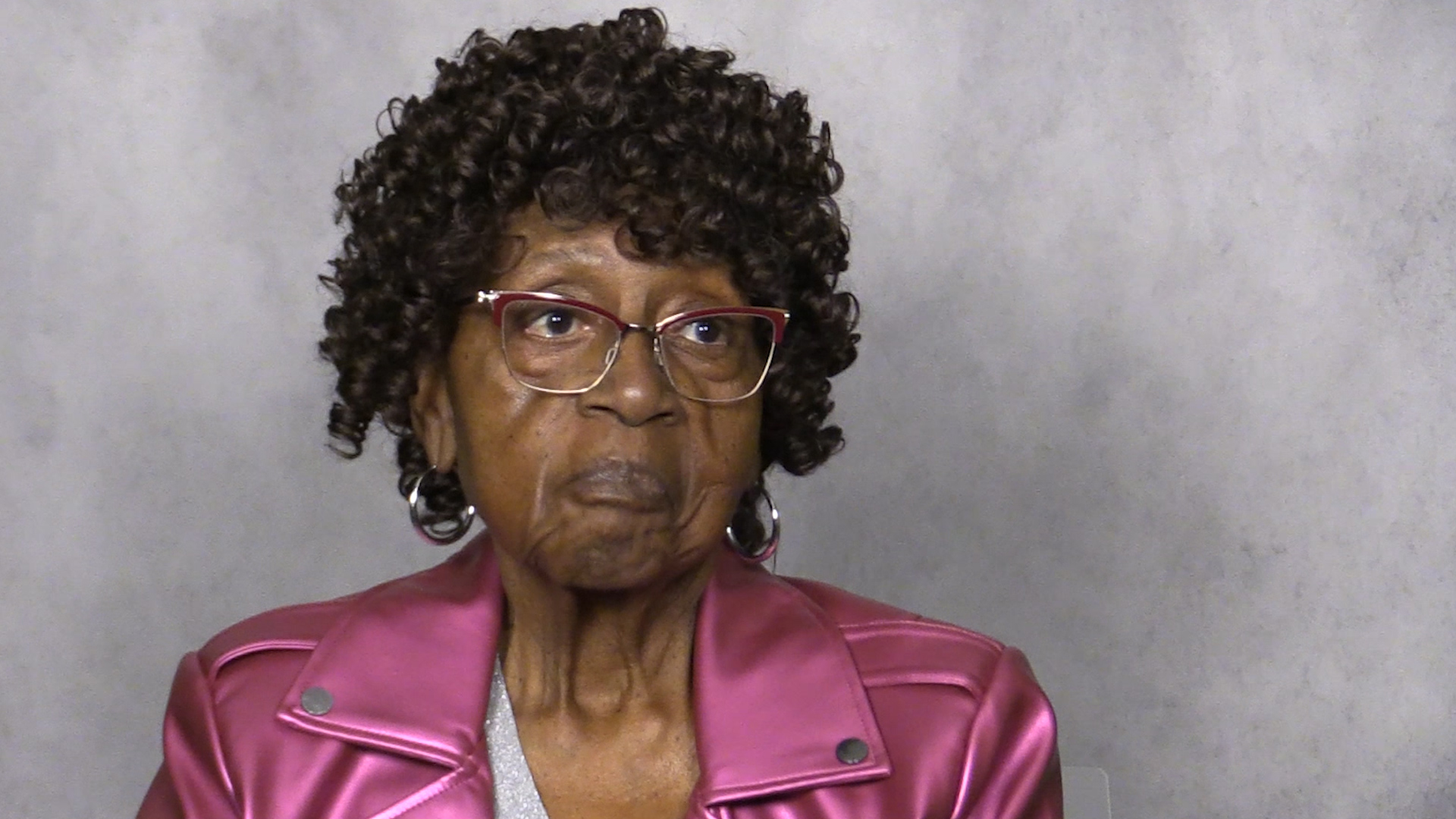
BIO INFO: Thelma Queen was born Thelma Todd in Smyrna, Delaware. Her family lived in Middletown, Delaware her whole life. She attended school in Middletown in a segregated school until the 9th grade. She married Renzie Queen and had two children; a boy and a girl. She has devoted her life to working hard to support her family and volunteering in her community to serve others. She has attended Dale’s Memorial United Methodist Church in Middletown her entire life.
TOPICS AND SUBJECT MATTER KEYWORDS: Religion, Community Service, Social Activities, Education, Segregation, Integration
Recording Inventory Sheet: Thelma Queen
Digital Collections Sheet: Thelma Queen
Middletown Historical Society
Middletown, Delaware
Oral History Series
Speaking of the Past: Conversations
With Long-Term Residents of
Middletown, Delaware, 1900 – Present
Interview with Thelma Queen
February 18, 2026
Middletown Historical Society Oral History Transcript
Thelma McQueen – Youtube – 02182026
Interviewer Patricia L Peirson Maichle
Pat: Good morning.
Thelma: Good morning.
Pat: I’m Pat Maichle. I’m a volunteer with the Middletown Historical Society and I’m here with Keith Schneider who is our videographer and we’re in the Appoquinimink Community Library in Middletown, Delaware. And what we’re doing is, what the Historical Society is doing is uh producing videos to document the history of Middletown as it has progressed over the years using the memories and insights of the people who’ve lived here for a long time. Um so I’m here with um Thelma Queen who’s going to tell us her name and uh when and where she was born.
Thelma: My name is Thelma Queen. I was born in uh Smyrna at the nursing home. That’s what they called it then. I don’t know what, you know.
Pat: What year was it?
Thelma: 1935.
Pat: How did your family come to live here?
Thelma: Um they were they were from um South Carolina and I guess um they came north just to uh I guess they just this come north? That’s all I know.
Pat: And they and they, well, you’ve been here your entire life. Do you do you know how long ago your family moved here?
Thelma: No, not not really. They c um my grandson looked up some information about the Todds and back the 20th century he thought that the Todds came into come north.
Pat: And, Todd was your maiden name, right?
Thelma: That’s my maiden name. Yes.
Pat: Are there other family members who live in the area or just your immediate family?
Thelma: Just my immediate family.
Pat: Okay.
Thelma: Well, I’ve just got cousins left now. All my uncles and aunts are passed away.
Pat: How many cousins do you have around here now?
Thelma: Oh, probably 10 or so. It might be more. I really kind of
Pat: Your house that you lived in when you were growing up, could you um tell me what it was like? Like how many rooms were in it? Did you have electricity and running water?
Thelma: We had electric. We had um it was a two-story house on Cox Street that has uh that I come up in when I was little. And uh two bedrooms in the kitchen in the living room. And uh uh we didn’t have bathroom was outside and we right on Cox Street, right you know little what else you
Pat: What is your earliest childhood memory? Good or bad?
Thelma: My earliest, was a child.
Pat: What’s the what’s the first thing you can think of that you remember when you were little?
Thelma: Well, um going to school. I don’t know. I I really living on Cox Street. My aunt I had an aunt that lived on I had two aunts that lived on same street we did. But um. I really, I don’t. I don’t have nothing on it.
Pat: What kind of games did you play growing up?
Thelma: No, we used to play hide and go seek play um that’s what I usually played and play marbles. We used to shoot marbles. That was about it for uh when we were when I was younger.
Pat: Any more outside games? Just hide and seek.
Thelma: They were hide and seek was outside. I don’t I didn’t I didn’t I didn’t do that. That’s all I did. But you know, hide and go seek and we play marbles and stuff.
Pat: What was your favorite thing to do for fun when you were a kid?
Thelma: What was my favorite thing for fun? I uh I used to like to go to my friend’s house and and visit them. Um my girlfriend, she uh was in a large family and I used to I used to tell them I would come down there for see the show cuz they always had something going on and it was comical. But uh that and we used to when I was uh well, I go in my teens. Uh her name was Christine Ross, and we did a lot of things together. All her family is gone now. But um
Pat: She’s still alive.
Thelma: No, all I’m just saying all all of her she’s gone and all of her family the whole family’s passed away. And I was friends to you know now I got the their kids the uh her sister and brother they call me Aunt Thelma and everything because I was always around there with them.
Pat: Good memories. Good memories.
Thelma: Good memories. Yeah. Like I said, we uh back there in the day, we didn’t really didn’t young people didn’t really do that much except what I told you.
Pat: What was school like for you as a child?
Thelma: I like going to school.
Pat: Where did you go to school?
Thelma: Louis L. Reading.
Pat: That was the old one. So, did that have all the grades in it?
Thelma: No, just went to the ninth grade.
Pat: So, you started at Louis L. Reading?
Thelma: I started at Louis L. Reading was already at the old school.
Pat: And then where did you go a after 9th grade?
Thelma: Well, I came at um I had a baby. I I come out of school. I didn’t go back to school again. my I went back and got a um my diploma. My oldest child was had graduated when I went back you know to get my high school diploma. And I got it from uh Louis L Reading, but you know the school that they tore down just tore down.
Pat: Did you like school?
Thelma: I love school.
Pat: What were your worst and best subjects?
Thelma: Reading.
Pat: You liked reading?
Thelma: No. That was the worst.
Pat: Oh, you hated reading? Were you good at math?
Thelma: I was I could pass it. Yeah, I could do math and stuff.
Pat: Do you remember any fads in your youth like hairstyles or clothes?
Thelma: Well, you know, everything was um with the called it back there then. Um like they going back to it now. Everybody got a natural and and uh they wear them peg leg pants. And, um and I I didn’t wear them. But the short shorts, the booty shorts I call them. And stuff like that when I was growing up.
Pat: And you didn’t wear any of those?
Thelma: No, I didn’t wear no shorts.
Pat: Was that because you didn’t want to or your your parents wouldn’t allow it?
Thelma: I just didn’t want I didn’t wear I didn’t think I had the shape to wear.
Pat: So, what were your favorite songs and music?
Thelma: Oh, Lord. Not listen to that stuff, but songs and stuff I Oh. I like you want to know the people? That are u Drifters and this um Temptations their their music.
Pat: Motown.
Thelma: But I can’t give you a name of a song cuz I like them all.
Pat: Um what was your religion growing up and where did you go to church?
Thelma: I went to Dale’s church, Methodist church. Still go there.
Pat: That’s an old building.
Thelma: No. Well, it’s an old building, but we renovated and, you know, fixed it up right on Lake Street. And that’s where my rest of my family went, too. My grandfather and my mom tell moved away, you know, with their own lives. We always went went to Dale’s. Um, and I’m still active at Dale’s.
Pat: And you sing the hymns?
Thelma: huh?
Pat: Do you sing the hymns?
Thelma: Yes. Yeah, I sang in the choir. Well, a matter of fact, I still sing in the choir and stuff.
Pat: Did you when you were young?
Thelma: Yep. Yup.
Pat: So, you must really like it after all this time.
Thelma: Yep.
Pat: Were you ever mentioned in the newspaper or other publications?
Thelma: I probably was uh I’m in a lot of stuff. Uh I’m in the Eastern Stars. I’m in the the Shriners. I was um well, you know, I go to MOT and they um they give me a day uh November the 7th. Name that day, you know, for me.
Pat: Thelma Queen Day!
Thelma: Mhm. And that had to be in the papers.
Pat: Exciting.
Thelma: Yeah.
Pat: And you’ve been uh at the Senior Center for how many years?
Thelma: Um over 20 years. I just say over 20 years.
Pat: Volunteering your time, right?
Thelma: Volunteering. I worked there for once. Well, I started out volunteering when and I was there every day. So, when somebody would leave and I would replace them, well, they would pay me. I I’d be on the payroll. But right now, I’m in the kitchen every day. But I don’t get paid. I just volunteer. couple hours or so a day and and with my time and stuff. But I still go there every day if I can.
Pat: Do you belong to any other clubs?
Thelma: Oh, what did I tell you? Eastern Stars, the Shriners, Red Hats, and that’s it.
Pat: Okay. What do the Red Hats do? I’ve heard of them. What do they actually do?
Thelma: Well, what we did, we just go out and eat lunch. That’s all I did. And I I don’t
Pat: It’s a group of ladies, right?
Thelma: Group of ladies that were dressed in purple and and red and we’d have luncheons and stuff and just talk and socialize.
Pat: How long have you been doing that?
Thelma: Oh, it’s over 20 years, too. I’ve been a long time.
Pat: What world events had the most impact on you while you were growing up? Did any of them per personally affect your family?
Thelma: Nothing. But what? World War?
Pat: Yeah, any of those?
Thelma: My uncle. I had what? Three uncles that was in in that war.
Pat: World War II or World War I?
Thelma: World War I. I don’t know. war. One, not no two. I think it had be two.
Pat: Did you have any members who were in Vietnam?
Thelma: Family members in Vietnam? I can’t I don’t know. I don’t know what it was. I know one of my uncles, he lost his leg when he was uh in the service, but I don’t know where it was.
Pat: How about 9/11? That was a big one.
Thelma: 9/11. No. No.
Pat: Did you watch it on TV while it was going on that day?
Thelma: Yeah. What? Did I watch it on TV? 9/11. Well, you mean when the um the bomb the What are you talking about? 911.
Pat: The planes ran into the buildings.
Thelma: In New York. Yeah.
Pat: And, also in Washington.
Thelma: No family in in there. Just the friends. Well, I was uh I was in the bed when that come on flashed on television that the bombs they had bombed. But I jumped right up and my I think my husband was home. I went out there and told him I do knew some people that was lived in New York, but u none of my family, you know, was in New York.
Pat: How are holidays celebrated in your family? For example, birthdays, Christmas, and do you have special traditions?
Thelma: Well, usually I’ll say I’ll take Fourth of July. We probably you come together and we’d have a barbecue. It’s the Christmas time. Well, Thanksgiving time, we always the Todds always had a Christmas dinner and we’d always um everyone would bring a dish and we, you know, and celebrate like that and Christmas time too. We all would, you know, be together. But, um, that was it.
Pat: Was that something your mother
Thelma: I do that I do that with the the cousin, my cousins and stuff.
Pat: So, you’re the hostess.
Thelma: Mhm?
Pat: You’re the hostess.
Thelma: No, I go to them. I’m I’m the oldest. They They call Aunt Thelma and I go to them.
Pat: How is the world different today from when you were a kid?
Thelma: Whole lot difference. A whole lot of stuff going on. But wasn’t that much going on when I was little, you know? It just main thing we well when I was small everything was centered around the school and the church. And the churches had a lot of stuff for us to do you know young people to do. And so that’s what we did. But now I don’t these kids I don’t know where they go for fun or what they call fun now. It’s nothing like what we did. Nothing. Like I I look at my kids. I tell them uh my great grands and my grands what we did. I said I don’t know what y’all call fun cuz you don’t do nothing that we did. Well, nothing. They have their own agenda. What they do.
Pat: Okay. I had asked about your how your um surname.
Thelma: Mhm.
Pat: The history of that and I’ll just read a little bit of what you gave me. This is a a quote from uh Family Lineage that um Thelma’s grandson did.
Thelma: Yeah, he did it for me. Yeah.
Pat: Your documented family line “traces through the Todd family of Horry County, South Carolina, moving north to Delaware in later generations. The earliest clearly identified ancestor in this line is John Walter Todd, born around 1822 in South Carolina. His son, John Frank Todd, 1882 to 1972, married Maddie Blanch Bryant, 1888 to 1965. And they were the parents of Oscar Burrows Todd 1911 through 1958. Oscar’s lineage continued through his daughter Clara May Todd Watson, then to Thelma A. Queen of Middletown, Delaware. This establishes a continuous maternal line spanning at least five generations, rooted in the South and shaped by migration, resilience, and family continuity. Because John Walter Todd was born in South Carolina before emancipation, it is historically very likely that he or his parents were enslaved or directly impacted by the system of slavery. African-American families in this period often adopted the surname of the enslaver or plantation owner, which explains why the Todd surname appears without early records identifying biological parents prior to emancipation.” Um that I I’m not surprised about that history. And do you want to talk a little bit about that? How it makes you feel?
Thelma: I don’t know what you talk about. Them people I don’t know them make. Do you um do you have a question you want to ask?
Pat: Do you have any feelings about your family having having to have come from slavery in this?
Thelma: Yeah, that’s life. That’s how it was.
Pat: How about when you were growing up?
Thelma: where there were up in Middletown where you know it was segregated and everything else. So, it’s changed from that.
Pat: So, from the segregation here in town.
Thelma: Yeah. when they change the schools and all that, you know
Pat: Because the school that you went to, the Louis L. Reading school was segregated when it when it originally was built.
Thelma: Doesn’t mix this this um my son was um in school when they change you know switched. Well that we could go to the white school and stuff when.
Pat: Desegregation.
Thelma: Mhm.
Pat: Did you have any uh did he have any?
Thelma: He had no problem.
Pat: Okay. Uh, okay. That’s good. This is good to know. Does he have your family’s history in a in a book? Does he?
Thelma: No, he looked at it. You know how they go like looking it up on. He looked it up on me. And I had another uh friend that looked up some too. Her’s is a little bit different, but he sent me. But it’s still the same thing.
Pat: the same story.
Thelma: Mhm.
Pat: That’s good to have. Do you want to say any more about that?
Thelma: No.
Pat: Okay. Well, if you want to, you can add something later.
Thelma: Okay.
Pat: Uh, is there a naming tradition in your family such as always giving the firstborn son the name of the paternal grandfather?
Thelma: First my my the uh my uncle raised me, right. He’s named me after his after his daddy Charles Oscar Todd. That’s what that was his name.
Pat: And did he name his son?
Thelma: He didn’t have a kids.
Pat: Oh, okay. So that ended that. Considering that we are celebrating the 250th anniversary of our country this year, what stories have come down to you about your parents, grandparents, more distant ancestors, and the history of the country? Besides this that you just gave us.
Thelma: Um, no. I don’t know. No other story.
Pat: Did any of you… well, I don’t you probably don’t know. Usually, I ask um people if they know if their ancestors were here when the country started so that maybe they were involved in the Revolution. You don’t know any of that?
Thelma: None of that. I don’t know.
Pat: Okay.
Thelma: I think he went back as far as he could. My grandson did he went back as far as he could.
Pat: Yeah. The 1800s. Are there any stories about famous or infamous relatives in your family? Anybody that stands out besides yourself?
Thelma: I don’t know nobody famous in my family. No extra. They just live the regular life.
Pat: Did any of your sons or grandsons play football at
Thelma: Yeah, my my son did. Joseph Todd. He was. He played football.
Pat: He was a star, wasn’t he?
Thelma: Sort of.
Pat: Do you want
Thelma: He was a star.
Pat: Do you want to talk about that a little?
Thelma: Well, I’m old. I was busy mother. So, when he went when they integrated, he went over there and started playing football. Well, I never went to his games, but I always asked him about ‘em and how they well, he just look at me and say, “Well, you need to come and to the games.” So, I start going to the games and, you know, to see him play. But, uh, he just lived sports. And he he’s got sons that, uh, in sports, too, that was in school. They they graduated, too. They played football. But um Joe and he he goes he he, well he went to my he goes to about Dale’s church too. He did when he was little. Now that he’s bigger. He goes to other churches but he went with me. He he was in church too. That’s it.
Pat: Um, are there any special heirlooms, photos, Bibles or other memorabilia that have been passed down?
Thelma: I couldn’t find, you know, I didn’t have anything cuz I I went to my grandmom cuz she uh but I didn’t have nothing, you know. I didn’t have… They didn’t give me nothing.
Pat: Just your memory. Just what’s in your head?
Thelma: Just your memory.
Pat: Okay, let’s talk about your spouse. What was the full name of your spouse?
Thelma: Renzie Queen.
Pat: And how did you meet him? What did you do on your dates?
Thelma: You want to hear the whole story? He, um he’s passed away and um well I was friends to his sisters and I was always over there with his sister but he drove the car and I had a boyfriend in Smyrna. So, I would go ask him to take me to Smyrna, you know, so I could or I would get off and he’d leave me in Smyrna. So, his father told him, so why are you taking that girl there? You could be talking to her. So, he decided when they wanted one he was taking me down to Smyrna one time. So, he pulled off on the side of the road and decided he wanted to kiss. So, So I give him a kiss. So, we end up hooking up. Say and and and we ended up getting married and everything, but he was taking me to see somebody else, but he decided to do what his daddy told him. So that’s how I ended up with Renzie Queen.
Pat: And he was a nice man. You fell for him.
Thelma: Nice man. We was married 46 years before he passed.
Pat: And you have how many kids?
Thelma: Oh, I had u uh two kids by him. Boy and a girl.
Pat: What did you used to do on dates when you were dating?
Thelma: Well, I was always into something. I I would go to dances cuz at Reading, the old principal, he would have dances and stuff at to the the old school to raise money and stuff and we would go there to dances and just go movies and stuff like that. Just ordinary stuff.
Pat: How long was it before you got married? After you started dating?
Thelma: A year.
Pat: A year.
Thelma: Cuz I got pregnant and I said I wasn’t bringing no more babies in with no daddy hooked up to it.
Pat: Um, okay. Where and when did you get married?
Thelma: Got married in Odessa. Odessa. Elkton. you know how they used to go over to Elkton to get married and um got married in 1958 in one uh went in one of those house right up on the main street and somebody I can’t say who married me we got married. His sister was was my uh best man everything cuz she went with me.
Pat: Did your family celebrate did you celebrate?
Thelma: No. No. No. Went and got where he went home to his house. I went home to my house.
Pat: How did that work out?
Thelma: Well, we we finally we well I rented a place and we got a house of our own, but we didn’t do it. I don’t think it was a whole year before we got, you know, straighten out for a house and stuff. But he stayed with his parents and I stayed with mine until we got a a place.
Pat: right there in Middletown.
Thelma: Right in Right. Right in Middletown on Lake. What was our first place? No. On Lockwood Street, 104 Lockwood Street. That’s what that was our first house. Then we moved across the street 103. Then I moved in u my own house, was brought up, you know. How were you where you live? My my uh father gave me a piece of ground and we built we build a house on at on New Street in in well used back there in the day called the Hamtown.
Pat: That that um historically was not considered part of Middletown. Right?
Thelma: Right.
Pat: Am I right?
Thelma: They just made it u when we moved out there because we didn’t have roads and nothing. My husband, he worked with a contractor and we build and the guy that he worked with let him bring some gravel down there and make a road, you know, that was decent for us to get in. But it wasn’t Middletown till after we moved in and then they changed because like we had to hook into uh we had a well but we when they made the town part of the town we had to hook into the town and stuff with the uh the sewer and stuff.
Pat: Do you do you remember what year it was when they made it part of the town?
Thelma: No.
Pat: No.
Thelma: No.
Pat: 50s 60s70s?
Thelma: It was in probably in the 50s cuz I don’t think I we’ve been there that long. No, it was in the 60s cuz I moved in my house. I do remember when I moved in my house. Um 1963. No, 64 cuz my daughter was um a year old or 63. Okay.
Pat: How would you describe your spouse? What do you admire most? What did you admire most?
Thelma: He was a hardworking man. That’s all I could say. He um and we just did things together. We uh whatever we had, we did it together.
Pat: What did your family enjoy doing together? Your married family.
Thelma: We had we always had cookouts and stuff cuz I had a big backyard. We’d have family reunions, you know, they come in my yard and they could bring their own tent and everything and we just set up and have barbecues and stuff. That’s what we did the most. And you know, back there in the day, we had house parties and stuff. But that’s what I enjoyed the most. The family had family reunion. They come out and barbecue and stuff in the yard.
Pat: What was your profession and how did you choose it?
Thelma: My profession. My mother, well, she was mine, but my mother, I call her mother, she was a beautician. So, I was always in the shop. Well, she she had her own shop. Well, when I grew up and I um come out of school, well, I I took uh cosmetology and I I and we had a shop together on Lake Street. And then when when uh she decided to retire, I didn’t want no business on my own. I So, I went I started doing um working in the school and stuff like that. But I did we had uh two places on cuz I moved from smaller place to a bigger place when we did hair and stuff. And that was it.
Pat: Did you like doing that?
Thelma: I like doing hair but I didn’t have any time to myself when I did hair. I was always in the shop. I I always. So, I didn’t I didn’t want to keep it up. I just left it and went I went to doing uh school you know they hired me I did days work. I did that both I did hair and days work all in you know same time. Just mean I never had no time to myself cuz I would go to work do my days work with and and then come home go to the beauty shop do that then go home go to bed then start all over again doing the same thing. So, it was just too much.
Pat: So, you stopped the beauty parlor?
Thelma: I’d stopped doing the hair.
Pat: What accomplishments were you the most proud of?
Thelma: I don’t know. I guess when the Eastern Star uh give me an award. I was proud to get that. And I would I’m proud that I uh of um just being able to take care of myself, you know, and my family and stuff. But um that’s it. I don’t know. I just a hard worker. I just
Pat: Those are big things. Taking care of your family is a big is a big thing. How has the recent development affected the area around Middletown?
Thelma: Whoa. Whole new town with all the stores and restaurants and everything’s changed in Middletown. Is this I tell my sister she uh she was raised in um Pennsylvania and she lived in a town called Westtown. I called her to I said well, we got a Westtown now in Middletown cuz she didn’t live in Middletown when she was younger. I is this road so this hard to believe that all these stores and stuff is in Middletown and you can’t get through Middletown for uh 15 20 minutes take you get through Middletown get it’s just a mess.
Pat: How has the community changed? Like the culture here and the feeling here? Have you noticed anything?
Thelma: No. Wow. They putting up a lot of new houses on Lake Street that we didn’t have. And um lot of just you know in the little small community they putting little house new house here and there you know it’s building up improving. So
Pat: What do you want people to know the most about yourself, your family, their business, etc.?
Thelma: What know the most?
Pat: Well, the Todd family has been around here for a while.
Thelma: We we’ve been here for a while, but
Pat: And the Queen family.
Thelma: huh?
Pat: And the Queen family.
Thelma: Yeah. They they wasn’t born here. I don’t know where they were born, though. I don’t know where they come from. I I don’t know what to say about that.
Pat: What do you want people to know about Middletown’s past?
Thelma: That the past?
Pat: What do you want people to know and remember about our past?
Thelma: All the stores that we had that where had a business been all the little stores like Sadoff’s, Shivery’s, Berkman’s uh who else say Buckworth’s all them going out of business. New people done took their place. They hung in George’s but everything all those old places gone. New places then took over.
Pat: Is that a positive or pos?
Thelma: I think it should be positive.
Pat: Part of growth.
Thelma: Part of growth. Uh my eye.
Pat: Do you have anything else you want to say?
Thelma: No.
Pat: Anything you want to add to the Nothing. Come on. Come on, Miss Queen. No.
Thelma: What could I add? No.
Pat: Is that it?
Thelma: That’s it for me.
Pat: All right. Thank you very much. Especially sharing this family history.
Thelma: Yeah. It’s uh I think I had another
Pat: It’s really important that
Thelma: I asked my church member to um but she thought I meant for me but I meant for my other family but she wrote it all about me uh uh in Dale’s church. How you you want to read this?
Pat: All the things you’ve accomplished in the church?
Thelma: Yeah, but I asked about grandpa see, you know, whether he had any. But them back in the day didn’t take no information like that. They She didn’t have nothing on him. But I knew he went. She
Pat: Do you want me to read this?
Thelma: Yeah, you can read it. You don’t have to put it in the thing. I just want you to see what she
Pat: We’ll keep it in.
Thelma: Huh?
Pat: So, this is about Thelma Todd Queen.
Thelma: Oh, you going to keep it? Okay.
Pat: “The Todd name is held with such high esteem within the MOT community.” That’s Middletown Odessa Townsend. “One person that comes to mind is Thelma’s uncle Norman Todd who was viewed as patriarch of the family.
Thelma: Yeah.
Pat: He was a man of high esteem who cared deeply about his family, friends, and neighbors. He was very active in his church, Dale Memorial United Methodist, where he served in many leadership roles for many years. In his desire in his desire to protect and serve those in the community, his friends gave him the nickname Mayor of Middletown. The following places bear the name Norman Todd in his honor; a portion of the grounds at Lewis L. Reading School, Dale Memorial United Methodist Church Kitchen. Thelma continues to carry on the Todd legacy by demonstrating the same values. She is a woman of integrity whose actions align with her values. She is the matriarch of the Todd family. She is powerful, respected woman who acts as the nurturing, wise, and protective head of her family. She serves as a cohesive force, leading with unconditional love, wisdom, and strength while fostering family unity. Her quiet influence carries immense weight with those she interacts with. Her ability to foster connection and provide emotional strength to those around her play a vital role as the matriarch. Thelma is a generous and caring person who is recognized for her giving nature and hospitality. She is an asset to Dale Memorial United Methodist Church where she has been a member for 50 plus years where her unwavering loyalty is demonstrated by serving and using her culinary skills. She extends her role to the broader community by offering her services at the Jean Burch Senior Center using her culinary skills as well. Thelma has a passion to serve in this capacity. Thelma has received honorary awards for her service within the community and her church, serving 10,000 plus volunteer hours at the MOT center, years of service at Dell Memorial United Methodist Church.”
Thelma: But now I’ve got 25 years of service in voluntary. What’s your name?
Pat: At the Senior Center?
Thelma: Mhm.
Pat: Okay. 25 years. That’s that’s pretty amazing. Well, thank you, Miss Queen. I do appreciate you coming and sharing this information with us and for taking the time to be
Thelma: if I could help.
Pat: Thank you very much. All right.