2026.005.011 Teddy Whitlock
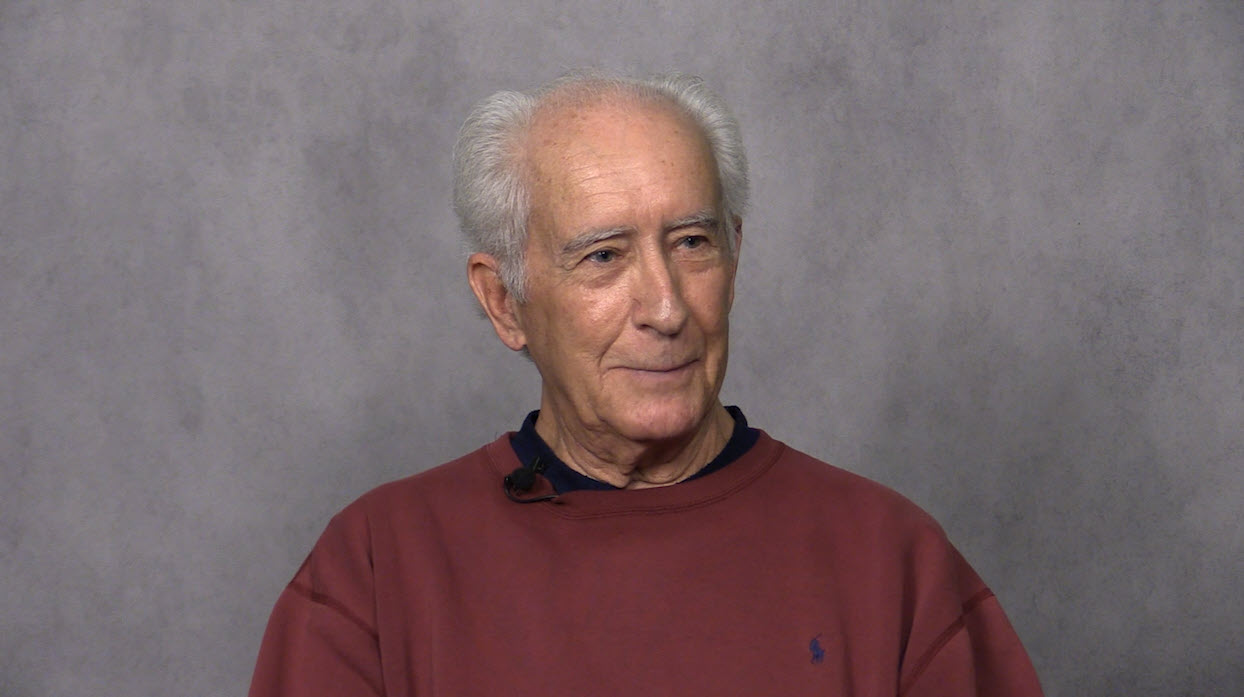
BIO INFO: Teddy Whitlock is a life-long resident of Middletown, DE. He worked most of his life at a local oil refinery and his wife Betty worked at a local bank. They have one daughter, Lisa. Teddy and Betty are are practicing Catholics and volunteered at the St. Vincent de Paul Society to provide assistance to local families in need. Teddy served in the Delaware National Guard and is now retired. Betty is now deceased.
TOPICS AND SUBJECT MATTER KEYWORDS: Family Heritage, Farming, Education, Integration, Religion, Social Activities
Recording Inventory Sheet: Teddy Whitlock
Digital Collections Sheet: Teddy Whitlock
Middletown Historical Society
Middletown, Delaware Oral History Series
Speaking of the Past: Conversations
With Long-Term Residents of
Middletown, Delaware, 1900 – Present
Interview with Teddy Whitlock
April 8, 2026
Middletown Historical Society Oral History Transcript
Teddy Whitlock – Youtube – 04082026
Interviewer: Patricia L Peirson Maichle
Pat: Good morning.
Teddy: Morning.
Pat: How are you today?
Teddy: I’m doing just fine.
Pat: That’s good. I’m Pat Maichle. I’m a volunteer with the Middletown Historical Society here in Middletown. And I’m here with Keith Schneider who’s our videographer. And we are the Historical Society is is doing these videos to try and from your memories and experiences document the history of the town of Middletown from the 1900s through today. Um so uh we’ll get started and the first question is what is your name and when and where were you born?
Teddy: Uh my name is Ted Whitlock. Uh I grew up as Teddy and still get called that by people who grew up with me. Um, I was born here in Middletown on East Main Street and uh I lived here up through my early 20s. And uh when I uh got married when I was about 26 in 1970, my wife and I uh lived in New Castle. She was a St. George’s Delaware City girl. So, both of us being small town people and at that time New Castle was way too busy. Even though I knew Wilmington quite well and around just from being single and having gone to high school at Salesianum I knew the city. Uh but we decided no let’s let’s kind of move into something the small town. So, we ended up in Middletown. At the time, Uh uh Richard Nixon was the president and inflation was uh really gone wild and he put a uh a hold on new building. Uh so those builders who could hang on until see their way through it, they would not build any new new construction. So, we had to look to the secondary market and the house on East Park Place uh was owned by a professor of agriculture, Delaware, and he was evidently moving to Indiana with a similar job. So, his house came up on the market and I got to know about it because my brother lives right next door. So, that’s where we bought the we bought the home. Uh we had one child, Lisa, and uh so we moved to Middletown in about this time in 1972.
Pat: Okay.
Teddy: So, I’m back back to back to home and it was small then.
Pat: So, you were born were you born at home? You said you were.
Teddy: No, I was born in Wilmington.
Pat: Oh, okay.
Teddy: Yeah.
Pat: A number of people have said that they were actually born at home.
Teddy: Uh yeah, I guess you kind of say that simply because this is where you’re raised, but no, I
Pat: No, they were actually born in born at their house.
Teddy: I know that’s not unusual back then. Yeah.
Pat: Okay. How did your uh well, how did your larger family come to live here?
Teddy: Okay. Well, my my father’s uh family uh I I came along late in life. My father came along late in life. He was one of of 11 that lived. And he uh so my grandfather was born in 1860, my father’s father in Dover, but he moved up here as a young man. And he was actually in the Light and Water Department of Middletown. He electrified a lot of homes back in the uh the late 19th century. And uh my mother’s family uh were she was raised on this Cedar Lane Farm where uh the golf course is right now. That was the Cedar Lane Farm and they were there until they lost the farm in the depression of the 30s. Um so my my father was and his uh his family were all raised here in Middletown. There was 11. There were six boys and five of them all went into printing as printers and all started out the Middletown Transcript. Uh his one brother Dory, Theodore, his call him Dory. He went to Goldey College and got a degree in as a I guess an office uh worker and that sort of thing. And so, he worked for Shallcross Brothers here in Middletown and kept all the books for them. So, the boys were in the printing business and my uncle Dory was a printer and the girls all got married.
Pat: As the girls did.
Teddy: Yeah. That was on my uh father’s side. My mother, my mother, they were all raised on the farm out there uh on Cedar Lane and um there was two girls and seven boys. Yeah, big families and they were all there until they lost the farm. Ironic way my mother and father met was my father would worked there at the Transcript and well the the buildings are all gone now but anyway there was a beauty shop two doors down and my mother worked there as a beautician so they just kind of met one another and well went from there.
Pat: It’s history now.
Teddy: Yeah.
Pat: Uh yeah that kind of answered the next question. Uh, what was the the house that you grew up in? What was it like? How many rooms did it have electricity? Did it have running water?
Teddy: It had electricity. It had running water. And well, like I say, my grandfather was the Light and Water Department of Middletown. So, and he was a he had built different homes around Middletown or or had kind of redid them and that sort of thing and rented the properties out. Well, the main home that he lived in, he ended up building turning it into a triplex. So, you had three homes. Well, my mother and father bought the middle home when they got married. So, we lived in the center portion of what became a triplex. Since he’s the Light and Water Department, we always had a bathroom, showers. Up and down the street. They were all outhouses outhouses, which disappeared over a period of time as uh things got better in town. But yeah, we always had electricity. Well, mo at that time, everybody had electricity.
Pat: Most people most people did.
Teddy: Most people within town had. We’re talking about in town. Yeah. Most in town, you had electricity. You didn’t know. But like I say, we had a bathroom. We had uh whereas others had to use, you know, had septic systems or whatever. Uh it was very comfortable. I I had a good family. My Yeah, I had great parents and the family uh was very close. Even though my aunts and uncles all their jobs and the lives took them away from Middletown, um basically all Yeah. My uh my mother and father were the only two that remained in Middletown. Everybody else moved away.
Pat: What is your earliest childhood memory?
Teddy: Oh.
Pat: good or bad.
Teddy: Oh, I would say u Oh, no. Good. Good. Yeah. I guess it was when my grandmother, my mother’s mother uh came to live with us. Uh she came over from Ireland when she was a 12 year-old girl and u yeah I don’t know how old I was but I guess I it was like when uh it’s time to drink milk out of a glass instead of out of a bottle. I can re why why would I remember this? I can remember being out in the in the kitchen and my mother was refusing to give me the bottle. She was putting me onto the glass and I can remember my grandmother saying, “Ellen, if he wants the bottle, give him the bottle.” I don’t know why I remember something like that.
Pat: That’s funny, though. What kind of games did you play growing up?
Teddy: Oh, Tag, Kick the Can. Um, yeah, Tag and Kick the Can were big were probably the most popular. But we played all those other ones like Simon Says and that sort of thing.
Pat: Were there indoor games?
Teddy: No, everything was outdoors. Everything was outdoors. Yeah.
Pat: What was your favorite thing to do for fun? like go to the movies, go to the beach, or something else.
Teddy: Uh, probably play baseball or football with with my friends and go to the movies up at the Everett. That was usually a Friday night deal with with three or four of my friends. Yeah.
Pat: How much did it cost then?
Teddy: Oh, boy. It was uh uh it was 25 cents to get in. I can remember my father would give me 35 cents; 25 cents to get in and 10 cents I could either buy a bag of popcorn or or all or Juji Fruits which were like a nickel. Yeah.
Pat: Did you have family chores? And if so, what were they? And what was your least favorite?
Teddy: Well, you had to get you had to mow the grass for sure. And uh my father always had a big garden. So, picking beans, snapping the ends off ‘cuz my mother and father were big into canning vegetables. So yeah, picking the snapping the beans and stuff like that.
Pat: That was not your favorite.
Teddy: Nah.
Pat: What was school like for you as a child? What were your best and worst subjects? And where did you attend grade school, high school, and college if you went?
Teddy: Okay. I uh Well, I went to Middletown School. Every it was one building where Everett Middle School is now. That was the one building. Incidentally, my my mother was in the first graduating class from that from that school. Before that, my mother and father, everybody else attended where the Old Academy is. Uh, she graduated in 29. That was, I think, the first graduating class from Middletown High School. Um, but I went to school here for the first eight years here in Middletown. Uh, I always loved history. Loved it enough so that uh one summer when I was between the fourth and fifth grades I think it was or maybe it was fifth and sixth whatever I think it was Mrs. Pleasanton and was my uh was my teacher. And back in those days you know my mother and father and the people ones that were teacher they all knew one of the middle house small anyway she knew I really liked history so she said, “I’m going to do this for the summer. I’m going you go in and pick any of those history books that are on these shelves in this room this is between you and me and just bring them back in September.” So I did I took several history books and u yeah and I kind of read them off and on but I’ve always loved history. Math was something else. I I just Yeah. I had a tough time with math.
Pat: Where’d you go to high school?
Teddy: I went to Salesianum. Uh my brother was also a Sally’s grad who was my brother’s nine years older than me but he and he like where he went to Middletown then went to Sally’s. So, uh they didn’t uh say I had to go but that’s where they would like me to go. So, um when it came time I decided yeah I’ll go up there. Howard, my brother Howard seemed to make out real well up there in the city and that sort of thing. And that’s where I went. Yeah.
Pat: And then did you go to college?
Teddy: Yes, I went over to the University of Delaware. I was over there for a a couple of years and um I got a job over at the refinery which uh at the time um I was I thought it was going to I my intentions were it was going to be a part-time job but uh when I was working there I started making a little bit of money and I decided maybe I’ll get a night school instead. So, it turns out that yeah, it was a good job. I They paid well, benefits were great, and I just decided I’ll stay here a while. Well, I ended up being there 40 years. Uh but uh yeah, after a while, the night school kind of drift away, so I never got my degree. Yeah. But back then a degree was not something that you really had to have in order to get a really a successful job unlike today. Uh at one point, say after about 20 years or so, when I’m working over at the refinery, they had um my boss at the time came to me. He says, “You we’re going to have a group of of kids from Del Tech are going to come in here and they’re they’re interested in science, getting into science and that sort of thing.” He said, “Uh, would you mind interviewing them and let them ask you questions about your job and working here in industry and that sort of thing?” And I said, “Sure.” So, I did that. But when I left, I thought if I had to apply for my job today, I couldn’t get it. I didn’t have that piece of paper like those kids. And I kind of in a way just kind of stressed it to him. It’s very important. That’s part of the world today. Yeah.
Pat: Do you remember any fads from your youth? Like popular hairstyles or clothes?
Teddy: Oh, yeah. Oh, yeah. The DA was popular. You know, you know what the DA is, right? Okay. Yeah. And um Yeah. Yeah. The hairstyles were Yeah, that was a big deal.
Pat: Um, how about your clothes?
Teddy: Oh, yeah. You had to have Yeah. White Bucks, white and white bucks shoes were popular. Penny loafers. Uh, sneakers of which you had a great lot of choice, either white or black, and they had to be Keds.
Pat: Keds
Teddy: That that was it. Yeah. you didn’t have a whole lot of choices, but uh yeah, I always Yeah, I like to dress well. I know one of my buddies uh would say, “God, you know, you’re you get your mother to starch your shirts ‘cuz my dress shirt.” He said, “I get I’m lucky if I can get my mother to iron them.”
Pat: What were your favorite songs and music?
Teddy: Oh. Uh, well, back then, back then, uh, rock and roll and and and country were both kind of popular. So, uh, I can remember back then I like to dance. So, if you wanted to slow dance with a girl, Johnny Mathis was always great. Yeah. “Chances Are”.
Pat: And did you go to dances?
Teddy: Oh, yeah. Oh, yeah.
Pat: Where did you go?
Teddy: Out here at the at school. Uh we had what you call sock hops. Uh that’s where everybody kicked their shoes off and you had a DJ and that sort of thing and you dance. But we had a lot friends would have dance parties in their own home, that sort of thing. But mostly at the school also as you got older they over at the old armory they would hold dances there. But dancers were quite frequent. Yeah. You could almost depend on especially in the winter time were all there to be dancers around. Yeah. Jitterbugging.
Pat: Were you good at it?
Teddy: Uh not really. Enough to get along. Enough to get by, I guess. Yeah. That’s how you met girls dancing. That’s how I met my girlfriend today. My wife died 10 years ago and and my uh Joyce and I that’s how we more or less Yeah. And we dance. We like going to dances.
Pat: Did you have any pets? And if so, what kind? And what were their names?
Teddy: Oh, yeah. My father and I were always into hunting. So by the time he was a [ rac ]coon hunter uh and a rabbit hunter and squirrel hunter and that sort of thing. But like as he he when the war came, he had uh he was he no longer worked at the Transcript. He was he was in the he was 39 years old. So that was they they still drafted you. He worked in the Defense plant up in New Castle during the war. And when the war was over, he got a job in printing with the uh there were a lot of news different number newspapers around Wilmington. Uh he ended up working at the News Journal. So, since he no longer was working here at the in in town, that was the end of [ rac ] coon hunting because you did all that at night. So, rabbit hunting was the big deal. So, we had beagles and uh he had back part of the house was where he had his garden and he had a big uh dog pen. So, he always had beagles. So, rabbit hunting during the season and squirrel hunting and I loved it.
Pat: What was your religion growing up and what church did you attend if you did?
Teddy: I was raised um u baptized and confirmed here at St. Joseph’s in Middletown and I still go. Uh yeah I I I’m quite involved with St. Joe as a matter of fact if you’ve heard of the St. Vincent de Paul Society. Okay. Um I’ve
Pat: tell us about that though.
Teddy: Okay. St. Vincent de Paul Society is a it’s a worldwide Catholic organization that helps does crisis alleviation. Uh it was started in Paris, France by college students and uh now in say the Diocese of Wilmington there’s 34 conferences out of I think 55 parishes and what you do is um you get the agreement from the pastor to be able to do your work in the parish and you use the poor box money or any donations that come that’s strictly it’s all you use. Uh it’s not funded by the church or anything. It’s an organization does crisis alleviation and you get permission of the pastor to handle any of the crisis alleviation that comes through the parish. Uh and my wife and I and Eleanor, we were uh charter members of this conference and we’ve been doing it for 40 1979. Uh we have about u well at one time we had about nine members. I think we have about five or six that are functioning members. I’m the treasurer. I’ve been through all the chairs, president. Uh my wife was uh the treasurer and then when she passed away 10 years ago, I I took that part. So, I do a good bit of the of the leg work. Uh it’s um if you talk to anybody at the Neighborhood, if you’re familiar with the Neighborhood House, okay, if you would ask them, they would say that we at St. Joe’s are their biggest benefactor. We support them probably more so than any organization around here. Uh so we we people that come through uh St. Joe that call, we have a a phone that’s uh dedicated at St. Vincent. They people call for help. We’ll we’ll handle that. or if Neighborhood House or Friendship House needs somebody to help them help somebody, we’ll do that. So, we work in concert with the different uh organizations here and we operate on our own and that sort of thing. So, we feel quite good about ourselves.
Pat: As you should. Were you ever mentioned in the newspaper or other publication?
Teddy: No. No.
Pat: Excuse me. Who were your friends when you were growing up?
Teddy: Well, uh, actually, I’m going to see one of them this coming Sunday. Uh, Wayne Erixson was a good friend of mine. He lived across the street growing up and eventually when he was in eighth or ninth grade, I guess it is, his they were originally from Wisconsin. The whole family moved back to Wisconsin. So, over the years, he and I would keep track of one another. Uh I’ll be 82 next month. He’s already 82. He is his his brother, one of his brothers lives in Pennsylvania just across the line. Wayne’s coming in. His daughter’s driving him in. So, we’re going to get together for golf on Sunday. Dave Price, who lives in Smyrna, uh he and I keep in contact with one another. We’re still good friends. Um, I’d say growing up or I see Kenny from time to time and Jimmy Reynolds, you know, they’re ones I’ve known all met Eleanor. I’ve known Eleanor since we were little little tots. So, yeah, probably of all of them, uh, Eleanor and I are probably the closest. Yeah. and she uh when Betty and I moved back here to town, she and Eleanor became fast friends. So, the three of us have been Yeah. But yeah, Dave Price is probably all the ones that are still around.
Pat: What world events had the most impact on you while you were growing up? And did any of them personally affect your family?
Teddy: Uh, I I suppose looking back, the Vietnam War was the was really the a tough tough time. Um,
Pat: Did any of your family serve?
Teddy: Uh, well, I was in the National Guard. Uh, no. Everybody was too old to serve back then when Vietnam came. Like I say, uh during the Second World War, a number of my cousins and that were were were in the different services. Um like I say, my father was in the uh Defense plant because he was too old to uh uh but yeah, Vietnam. Well, we lost 58,000 in that 10-year war. Uh, and lost several guys that I went to high school with. Um, several ones in the National Guard lost there, too. So yeah, there’s Yeah. I like to know my kids u when they asked about I said Vietnam Viet that the late 60s were tough because it was a lot of racial discrimination still. You had the Vietnam War. Uh it was a tough time. We’ve come a long way I feel with assimilation. Uh now we’re having problems with it. I don’t want to go into that but uh with assimilating other groups.
Pat: Yeah. Let’s move on. Uh how how were holidays and like birthdays, Christmas, Easter celebrated in your family? And did you have family special traditions?
Teddy: Uh Christmas naturally was always a a good family time big and Thanksgiving as well. My aunt uh Alma who lived next door, she lived in the the original home that became a triplex. She was my one of my father’s sisters. She was big on birthdays. She was, you know, every family has a historian that keeps track of everybody and birthdays and all that. Well, my aunt Alma was was that. So, she a lot of my cousins and all, we all had birthday parties and she would have them at her house. So, uh I remember Yeah. The birthday parties at a Alma’s. It was like she insisted on it. Yeah. But yeah, Christmas was always fun.
Pat: Did you have any special traditions that your family did for that?
Teddy: Uh, not nothing that really sticks out. It was just good family time. Yeah.
Pat: How is the world different today from when it was like when you were a child?
Teddy: Um, it’s definitely a lot faster. That’s for sure. And uh technology has really changed to the way just daily life is anymore from when I grew up. I my summers uh always look forward to. Uh my father and his brothers had it had built a cabin. When I say it was a cabin, it was a cabin that had no electricity. It had an outhouse. It was used strictly for fishing and all that sort of thing. And they built it down on Noxontown Lake. So, not that my mother enjoyed it, but every summer my father and his brothers, different ones, would we would take two weeks out of the summer and that’s where we would live for two weeks. And my uh my cousin who was from Philadelphia, his family, it would be my father’s one of his sisters uh children, they would come down and spend a whole summer at their place on Noxontown Lake. So, Dave, my c my cousin Dave Kirkpatrick, he was he was a couple years older than me, but boy, those two weeks they were fabulous out on that on that lake. He and I would just have fun.
Pat: What do you know about your family’s surname?
Teddy: Um, well, I mentioned before I like history. My daughter loves history and she has she has documented so much stuff on my father’s side of the family as well as my mother’s side of the family. I mean, she goes back to the late 1700s and she’s even got manifest from immigration ships from Ireland and all that sort of thing. So, any chance she gets to interview anybody in my family, whatever, she just boom, jots it down. And u
Pat: So, your name Whitlock they’re from?
Teddy: It’s English.
Pat: It’s English.
Teddy: English. Uh they came over from from England way back. Uh not like my mother’s family who immigrated over here uh like in the 1880s and my mother was a first generation Irish American and she has some brothers whereas on my father’s side they go way back further. Uh most of them are from either Sussex County or over in Cecil County, Maryland.
Pat: That’s where that’s where they um settled.
Teddy: Yeah, that’s where they settled.
Pat: Is there a naming tradition in your family such as always giving the firstborn son the name of his paternal grandfather?
Teddy: Yeah, that’s uh as Lisa, my daughter, said that the name Theodore is is threaded all back through the Whitlocks. That’s my grandfather’s name, one of my uncles. And Lisa says it it seems to come in right through there through the whole over the years.
Pat: Considering that we are about to we are celebrating the 250th anniversary of our country this year. What stories have come down to you about your parents, grandparents, more distant ancestors? So those ancestors on your father’s side who came over really early. They were here during the Revolution?
Teddy: I as far as I know they were. Yes.
Pat: Do you know their involvement in the Revolution?
Teddy: Does I personally No. No. Like I say, my daughter might, but
Pat: Okay. Well, other than that, they they fought in World War II. Did any of them fight in World War I?
Teddy: Um, not that I know of.
Pat: How about the Civil War?
Teddy: Not that I not that I remember any stories about. No, I don’t think so.
Pat: Okay. Are there any special heirlooms, photos, Bibles, or other memorabilia that have been passed down in your family?
Teddy: Yes. the the the family u Bible. My father’s side of the family were all Methodists even though later in life and when he was 70 I think he converted to Catholicism but uh my my mother’s side being Irish Catholics. Yeah my my grandmother my mother my aunt Margaret yeah they were they were die hard Catholics so the family Bible was passed down. Lisa has it now.
Pat: I was going to ask you who’s got it now.
Teddy: No, she’s got it now. And all the all the things that come through in writings and whatever newspaper clippings, you know, they’re all stashed in there.
Pat: That’s good. What was the full name of your spouse, siblings, and parents?
Teddy: My uh my spouse was uh Betty Betty Curlett. Uh her name was uh Elizabeth
Pat: from Delaware City?
Teddy: From Delaware City. Yeah. You knew the Curletts?
Pat: Yeah.
Teddy: Yeah.
Pat: Some of them.
Teddy: Yeah. Yeah. She and I met u on a blind date. My her older sister’s husband worked with me at the refinery. So, it was one of those deals where the two of my Bobby and Betty’s older sister Gerry, they wanted to get us together and they had a little problem doing it, but eventually they did. And well, it kind of
Pat: Love at first sight?
Teddy: Well, no, but it it grew. It grew.
Pat: How um tell Excuse me. Tell me about your um how you uh got married, your wedding. Did was it a big celebration? Did
Teddy: Yeah. Yes. Uh yeah, it was Yeah, it was a big celebration. U she was late getting there naturally. Now, she was a she was a very attractive girl. Loved to dance. And uh that’s where we met. We met over at at a local dance t out on Route 40, which was very popular for music and and drinking. It was a tavern. And anyway, that’s where we met. So, we like to go dancing a lot and that sort of thing. Uh, but yeah, we were married over at St. Paul’s Catholic Church in Delaware City because that was they were her family was Catholic and that’s where that’s where we were married. Uh the re the reception was my father-in-law was a carpenter so the reception was up at the Carpenters Hall. I think it’s out on New Castle Avenue. But uh yeah, a lot of my friends were there and uh and the families from both sides. Yeah.
Pat: So, how would you describe her? More than just the color of her hair.
Teddy: Uh, Betty had grit. I’ve been told that just after she passed away that more than one person said, “Yeah, she was very personable. She was very attractive. She was very personable. She got along with uh people. Um you didn’t get anything over on her. She was the manager out here at Wilmington Trust for a number of years and uh she got a she got along very well with people. She she could handle herself with people and uh she was quick witted and liked a good time, but she as more than once I heard they would call that Betty’s Bank. Even in the days prior to her becoming manager when she was say the head of the loan officers, they would still call it Betty’s Bank. Yeah. She knew how to handle things.
Pat: What did your your family enjoy doing together?
Teddy: Uh, we were a good everybody was very good at socializing. We just love being together and um having a good time and um we could toast a good bit. Uh yeah, we just enjoyed one another’s company. Uh on my father’s side, uh uh my father and my uncle Preston, we were all hunters. We liked being together. But u when when Yeah. The men, the women, we Yeah. We all got together and we just enjoyed one another’s company in town.
Pat: In town primarily.
Teddy: Yeah. Right in time in town. Yeah.
Pat: And you talked about your profession and and how you chose it. So, we’ll unless you want to say anything more about that. Did you regret years later going not getting your degree and uh working at the refinery?
Teddy: Actually, there there was times I thought geez maybe but overall looking back at it no. I was happy with I did well uh with it I did well and um when I retired I I can live I live very comfortably so uh the and I met a number of good people that that I worked with. We had good relationships. Yeah. you had naturally when you’re working together and that sort of thing. You have your tough times. Uh but overall, no, I was very happy with where I was.
Pat: What accomplishments were you the most proud?
Teddy: I guess um my daughter is very successful uh both uh professionally and family-wise and all. So, I’m proud of that. That that’s that’s worked out well for her. Uh Betty and I had a u had a a relationship where we enjoyed traveling. We enjoyed one another’s company. It seemed like we handled the tough times that that come along in every marriage. Uh we worked our way through them. And looking back on that, um yeah, that’s quite an accomplishment, I think, after being married 46 years and you work your way through it.
Pat: Now, the tough questions. How has the recent development in Middletown affected the area?
Teddy: Oh boy. Woo. The traffic is just unbelievable. Uh yeah, I’ve seen it. I think when I grew up here, we had about 1,500 people. And uh up until I well I’m going to why I remember this is I think it was in the late 80s and Kenny was on the planning board. It was right before he became mayor. But anyway, um I think this the Johnson Controls the battery plant was really about the only what you call manufacturing business in town. It was a residential farming community and the concrete plant wanted to be built out there. Oh, that didn’t go over real well. I can remember we were at a meeting, I think, in the at the school, I think it was where it was held. And in general, people weren’t really happy that this is a residential committee. We don’t need that. And growing up, even through in my 20s and all that sort of thing, I used to refer to it as a drive. “I’ll drive to the fun and come back to the quiet” ‘cuz having gone to school in Wilmington, I knew my way around. So, you know, you go to nightclubs up that way, you go over here and this and that. Yeah. I used to call it drive into the noise, come back to the quiet. And then that’s why Betty and I moved back moved to Middletown was to seek out the small town, the quiet, and then
Pat: And now
Teddy: go to the noise. Well, now the noise has found us. Uh yeah, things have really changed big time. Uh I got uh here at St. Joe I was always I’ve always been involved with things. I do a lot of always have. My wife and Eleanor the same way. We do a lot of volunteer work. I get involved with all kinds of different things. I did a lot of uh umpiring with the lo Little League and that sort of thing and uh different organizations. Um but um it seems like uh yeah, things have just really just gotten so fast and it’s quick. It’s like it’s like it almost happened overnight. But uh we but one of the food runs, we put together a food run here at St. Joe and the pandemic brought that to an end because all our food sources went to the food bank. Not that they didn’t get where it belonged, but we were a mom-and-pop business and they put us out of business anyway. But as people came into the church, it was kind of a good way to get people involved. Okay. being the food delivery may Vincent de Paul and that sort of thing. And I know one guy Dave Danielson, he was from Seattle, grew up in Wisconsin, but Seattle, he would say just like you’re asking what? I said, “Well, back in the 50s, we had four auto dealerships in town.” What? He couldn’t believe it. I said, “Yeah, we had four auto dealerships in town.” I said, “You had two, three restaurants that like the Village Inn on the corner, the Wither, well, not the Wither there was the where the tattoo parlor is. That was a restaurant I It’s called the Kathleen’s Inn there was the small restaurant alongside of what’s now. Well, there are so many buildings that have disappeared from the center of town down Main Street, Broad Street. It’s like across from the old firehouse that was all homes along there. There was a sub shop, there was a restaurant. And when I name these things, I’d say, you know, you really didn’t leave need to leave town because you had men’s shops, women’s shops. It was a self-contained small village. And he just could not get over that. I said, you know, but that’s Yeah.
Pat: How has the community changed? And you you could talk about the cultural change since the old days or well the financial change. There’s a lot more employment opportunities for example, especially for young people. Um but what are your thoughts?
Teddy: Assimilation is is a that’s a big thing a big difference big difference is the assimilation uh with the races. To me, uh um as far as job opportunities and that sort of thing. I uh I guess I’ve been retired so long I uh really. Yeah. Well, the business it’s so different. It’s so different. It’s a small city and um
Pat: is that good in your eyes?
Teddy: I’m not sure. just I I think with Amazon I guess you know there’s a lot of employment opportunities out there. Uh but everything seems to be on a small scale like with the fast-food restaurants and stuff like that. Uh, I I guess there’s ample uh jobs to support the people in town. I know from St. Vincent de Paul work a lot of crisis alleviation. There’s a lot of people that live on the margin. A lot more than our politicians realize or even want to realize. I’ll put it that way. Um yeah, that rolls back to education as to how important it is. Um, yeah, I can’t emphasize that how how how important education is today.
Pat: What do you want people to know the most about yourself, your family, their business, etc.? Um, so you’re leaving a message here. What do you want people to know about your family?
Teddy: That um they were good, honest people that that uh wanted to be well thought of that u were there for one another. Yeah.
Pat: What do you want people to know the most about Middletown’s past?
Teddy: Middletown’s past. Oh. Well, this is a this was a community of really u hardworking people. They really were. And uh I’d like to see the community as that is as big as it is. And um I I would hope that u those roots that have been sewn here and and seeds so to speak, they would kind of help people today uh in their own lives. But the community today, it’s it’s it’s different than it was because everybody’s of a different they’re all newbies. Um, so it’s it’s become multicultural the town because people have come from so many different places that uh but uh I I would hope that what little they can learn from we old homegrown people that it would be would benefit them.
Pat: Well, that’s all the questions I have. Do you have anything you want to add or leave us with or anything else you want to say?
Teddy: Well, um, like I say, I I I love history and I pass that on to my daughter. I, uh, Middletown Middletown’s been a good community for me to grow up and and I’m going to say it’s it it still is. And as I live my elderly years, I’ve met a lot of new people that are good good people and they’re bringing good things to the community. I will say that. Yeah. Granted, traffic is a problem. But the person has said that I have a feeling that’ll be solved somewhere along the line.