2026.005.009 Phyllis Waecker
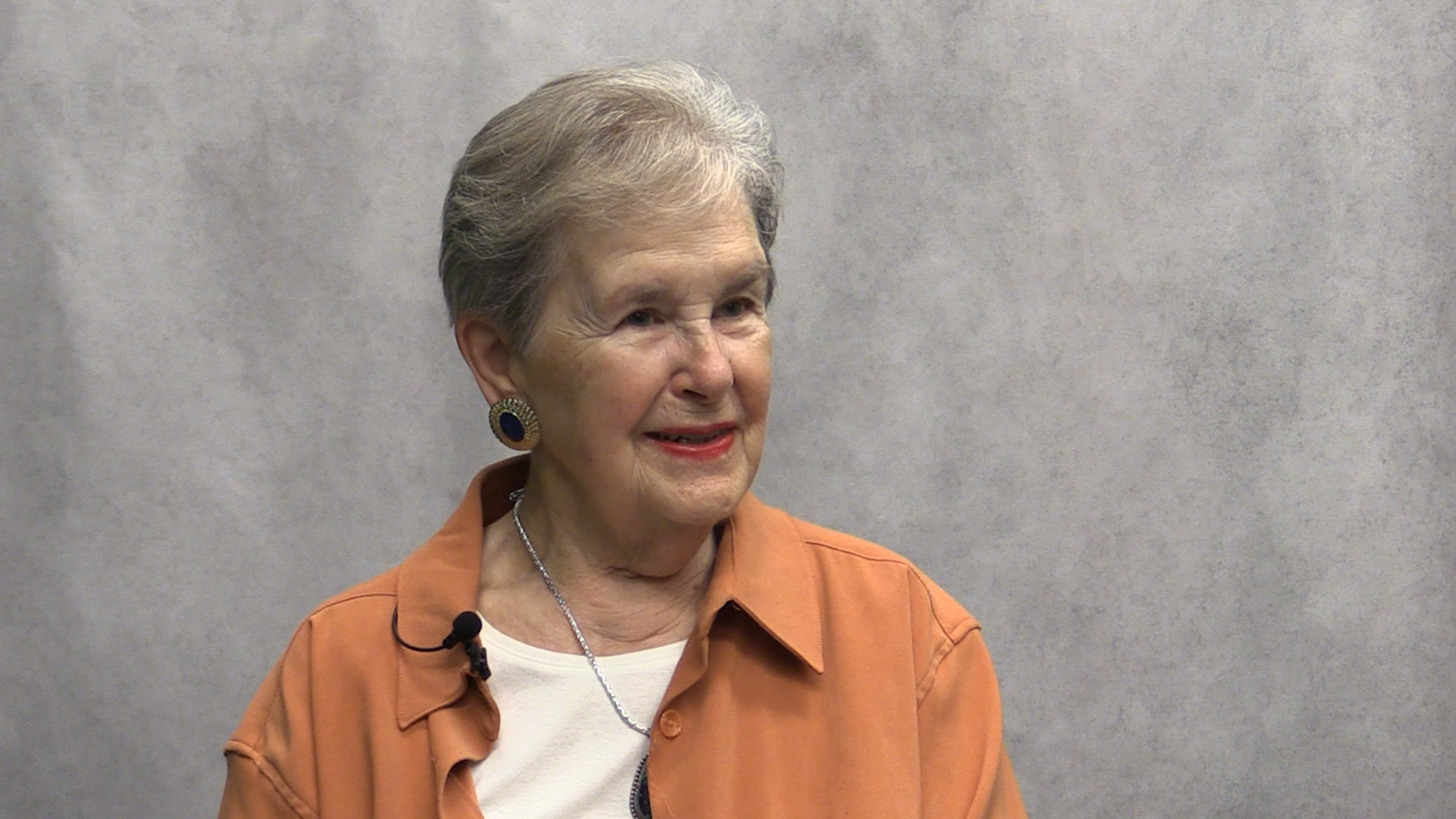
BIO INFO: Phyllis Waecker is a life-long resident of Middletown, Delaware. She and her husband and family have owned and run a farm for several generations. She has worked her whole life, both on the farm as a child, and in local business as an insurance agent and in accounting. She was born and married at her farm home. Phyllis is proud of her hometown, its rich history and the community support for each other.
TOPICS AND SUBJECT MATTER
Recording Inventory Sheet: Phyllis Waecker
Digital Collections Sheet: Phyllis Waecker
Middletown Historical Society
Middletown, Delaware
Oral History Series
Speaking of the Past: Conversations
With Long-Term Residents of
Middletown, Delaware, 1900 – Present
Interview with Phyllis Waecker
March 11, 2026
Middletown Historical Society Oral History Transcript
Phyllis Waecker – Youtube – 03112026
Interviewer Patricia L Peirson Maichle
Pat: Good morning.
Phyllis: Good morning.
Pat: How are you today?
Phyllis: I am very fine, thank you.
Pat: That’s good. I’m Pat Maichle. I’m a volunteer at the Middletown Historical Society and I’m here with Keith Schneider who’s our videographer. We’re here at the Appoquin Appoquinimink Community Library in Middletown, Delaware. And the Historical Society is trying to um by by using your memories and experiences display the history of Middletown from the 1900s through today. So, um all of this information that you give to us will be valuable in the effort to do that for the Historical Society. So, just relax. I’ve got some questions for you and we’ll get started. What is your full name? And do you have a nickname?
Phyllis: Phyllis Carol Emerson Waecker. And no, I do not. Maybe. Hey, you.
Pat: When and where were you born?
Phyllis: I was born on the family farm on March 24th, 1943. I was a war baby.
Pat: How did your family come to live here?
Phyllis: My father had lived on a farm about a quarter of a mile away with his family and he was had nine children in that family. He was the last one. And he found the farm available and he went and bought it in 1941 just at the beginning of the war. And with that he raised five children there.
Pat: Were there other family members in the area besides your immediate family?
Phyllis: Uh, yes. I had cousins that lived in other places around the area. Emerson is a big name or was a big name with nine children. Yes. My uncle lived on the backside of our farm. My dad sold him a piece of pe property and he lived on the back side of the farm and he was the oldest of the children.
Pat: What was the house you grew up in like? So, how many rooms it had? Did you have electricity? Did you have running water?
Phyllis: It was a very big farmhouse. I have counted the rooms now by memory and we had 11 rooms in the building. It was three bu stories high with a basement in it, a cellar as we called it back then. And yes, when I was there, yes, my father had just put in the bathroom and the heater. They were the uh heater was in the basement. The bathroom was on second floor. Only one.
Pat: What is your earliest childhood memory?
Phyllis: Oh my. No, I honestly can’t tell you. Uh, probably the earliest one was being switched by my mom for chasing the chickens. I was supposed to be feeding them and I was chasing them to feed them. I thought you fed them by hand. So, she got a stick and whacked me.
Pat: What kind of games did you play growing up?
Phyllis: None. Uh, you played by yourself because there was four years difference between myself and the youngest set of the other children and they were much older than me. There’s nine years difference between my brother and I and the other three two were in that range. So, I was played by myself and of course you had hopscotch when you saw it someplace at school you learned hopscotch, jump rope so you did that. On a farm, you work you don’t play too much. Ride a bike.
Pat: From one job to another. What was your favorite thing to do for fun? Did you go to the movies? Did you go to the beach?
Phyllis: Uh, we went to the movies. On a Saturday night if it was a good movie. The family would go to the movies. Uh, later on in years when I was in school, we would I would go to dances ‘cuz the school used to have dances every Saturday night for the students. But that was in high school, not lower. And fun. We used, my family used to have dances at our farmhouse of all the neighbors. Uh, and it was either the Victrola, the old crank Victrola, or it was my grandfather’s band would come and play and we would have that. And later on, my we were the first family that had a television and we got it in 1949. And the neighbors would come over to see the television.
Pat: Black and white?
Phyllis: Black and white. And then it had a screen that you could put on it that was red, blue, yellow to make colors on it, but that didn’t get put on too often.
Pat: Did you, well, you kind of said this. Did you have family chores? And what were they? What was your least favorite?
Phyllis: Milking the cows. Yes.
Pat: By hand?
Phyllis: Yes, I did. I had to milk by hand. We had electric milkers later on, but originally you started milking by hand. And my job when I first started was milking the cows by hand, the ones that they couldn’t get the milkers on. They would be too afraid of the milking machine. But yes, I milked by hand.
Pat: What was school like for you as a child? What was what were your best and worst subjects and where did you go to school?
Phyllis: I went to Middletown High School, all 12 grades. We did not have kindergarten at that time. Um, my best subject was math. My worst subject was English. Uh, I struggled very much in school with getting grades. Uh, I came from a family that brother had a photographic memory and the two sisters were straight A students. All of them would the oldest sister would went out of school at 11th grade but she would have been the same as the other two. One was Valedictorian, one was Sudatorium, and then me.
Pat: Did you go to college?
Phyllis: No, ma’am.
Pat: Do you remember any fads from your youth like popular hairstyles or clothes?
Phyllis: Uh, not really because I did not have fads. Uh, my mother dressed very proper and that was taught us. We walked with a pill a book on our head the bit walked straight. Uh, the fads at that time were the big crinolines and the skirts, you know, long skirts, bobby socks, sweaters, but that’s it. My hair was a page boy. I had long hair at that time and it was a page boy. And it would be set every Sunday and it would stay in until the following Saturday. You didn’t wash your hair all the time back then.
Pat: What were your favorite songs in music?
Phyllis: Rock and roll. Favorite song? I didn’t have any. I liked them all ‘cuz you could dance to them.
Pat: Did you have any pets? And if so,
Phyllis: yes, I did.
Pat: What were they and what were their names?
Phyllis: Uh, there were two dogs. Two uh Irish set or Irish. Yeah, Irish terriers. And um one was Patch, the other one was Midge, and mine was Patch. It was a little brown and white terrier. And they stayed in the house and running the farm.
Pat: What was your religion growing up and what church did you attend?
Phyllis: Methodist. And I attended the Summit Bridge Methodist Church. Uh, my mother finally settled down with that church. We had been to Odessa, the Grace Orthodox here in town and then we settled on Summit. She liked it.
Pat: Do you still go?
Phyllis: The whole 27 people.
Pat: Do you still go there?
Phyllis: No, ma’am. I still get information about them. Yeah, that is still my church, but I have not been there in many years.
Pat: Were you ever mentioned in the newspaper or other publications?
Phyllis: Yes, ma’am.
Pat: For what?
Phyllis: One for being uh the nom uh representative of Middletown in the Delaware Junior Miss Pageant. Then the other time I, of course, graduation they put the names of the students in. Um, but the other was where I was Miss New Castle for Farm Bureau, Delaware Farm Bureau, and I rode on a float in the Delmarva Chicken Festival in Dover and then down in Delmar for it. And I do appear in the Farm Bureau paper. They have a magazine. It came out with us, the three girls on it.
Pat: Did you keep copies?
Phyllis: Yes, naturally.
Pat: What world events had the most impact on you while you were growing up? And did any of them personally affect your family?
Phyllis: The only one that would have had affected my family was my brother-in-law. He was in the army and got stationed over in Korea in the ‘50s. And that’s why my sister was out of school and stayed with us because they were married before he got shipped overseas. Other than that, no ma’am.
Pat: How are holidays uh celebrated in your family such as birthdays, Christmas, Easter, whatever holidays you celebrate? And do you have family traditions that you do?
Phyllis: We had family traditions. We gathered at Thanksgiving, Christmas, and Easter. Mom, my mother would always fix a large dinner, and we all would jump in and help and uh you know, yes, we did celebrate birthdays and anniversaries and uh you know, just have a good time. The families would get together. Early on, my dad’s family uh own family, brothers and sisters, if they were close relatives or close by, they would come and celebrate with us, too.
Pat: Did you have a special tradition for uh for example Christmas, like going to get the tree or
Phyllis: Uh, tree was always decorated the night of Christmas Eve and then you went to bed. Dad would go up to farmers market in New Castle, buy a tree a month ahead of time, put it in water and keep it and then Christmas Eve it would be brought in and you would decorate it. Back then we had the lights were the bubble lights and you had different other things that you had that you put on the lights and all and I still have them.
Pat: Do they still work?
Phyllis: Yes.
Pat: That’s amazing.
Phyllis: Yes. And I have all the little aluminum foil colored item things that would go on for as a stand for them. Yes. And I remember the tinsel. How it got everywhere. Even when you thought you had nothing, you would find it.
Pat: How is the world today different from what it was like when you were a child in any respect, culturally or anything you.
Phyllis: How is it like from when I grew up?
Pat: Yeah.
Phyllis: Terrible.
Pat: Okay. Go ahead. Talk to me about that.
Phyllis: What one major thing that I find of when I was growing up and what it happens now, there is no politeness, uh, no respect for other people. And when I was growing up, if you were in town walking down the street, you said hello to everybody because you may not have known them. They knew you in the town because it was a small town. And now if you say hello to somebody, they look like you. It’s like I don’t know you. I’m not talking. And, the way they act, it’s me first. And that was never the way before. And that’s what I miss.
Pat: What do you know about your family surname, your maiden name?
Phyllis: Not much. Um, the reason for that is that um I have done some work on it. I have a cousin that has done a lot of work on it as far as he can go back. Uh, the Emerson family, as far as we know, goes back to 1810. They may have been here before then, but they can only get that. And I know that the grandparents, the grandfathers, they were George Emerson or George H. Emerson so that they could distinguish which person they were talking to. And my great-grandfather died just after the Civil War. So, I don’t know a whole lot about them.
Pat: Do you know what country they came from?
Phyllis: I assume England being Emerson.
Pat: Don’t make too many assumptions.
Phyllis: No, I don’t. And I do not know where my great-grandmother came from.
Pat: Okay. Is there a naming tradition in your family such as always giving the firstborn son the name of his paternal grandfather?
Phyllis: The only name that they have is my uncle. I do have an Uncle George because my grandfather’s name was George and I believe he is George H. Emerson. Uh he is not the oldest because the oldest was Ira and that name got passed down through the family by my uncle naming his had the father that named his son after my uncle. But that’s the only time that that name has shown up between those two. But George has been all the way through.
Pat: Considering that we’re celebrating the 250th anniversary of our country this year, what stories have come down to you about your parents, grandparents, or more distant ancestors? Kind of answered that a minute ago, but do you know anything else? maybe about the Waeckers side of the family.
Phyllis: Uh, no ma’am, I don’t. We’re having a very hard time finding information about them. Uh, we do know that they came from Switzerland. The grandfather came from Switzerland and the grandmother came from Austria.
Pat: Do you know when?
Phyllis: No, we do not. We don’t know. And we do not know what port they came into. There were Waeckers out in Wisconsin, but we don’t know. We cannot get a connection to them. So, I, honestly, we’re having a hard time finding that. Maybe somebody will listen and see contact.
Pat: What was your profession and how did you choose it?
Phyllis: My profession basically was in math as I said of my first job was with Schagrin Gas as a bookkeeper. Uh I worked for him for a year. Then I got married and when my son went to school, I went in to work for an insurance agent in Middletown, Combes Insurance uh run by Ellen Combes Davis. And I worked for her for 10 and a half, 11 years in that office. And, with that, I had my own insurance license. Uh, you had to work in the office, you had to have a license. So I went to school, college, classes at night and got my thing from there and got my license. And as I say, I worked there and I was basically her bookkeeper, salesman, secretary because I was the only one in there for about a month and a well more than a month. Uh I went to work for her. On one week she went on vacation for a three-w week vacation and the second week the lady quit that was in the office. So, I had to learn insurance very quickly and thank heaven for the companies because they helped me and then Ellen had came back and I worked for her for quite a while.
Pat: And why did you choose that profession?
Phyllis: Simply because my husband found out that there was a job open. But I enjoyed it very much and I did keep her books.
Pat: What accomplishments were you the most proud of? Of which accomplishments were you most proud?
Phyllis: Oh gosh, I guess the insurance field because after I left the insurance field, I went to work for the Appoquinimink school district and I was a secretary at the high school for 10 years and then went to personnel in district office.
Pat: How has the recent development affected the area? Excuse me.
Phyllis: A lot of traffic.
Pat: Talk to me about that.
Phyllis: I, well, a good example uh when I was coming up, there was very few cars on the road. No lights other than the light in Middletown center. Uh, now in order to get to my home there is a light from the center of town and there is another light now out by St. Ann’s because I live on 71 south of 71 a mile from Middletown center. Um, it takes me five minutes or better to come into town just to get out my lane because of the traffic that you have. Um, both going north and south. You think one way is clear and here comes the other side. Then that side starts up again. So, it takes a while to get into Middletown. Middletown is very crowded. It takes you takes me 20 minutes from my house normally to the Historical Society which is probably a mile and a quarter from my home. Yeah. And it’s a nightmare to get around town. You have to know the back roads of which the new people are finding out about and they’re crowding them too. And there’s no patience at all when they get behind the wheel. And you best let them go first. Good example last night going home from our meeting. I came to the light outside of town by the St. Ann’s church. I got the green light. I had a gentle had someone on the right hand side that was making the right hand turn to go down St. Ann’s road. Gentleman coming up in a truck going through town. We thought turned finally put his light on and turned just as all three of us started moving and he made the turn. Whether he had a light prior to that or not, I don’t know. All I know is I hit my brakes. But that’s type thing you have to watch because they do not pay any attention to rules, or that’s what I find.
Pat: How has the community changed? So, think of it culturally. Um, you said a little bit about the fact that people are not as patient and a little bit about the fact that people are uh not polite, but in other ways too, not just culturally, but how how has it changed since your childhood?
Phyllis: One thing that we’ve gotten is a lot of shops. We never had, we did have a lot of shops in town, but there were local shops and not real big. But now we have the Walmart and the Kohl’s and all the big stores and all the restaurants and everything in here. It has changed so much. So much traffic that you know it’s just it’s a combination of everything that is different now.
Pat: Are you happy with that?
Phyllis: No. I would like to when they put up the water tower and had the contest about slogan the little boy that won “Come Visit Us”. I would love to get on that water tower and say “now you’ve here go away. Sorry people but go away.” Yeah.
Pat: What do you want people to know the most about yourself, your family, their business, etc. Or what is your legacy, I guess?
Phyllis: I guess we are a long Middletonian family. My husband grew up in Middletown. Uh they had a business in Middletown with his grandfather being in business beforehand. Uh it was a total of 70 years. They had a garage in Middletown. The grandfather started it with another gentleman right underneath the old hotel. That was right by the railroad tracks. And then his daughter got married. And when the father, my husband’s father come out of the army, then he went into business with his father-in-law. They had a garage on South Scott’s, East Scott Street, South Scott Street in Middletown. And they had a garage there for 37. Well, my husband was in was had the garage for 37 years. And they had it prior to that. They started in the ‘50s with their own garage and they were there, both garages were there for 70 years basically.
Pat: And that’s for cars, right?
Phyllis: That was for my husband owned them. Did everything. Anything that had a motor, they would work on uh even go to farms and work on tractors for the farmers. Uh boats, welding, they could weld things ‘cuz they had all the training, everything. Motorcycles. Yeah.
Pat: What do you want people to know the most about Middletown’s past? Everything that you know about Middletown.
Phyllis: It was a wonderful town. Very quiet. Uh had a lot of fun. We had a fire company that used to have uh carnivals where the old Middletown Little League Diamond was. Where now the fire company has their new building. They used to have a carnival every year to raise money and everyone came to support it. This even out of the ones down in town, Odessa, Townsend, Smyrna, Chesapeake City, you know. And one of the things that I remember the most is my dad had a baseball field in one of our f front fields and that the Middletown Fire Company had a baseball team and they would come out and my father would help them and they could play on there every weekend with all the other teams. Yes, that was some and that was until I was 12 years old that they did that. So, yeah.
Pat: A lot of um community support for each other.
Phyllis: Yes, it was at that time it was a lot of support all along and of course we had the bicen or the centennial in ‘ 61 and um the fire company had their 70th anniversary shortly thereafter and everybody came to enjoy it, you know, helped celebrate with them, you know, but it was it was a very nice town to a member of.
Pat: Is there anything else that you want to say? Any stories you want to tell us about your experiences here or your memories?
Phyllis: Not really. Um, I have my memories. A lot of memories. I know a lot of businesses with working in town for 20 years. I got to meet everyone, the businesses that we had. We had a lot of stores in Middletown. Remember, Middletown was a country store ‘cuz we were below the canal. And in order to get anything good, what you would call real good clothes, you had to go either to Wilmington or Dover, which was 25 miles each way. Middletown was known as the hub of the east because we connected 301 and 13. They had to go through Middletown to get to 13. We’re a very old town. We were here for the Revolution, you know, and it’s just great history that the town has that, unfortunately, people do not know about.
Pat: Tell us about your husband.
Phyllis: My husband.
Pat: When did you meet him? How did you meet him?
Phyllis: I met my husband in high school. Uh I was a sen a junior. He was a sophomore ‘cuz he’s one year younger than me. And uh in those days you learned social graces. In the wintertime they would teach us have a six-w week course on social graces in Phys Ed class because you couldn’t go outside. Basketball was either hadn’t started yet or was getting ready to start. And, so, you had dancing and learned to be polite etiquette and learn how to play. Did bowling and how to figure it up and take account of that, how to play some cards, some games that you may run into. And during the dance class, my husband happened to be my partner because I knew how to dance and he did not. So, we learned how to dance together and we have been together ever since that time. And yes, we still dance. Matter of fact, we went dancing Saturday night at one of the ladies’ nights that we went to.
Pat: Where did you get married at?
Phyllis: In my home. I said I was born in my farmhouse in the major downstairs living room. I was born in the north corner of that room and I was married in the south corner of that room just diagonal in that same room.
Pat: Did you have a big family celebration for it?
Phyllis: No. No, it was only my aunt who had delivered me because the doctor hadn’t gotten there in time when I was born. My dad had to go horse and bo uh sleigh out to the road to get him because I was born in a big snowstorm. They called it a blizzard. And uh he was late, half hour late. So, my aunt had to deliver me and she and a couple of her daughters came to him at the wedding. It was his family and my family and he was had a very small family.
Pat: How long have you been married?
Phyllis: In June, we’ll be married 64 years.
Pat: Congratulations.
Phyllis: Thank you.
Pat: You deserve an award. Well, if you don’t have any more information you want to share with us now, um I think we’re finished. Thank you very much for being part of this conversation and um I really do appreciate the things that you told us.
Phyllis: Thank you very much for having me.
(NOTE: Additional footage added to video)
Phyllis: We had a bowling alley that was there. Took over from when the storm came in ‘57. The nylon factory was there until ‘57. We had a storm Hazel.
Pat: You should have talked about all the video.
Phyllis: That uh hit and knocked the roof off. And with that, Mr. Garmer did not go on and replace it ‘cuz it ruined the machines and everything. And he went out of business. And then in the mid ‘60s, the bowling bowl bowling started and we got a bowling alley in town until our senior people of Middletown thought that with when the kids came and played did the bowling, they thought we were on drugs and drinking and all that. So, as a result, it closed. They did the same thing to the student body when they started. The Armory used to be here also and they would have dances for us besides the ones that we had at school and we had a sentry club which is still in town. Uh it’s now called the 861 I think it is that had a restaurant and all that was the sentry club. And that came and I used to go dancing there with my parents because they would have uh western music. They called it hillbilly music actually back then. But uh they had western music there and you would go and dance and I was dancing with cousins and people I had no idea because they had such dances as a Paul Jones and that got you got in a circle and you went weaving and whoever you wound up with but music stopped that’s your partner for a while and then you did it again and again around. I don’t know how old you are or how you what you did but you know you had a good time at all times. It was not something where you would go have a fight or be drinking or anything you were just having a good time with it, you know. So, I I am very proud of my town, you know, and it upsets me when they try to tell me that we didn’t have such things as that. You had uh little grocery stores on all corners basically. On the North Broad there was one right down from the senior right down from the school, Academy. It had a little grocery store and they would carry bread, milk, things of that nature and you could get some sandwiches.
Pat: Was that Shivery’s?
Phylllis: No, Shivery’s was right in town.
Pat: Which one was that one that you talk about?
Phyllis: This one is down on Lake Street, the corner of Lake Street.
Pat: What’s what’s the name of it, though?
Phyllis: Um, the last couple the last people that lived there was Atkinson. Uh, I do not know the name of it. All I know is that I went there with my sister and her friend who lived just up the street, Jos’s. And uh they had to go get milk for the mother for whatever we were doing.
Pat: I don’t remember that, you know.
Phyllis: And um then you had them out on East Main. You had the one there and that was Comples’ and that is now a I think an antique. I think they may sell antiques again. They changed so often now. It’s right down from the Methodist Church on the corner. Yeah. We had three at least at least three cleaners in town. One was on East Main, two were on North Broad, right across from each other, matter of fact. And as I say, I worked for Schagrin and we had a shoe co store, a barber, the American store. Do you know what the American store was?
Pat: I don’t know.
Phyllis: Acme. It had started out over on West Main Street right there by the tavern. It was where a fitness center is right now, but it started out as the American store. Then they moved over to the brick building which is now the Mexican store and right on the corner was Capital Cleaners and they took theirs out to Dover to clean.
Pat: It’s like a game, a board game.
Phyllis: And the other side you had the bank, you had the liquor store, then you had Flying A gas station.
Pat: I remember that.
Phyllis: Then you had acquaintances, cleaners, and then you had Grimmingers.
Pat: Yeah, Baker.
Phyllis: Um, I’m sure you remember Grimmingers. They were a great German.
Pat: I do remember the Baker and that was a bake shop when they closed.
Pat: Oh, he was in he did one of the interviews. Yeah.
Phyllis: Yeah. And then you had Sadoff’s. And then the next thing up was Shivery’s was right across from Grimmingers on the corner at Anderson Street. And then you had the town townsman um Alderman Office and then you had Dr. Crutchley. And then you had the funeral home over on this corner or right across the street from him and then you had the school where we go.
Pat: That was Mear’s right, funeral home?
Phyllis: No, that was Daniel’s funeral home. Mears was over on Cass Street.
Pat: Oh, okay.
Phyllis: Grew Mears. He was on Cass Street, right on the corner of Lake and Cass, North Cass Street. Yeah. See, I remember a lot.
Pat: It’s like a board game.
Phyllis: I just Yeah, it is. It really is a board game because South Broad was the pharmacy, McNaughton’s Pharmacy. Then you had Catherine’s restaurant. Then you had um Nationwide Insurance. Then there was a little sub shop called Sunny’s. And then there was a boarding house in the vacant lot. And then you had bars for Ford. Mhm. There. And then you went into housing. Houses. Yeah. Yeah.Pat: Yes.