2026.005.007 Edna Cale
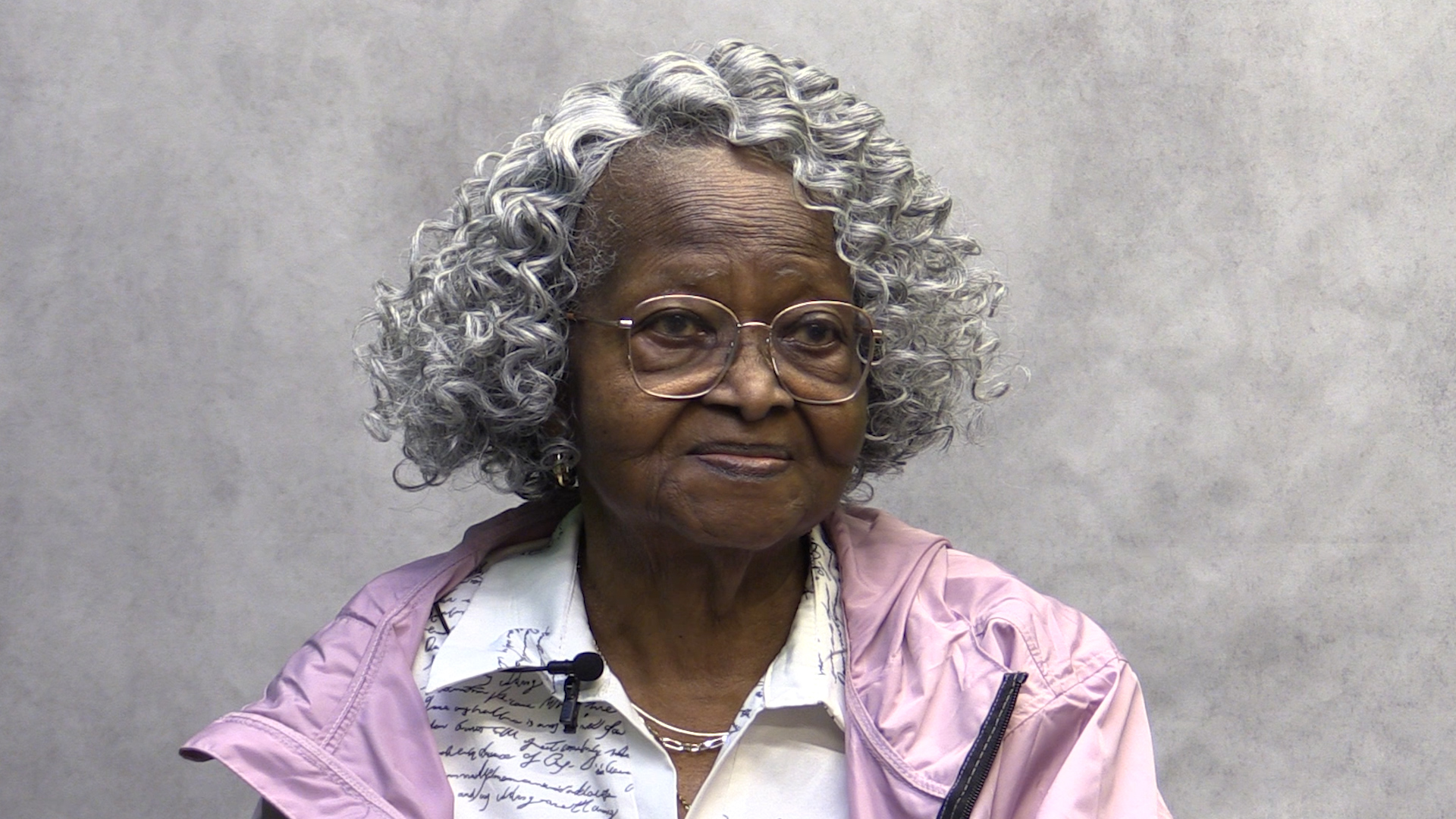
BIO INFO: Edna Cale is a life long resident of Middletown, DE. She was born at home in Mt. Pleasant just north of Middletown and was raised on a small farm by her grandparents. She attended school at what was then the “Colored” Schools in Middletown. She was married to George Albert Cale and they had 5 children; three boys and two girls. Mrs. Cale eventually earned her high school diploma and throughout her life worked to bring awareness of the value of education and employment.
TOPICS AND SUBJECT MATTER KEYWORDS: Farming, Segregation, Education, Religion, Family Heritage, Social Activities
TO VIEW SUBTITLES, PLEASE SELECT THE CLOSED CAPTIONING (CC) ICON AT THE TOP RIGHT OF THE VIDEO.
Recording Inventory Sheet: Edna Cale
Digital Collections Sheet: Edna Cale
Middletown Historical Society
Middletown, Delaware
Oral History Series
Speaking of the Past: Conversations
With Long-Term Residents of
Middletown, Delaware, 1900 – Present
Interview with Edna Cale
March 9, 2026
Middletown Historical Society Oral History Transcript
Edna Cale – Youtube – 03092026
Interviewer Patricia L Peirson Maichle
Pat: Okay. Good morning.
Edna: Good morning. How you doing this morning?
Pat: I’m good, thank you.
Edna: Loving this weather. Loving this weather. God knows I am. No snow. Oh, Lord have mercy.
Pat: Yeah. I’m uh Pat Maichle. I’m a volunteer with the uh Middletown Historical Society and I’m here with Keith Schneider who’s our videographer and we’re here at the Appoquinimink Community Library in Middletown, Delaware. And what the Historical Society is trying to do is to document in video based on your memories and experiences the history of Middletown from the 1900s to today. So, we’re glad that you’re here. Relax and uh I’ll have some questions for you and we’ll go from there.
Edna: Okay.
Pat: What is your name and do you have a nickname?
Edna: I don’t have a nickname. Never did have it. Well, they call me used to call me Little Edna because my grandmother’s name was Edna. But uh I don’t have I don’t really don’t have a legitimate nickname, but my real name is Edna Edna Cale with a C. C A L E. They think I’m at a vegetable, but I’m a C. And so that’s my name. I’ve been in Middletown all my life. Well, not Middletown so much as a little town called Mount Pleasant, but it’s also Middletown.
Pat: And when and where were you born?
Edna: Mount Pleasant, Delaware. Uh 1939. I’ve been here for a minute. Uh.
Pat: How did you how did your family come to live here?
Edna: My my my grandfather was a Conductor on the railroad years ago. When uh they uh he he the trains would come to Mount Pleasant and people would get on and off. He would flag or put them on or put the stuff on. So, I got free rides because I could ride on a train to Wilmington. I could ride on a train wherever the train was going. I could ride it. And so that’s how I came here. My my mother and and and was was born here also in a little town called Mount Pleasant. Yeah. Yeah.
Pat: Well, were there other family members here or just your immediate family?
Edna: There was there was other family members here. It was about five of us, f five different families that was around in the area. Uh we all grew up together. We we were we was in this little town called Mount Pleasant, which is uh nothing but uh it was a Grainery and uh so that’s where the train stopped and that’s where people did business and stuff like that. But uh we did every all of our shopping and everything went came to Middletown. We had to come to Middletown for everything. There wasn’t we had a little corner store but didn’t have no grocery stores and stuff like that. So, we came to Middletown and shopped with at Earl Shivery’s, Sadoff’s and Berkman’s and places like that to get whatever we wanted.
Pat: What was the house you grew up in like? So, how many rooms did it have? Did it have running water? Did it have electricity?
Edna: I’m in the country. Okay. We had we had uh three four four bedrooms. Now, first off, I need to go back and say the house that I that I grew up in is the same house that my mother went to school in. And so, my somehow or another, my grandfather got the house brought down there to where it is now. And uh and that’s where we lived. And uh we no, we didn’t have no running water. We we ran that pump, you know, we pumped our water. We had nice fresh spring water. And, so, uh didn’t have no we we we had a outside, John, I call it. I I call it outside toilet. You know when we went there. We had a chamber pot in the bedroom for night time and we that was my my job was to clean the chamber pot you know and stuff like that. But uh it it was me my my grandfather and my grandmother that lived in the house. My mother lived with her husband at another place.
Pat: What is your earliest childhood memory?
Edna: School right in behind me. Going to school there, living living where I live. And my grandfather was, I call him the boss of everybody. And he so so in in back of my house where where I live was was 117C. I think it is school that I went to for elementary school and and he he his job was to make sure that in the winter time that the the teacher got into there. So, I had all those pleasures of having see see him shoveling the snow and getting her ready to get into the school and making sure that this there was far there. So, uh then the kids from the other surrounding areas came to our house and would wait for to get into the school. So those are the kind of things that I remember.
Pat: So, you said the name of it was 117C. Can you explain that?
Edna: Uh, Dupont built a whole lot of schools for colored people and so they named them as 119 119 C 117 C one one whatever C but C stand for colored and the and the road that the school that the school went on was called Colored School Lane. Uh they changed it after the developments started coming up there because white folk wanted didn’t want to be on Colored School Lane. So, I don’t even know what they call it now, but they call it something else now.
Pat: Is the school still there? Do you know?
Edna: The school’s still there, but they convert somebody bought it and converted it to a house. And so, in back of it now is a house and uh they they have every everything is the same shape and everything. Nothing has changed for the school.
Pat: What kind of games did you play growing up?
Edna: Platting the grass. We would plat grass. I we we would get on the grass there certain kind of grass as you could could plat. And, so, we would plat grass, make mud pies and stuff like that. In back of the school in the winter time there was a pond and and then we we would skate on this pond. That was our skating area. Didn’t have no skates. We skate on our with our shoes and stuff like that. So, so plattin grass, making mud pies and just just this would be our house. We would take our barrettes and stuff or and any kind of things that we could make out of braids and stuff like that. We didn’t have it. We didn’t have stuff. We had to make our own. Make make everything that we wanted. you know, if we wanted to uh the school had a a little games over there for for the kids as when they were as young when we were younger, you know, you you would climb the monkey bars and stuff like that and seesaw and stuff like that. We had that over there, but we weren’t allowed to use it because it it belonged to the school, but we would sneak over there and do do things like that. Yeah.
Pat: What was your favorite thing to do for fun?
Edna: Like platt grass and make mud pies
Pat: And go ice skating.
Edna: Yes. And go ice skating in the winter time. Yeah.
Pat: Did you um go to the beach or the movies?
Edna: Oh no. Beaches. We weren’t allowed to. Well, I was black. I was an African-American. And, so, we those things were not open open to us. You know, some friends of mine years later when we got in high school, they got a job down in Rehoboth, but they only got the job there, but they couldn’t we couldn’t go there and and swim and stuff like that. We we we had we had a beach called Salsbury Spyros Beach down in Maryland that we would our parents would get a bus and would take us there in the summertime, but that was the only time we had a beach.
Pat: Has that changed?
Edna: The beach? The beach, that development. It was a it was a black owned community and and people didn’t keep up with the taxes and stuff like that. So now it’s a development. So, it has really changed. Yes.
Pat: What was school like for you as a child? What were your best and worst subjects?
Edna: Worst subject was all of them. I, somebody said if you could if you could go back what years would you go back to? I said any year that didn’t care didn’t have mathematics or or or English. I said because I hated we had to hang do hang it hanging participles and all that kind of stuff with English not like they do now. I said and I and and me and math just didn’t get along. I said so I I I did well. I passed, you know, because the school that I went to was one room school. So, it was first, second, third, fourth, and fifth. It was first through sixth grade. So, I went from I went from this bench over here, first grade, to this bench over here, second grade to, you know, like that. And finally got over to the window for the sixth grade. And and that’s where it stopped. And then and then after that I I I I would catch a bus and it would bring me to Middletown.
Pat: To which school?
Edna: To uh I I went I went it bring me to Middletown to Church because we didn’t have no schools then. They had they had they had they had 120, I think it’s 120 C was the colored school from Middletown. And I would go I would go we would go there but I but when we came down here we had they didn’t have classrooms for us. So, I would go to uh Dale’s Church went to Dale’s Church for the seventh grade. Uh uh we went in the went in the basement and had classes there and the teachers was come would come there and teach us for first through for the early periods like uh uh and then from from the early periods. Then we would go to the to to 117 C, color school, and we would uh do home economics and other classes like that in the afternoon. But and and the best part about that part of school was was being able to cook. I would be able to cook and eat my own food because my my parents back in the day we we we packed our lunch. You packed it in a brown paper bag. We wrapped it in newspaper. I I laugh about things like that now, but but that was the way I I I live, you know. And, so, when when I was in got into the seventh grade, I did home economics. And, so, whatever we cook, we could eat. And I really enjoyed that. Or sometimes I would would have enough money to buy lunch. The ladies in the town would would would cook the lunches at at their home and bring it to the school. So that that was the best part about it.
Pat: Did you go to high school?
Edna: I I went to high I went to high school at M that was the high school part seventh, 8th and 9th. And then I I was there until they opened Louis L. Redding itself. And don’t ask me what year because I I don’t remember the year that Redding open. But I went went from the eighth grade at at at at the colored school to Louis L. Redding when it when it first opened and that’s where I hated it because I had to do I had to do uh uh typing and stuff like that. And I did not like I did not like none of that stuff. I didn’t like I did not like school. I I was the only child. My My parents didn’t allow me to do this. They didn’t allow me to do hardly nothing. My grandparents really. And, so, if I got a chance to go visit with my mother and my other siblings, then uh I would I would have a little fun. They would do things that I I could I wouldn’t wasn’t able to do at my house because I wasn’t wasn’t allowed to get dirty. Wasn’t allowed to do a whole lot of stuff. So, uh, school was school was basically, I guess, my little outlet as to where I could go, you know. Uh, but, uh, had a few friends there then because I would get on the bus and I I would make the friends, people were coming from Glasgow and Iron Hill and Delaware City and Port Penn, places like that on the buses. And so those are the kind of things that we did.
Pat: Do you remember any fads from your youth like popular hairstyles or clothes? Was there anything that was the thing then?
Edna: I can’t I I I can remember but I can’t I can’t remember the names of them. But but we had dresses that had Can Can slips and stuff like that. So, we had all that. And, so, it was like if if we went to a dance, we try to dress up a little bit. We go to Joseph Berkman and buy those $1.99 shoes that would hurt your feet. You put them on, by the time you got to the dance, you was taking them off or you was walking on the back walking on the back of them. But we we had our Can Can slips and stuff like that. So So So, the people that had the most money, you could tell who they were. Yep. They had the special hairstyles and stuff like that. My stuff came from my grandmom. She She was. That’s the way she was. That’s the way she raised me. Yeah.
Pat: Did you have any favorite songs or music while you were growing up?
Edna: Yeah. We had. There’s a place in we used to go to called The Shop and and and and had a Piccolo in there. So, you look I’m trying to remember some of those songs now. Uh, I had a seizure and so I had some memory loss and
Pat: that’s okay if you don’t remember. It’s okay.
Edna: Okay. Yeah. But we had we had some music. So I I I would sneak off from school and and then go up there when them Piccolo man was coming in to change the music and we would go in there and find out what what was the new music was and whoever had money we put a quarter in the machine play the music and then run back down to the school. The other thing that we did, we snuck around and try to smoke buying cigarettes by the. You didn’t buy cigarettes by the pack, you bought them singles. And, so, we would sit up to the shop. Well, we didn’t sit in the shop because the lady didn’t allow us to do it, but we would sit up to the shop and smoke our cigarettes and listen to the newest music and stuff like that. And so, yeah, we had several music. Uh, James Brown, Fats Domino, all those kind people like that.
Pat: All the big ones.
Edna: Yeah.
Pat: Did you have any pets? And if so, what kind? And what were their names?
Edna: Didn’t have no pets. I wasn’t allowed to have pets. I was allowed to work in them gardens, pick them tomatoes, and bud them. Bud bud them. We call it budding bean beans. You know, beans had buds on. Bug bugs on them. We had to get that off early in the morning. I They would get me up early in the morning. My grandmother and my grandmother, grandfather, and I, we’d be out in that garden. Yeah. But I I worked. I really worked. Yeah.
Pat: What was your religion growing up? And which church did you attend?
Edna: I There’s a little church in Armstrong called Ringgo Chapel and that’s where I went to church. My grandfather also was boss at that church. I I say boss. My grandfather, I call him trustee of everything. He he was uh we we we I walk from Mount Pleasant, which is about four miles to Armstrong to church every Sunday morning, winter, whether it’s winter, summer or whatever it was. It was at that time it wasn’t fun so now. I think about it, it was fun and cool. And then we would go home, steal peaches out of out of every Everett Meredith lot and then he would chunk us because he didn’t want us any any you know it it it was it was racism really strong racism back in the day and he would call us all kind of names. We we but we would still still get the peaches and the apples off of that off the tree or on the ground and run up the road. Yeah. Me because me and it was it was five families up in there and we would all went to church at the same place and we all did the same things and so that’s what we did that was our fun and then we were
Pat: Were you ever mentioned in the newspaper or other publications?
Edna: Uh years later, I was uh a friend of mine was trying to tell me about going back to college, going to school and getting my uh degree. And, so, uh I was mentioned in Delaware, Delaware, the newspaper came out, think of the name, Transcript, not Transcript, uh
Pat: News Journal?
Edna: Yeah, News Journal. I was mentioned News Journal because I went back to school. They called re-entry. And so I got a got a scholarship to go back to school and uh went there for uh Del to Del State for uh I didn’t like it because I I went there and and and it was young kids that was there and so I I was now pretty close to being I was an adult and so they did not believe nothing that had ever happened, you know, like when they was talking about the history of racism and stuff like I don’t know. “People didn’t do that. People didn’t do that” because they they had no ideas as it is now. Still don’t have ideas what really happened. Yeah. But I but I played basketball. Uh and when I played basketball, girls team, you only played half court. So, uh so I was a guard and I and and and so I stayed down this end and and my other people the forwards was on the other end. So that’s how we played basketball. But uh me and my girlfriend class who who also lived at Mount Pleasant, we was the biggest ones on the team. And we and and and they they had suits for everybody except for us. They had to go buy a special kind of suit for us because we were so big and tall. Big and tall. I felt I I used to they got pictures of us in the in in in a in a yearbook. I I say I tell everybody I said I I feel so felt so awkward, you know, things was just awkward for me back going growing up, you know, but uh I was determined to make it make it and did make it a little ways. Yeah.
Pat: What world events had the most impact on you while you were growing up? And did any of them personally affect your family?
Edna: I I try not to think about those kind of things because like I said, racism was, you know. First off, we we we we had stamps, green stamps and whatever other kind of stamps you could get. And uh we uh you could only buy so much sugar, you could only buy so much flour, so much of this and so much of that. So, uh if if and and my grandmother did not allow me to buy chocolate ice cream because it was considered racist, you know, so I had to always buy vanilla. And I love I love chocolate, but uh she didn’t allow me to do it. Those kind of things happen. So, so when I when I when when we was when when when when I would get on the train to go somewhere, she and I had to sit at certain spots on the train. Like she she had family down in Maryland. So, we would go down there for a weekend and but but getting on the train was was was a hassle, you know. She she told me she said, “Edna” said, “I’m glad you were born now than when I was born.” I said, “Because you would be dead because you don’t keep your mouth closed. You ask too many questions. You’re too nosy, you know, and you can’t do that.” ‘Cuz she worked for a lady who had cancer real bad. The lady wanted shortbread, but she would not allow my grandmother to make her shortbread. My grandmother had to take the flour and everything upstairs to her so that she could mix it up because my grandmother was about your complexion, almost your complexion. But she said that black was coming off of her into the flour. So those are the kind of things that I I I was constantly dealing with as a child coming up and those are the kind of things that that impacted my family. Uh uh they they still tell me that and “you still got a mouth that’s going to cause you some trouble”, you know, but if you ask me, I’m going to tell you, you know, and and those are kind of things that hurt. And then I had a I had I had a a lady that lived on a farm called Dixie Rob. And she uh I I used to babysit her. I don’t know why I was babysitting her because her kids were the same age I was that I was babysitting, but she had some younger kids. And uh I I I I would I would watch watch her kids and and and she was a really influential person in my life. She kept my parents involved in in the politics. That’s how that’s how Redding got the name because she kept them about abreast as to what was going on in Dover. She would she had to she she and another cousin of mine had cars that they had and they would go down down there and argue about different points that they needed. They we had a creamery in Mount Pleasant and they was trying to get rid of it and and she and it was on her property and so she my my parents went with her to make sure that she could keep her creamery. I mean different things like that. And so then later on in in life when I started having children I we didn’t know enough about birth control. And, so, uh uh she was trying to introduce me to birth control. What in the world are you talking about? But then when I then I had a child and so I was trying to get non support, she took me to Elkton because the father lived in Maryland and they said we don’t do bastard kids. So, So those are the kind of things I mean that that was constantly in in my face in my life. So, as as I continued to grow up, black history started becoming prominent and and and 90% of the time I wore African clothes. So, they told me when I was looking for a job, they said, “Edna” said, “You can’t get no job looking like that.” And, so, I had to change my clothes, what I was wearing to an interview and stuff like that. I mean, those are the kind of things that happened when I when it when when uh when I was trying to get non support. She I mean, she took me to Elkton and then she she really argued with them about my my child wasn’t a bastard, you know, and and that he was a human being. I didn’t get no support to because because they wasn’t going to give it to me, you know, uh just uh little things like that. She she let me know who who was the Klan in Middletown because she was white. She she she hung out with them. So, she so so she she said why watch this person and watch that person and be careful Edna, you know. So, so I always living on the edge 90% of the time as I as my adulthood started coming. Yeah.
Pat: How are holidays, how were holidays, birthdays, Christmas celebrated in your family? Did you have family special traditions?
Edna: Yeah, we always always had those were the days. First off, we I need to go back a little bit because because we raised, my grandparents had we had chicken, ducks, cows. No, we didn’t have no cows. We bought cows. We had chicken, ducks, turkeys, any any kind of animal you wanted. We raised it. And so and and then at in November or somewhere thereabouts, every everybody in the neighborhood would come to our house and they would have what they call “hog killing time” and and so then then that’s when we got really good sausage, really good pork chops, you know, and then and then you’ve taken had all that stuff and so and and and so uh uh Thanksgiving, we always had Thanksgiving we had turkey. Christmas we had a goose because we had to get the grease from the goose to for medication. Nastiest tasting stuff in the world. But that’s what we had. And, so, uh we always came together. My parents, my mother and father, and my uh grandparents, they all came to my grandfather grandparents’ house. We had we had those days. Those two days was always together. And and and we had good times that you know uh uh my my we don’t everything that we had came came out of our yard. Uh uh the turkeys were my my grand my grand my my my my grandfather raised the turkeys. So, then they killed the turkeys. The other thing that was crazy was we had chickens and you had to take the chicken and ring his neck. But the Lord have mercy. And and ah grab that chicken. They said, “Didn’t they bite you?” I said, “No.” I said, “But I had to do it because that’s what they said I had to do.” So, I had to take that chicken neck and ring it. And then and and I wouldn’t eat chicken. I wouldn’t eat it. And then then when my kids when I started having kids, they found out that that the the pig came out of the yard or or or that the cow came from somebody’s farm. And, so, when I go with a I had the meat put in the freezer and they when I when I would bring it home I had to take it out of the brown out of the paper so that they wouldn’t know where where the meat ‘cuz they wasn’t going to eat it. So, it it was things like little things like that you know. But but but we we we we raised everything. We grew everything. We the garden was everything. We would go on a railroad track and get blackberries and make.
Pat: You had your own little farm?
Edna: Yes. Yes. Yes. Yes.
Pat: What do you know about your family surname?
Edna: Nothing. I I I I I a couple times I tried to do whatever that thing is.
Pat: Ancestry.
Edna: Yep. And uh I I my grandfather was born in a little town called Hollywood, Maryland. And, so, I got some information from the senior center that said he wasn’t born there. That that and so I then I tried to look him up found some family members but uh nothing worked out. So, I know nothing about that and and I keep saying I’m going to do it and going to do it but now my attention span is short so don’t don’t get I don’t know nothing about it.
Pat: How is the world today different from when it was like when you were a child? Is it different today?
Edna: Is it different? Is it different? Yes, it’s different. Yes. Uh uh uh. Well, uh for me, it’s it’s like I I was a I I was able to get an education. So, I was able to go into different areas of of c different cultures and and talk to people. And uh I I I did Alcohol and Drug Counseling. So, I was able to do that with different races and stuff like that and have conversations with them. So, while we was talking about the addictions or whatever the issues were that they were dealing with, I was I was also learning about different people and how they lived and stuff like that. So, how is it different now? Now they’re trying to wipe all that out, you know. They they they don’t want the books in the schools, you know, and stuff like that. I used to with with with my kids, I would come to Redding, I mean, Silver Lake, because they all went to Silver Lake as elementary elementary school and I would go over there and read to kids and stuff like that. You’re not allowed to go into schools no more, you know. Well, I can I can understand that too because as as as a Social Worker, you know, some sometimes kids weren’t allowed to be with parents and so you have to watch who can come into school and stuff like that. When when my kids was coming up, I I had a freedom of going to the schools and stuff like that. And and and we and I enjoyed going in there and talking to the kids and stuff like that. I I I spent some time in the school as as a I guess you call it a person that that that dealt with kids that had problems and and and and and we we I started a a a little club with them and and and and and so then the kids got to the place by where they wanted to come to my come to my my me because we we would do things. I I knew nothing about academics. So, uh, what I did was something to keep them quiet and so they would do chess and stuff like that and and and I I knew nothing about chess either, but but they but they knew a little bit about it. So, so they they would come in there and they would do chess and stuff like that and and and start a little chess club for themselves, you know. But teachers didn’t like that because they were supposed to be coming in there to be punished. You I was supposed to be punishing them. And so, uh, I don’t know how they do it now, but, uh, that that’s how I I en that’s what I enjoyed. That’s what I enjoyed about the academics, how the world is different now. You can’t go in you can’t you can’t go into schools. You can’t talk to people like you used to. You can’t uh better not have a conversation about race and stuff like that, you know. But but if if the kids would ask me, you know, we would uh Janet Baldwin would would have all different kind of cultures, whatever the cultures were in in our classroom, she would have them there and she would have someone from those cultures come in and talk to them about how how they lived and stuff like that. Something similar to what I’m doing now, except I I could remember a little better then. Yeah.
Pat: Is there a naming tradition in your family, such as always giving the firstborn son the name of his paternal grandfather?
Edna: My brother is named after my his my grandfather, William Alfred Dickerson. Reverend Bill is coming.
Pat: Yeah.
Edna: He’s that’s part of my family’s name. That’s my grandfather. Uh he he’s Reverend Bill is the third. my brother’s junior second. I I named my son after his dad, but my daughter said she wasn’t gonna do that to her kids. Yeah. So, my grandson are now playing basketball in in Belgium. I mean, Barcelona. Wait a minute. Wait a minute. Can I get it right? Because he’s going to be playing he I’m concerned right now for the world as it is now because he’s going to be playing basketball in Dubai and and uh just scary. My my my son played basketball uh got got a college got got a degree to play basketball and uh he’s doing he he does well. my my my my my son has has retired three or four times, you know, from the state, from the county, and now he’s with now he’s he’s with somebody, he’s working somewhere. Yep. Yep.
Pat: Considering that we’re about to celebrate the 250th anniversary of our country this year, what stories have come down to you about your parents, grandparents, or more distant ancestors?
Edna: Nothing.
Pat: Nothing. Are there any stories about famous or infamous relatives in your family?
Edna: No.
Pat: Not giving away too much.
Edna: But No, I don’t have no famous. We don’t have famous people in our family.
Pat: Are there any special heirlooms, photos, Bibles, or other memorabilia that have been passed down in your family?
Edna: Yes, we have we have the family Bible. In it my mother kept everybody’s birth date, the time they were born, and all that kind of stuff. So, I I I have that. I gave that to my sister. I said, “Because should I pass, I don’t know where it would go.” Because I had some other stuff from my grandparents and and and we we we didn’t value things back in the day like that. And, so, my grandfather’s picture that I had, some things like that I don’t have. But I have a picture of my mother when she was younger and my grandmother. Well, my I say my grandmother. I and and somebody probably come here and said it wasn’t your grandmother. And she wasn’t. She was my my my her name was Edna. I was named after her, but uh she was my grandfather’s second wife, you know, but she she was grandma, you know, so I got pictures of them, stuff like that. I got I got I kept stuff like that. But we we didn’t value stuff like that because I used to have a little pot belly coal stove that uh I I wish now I had kept, you know, but I think back at it, you know, it was like when we we had we had these four bedrooms upstairs and on and it was on two on each side. And, so, one side had the pot belly stove, the other side had the kerosene stove. And so that’s how we heated the upstairs or or back in the day you you know you had to my my mother didn’t believe in gas stoves. She did not want no gas stove, did not want no kerosene stove, you know, so everything was coal and wood and stuff like that. So, we had all those kind of things like that. Well, I know we weren’t gonna keep them, but uh that’s how we heated the downstairs and uh that’s basically it.
Pat: What was the full name of your spouse and can you tell us about him?
Edna: Okay, his name was George Albert. Uh he worked in God. He worked at Deamer Steel in New Castle. Uh Deamer’s Deamer Steel and in New Castle and uh he uh he his family worked at at uh Cooch’s Bridge Cooch’s. So, so that if anything was famous in my family, it was because of of my husband and and and his his his mother working at Cooch’s Bridge, you know, because that’s Cooch’s was a famous people back in in Glasgow and uh
Pat: He worked at their house?
Edna: No, he he he his his mother did. His mother did. No, he he worked my husband worked at Demer Steel. Uh that’s basically it. They party something about talking about partying now. Now back in the day that that was what they did. Party party weekend get off work and and and and you had this beer. You had that. My husband would go down in Maryland and get fish and stuff like that and bring them home and process them and put put them in the freezer and stuff like that. But uh nothing famous.
Pat: When and how did you two meet?
Edna: Party. Place called Cotton the Cotton Club. The Cotton Club in Middletown. Uh uh, when I got old enough to go in there because the Drapers didn’t allow us to come in there. They first off their kids were were teachers. So that the teach the kids knew everybody. So, you didn’t get into the Cotton Club unless you was old enough to go in there and drink, you know. So, when I got old enough to go in there, I was in the Cotton Club and that’s how we met party. Yep. Yep. Yep.
Pat: And when you get got married, did you have uh where did you get married at? And did you have a celebration?
Edna: No. No. No. No. No. Money wasn’t didn’t allow that. Uh we got married in Elkton. I got married at Elkton. And uh came home and did nothing. I don’t I’ve been trying to remember. I don’t even remember us doing anything. We we ‘cuz we I had my license almost a year before we got married, you know. Uh but we got married and came on home and had to get married because before my license re expired.
Pat: Okay. How did your fam what did your family enjoy doing together? Like your family, your husband and kids?
Edna: Uh uh my my husband loved to play games. Uh uh like penuckle and stuff like that. So, he would do that kind of stuff like that as as did my grand grandparents. They they they they Checkers and penuckle. And we on Saturdays we would get together a group of us husbands and wives would get together and play play a game board game pennies and stuff like that. So, we would those are the kind of things that we would do almost every weekend like that. Yeah. or or or they were the the friends. My my my husband comes from a family called the Cales. Cales is a big family in Middletown. And, so, they all would get together. They would either have a turtle. I I swore I would never eat a turtle, but I did because they they cooked that turtle and ta it taste tasted so good. I thought I was eating chicken. I really did. And and then then then my hands got sticky. I said, “Well, what is what what is this?” I said, I said. The bus or or Christmas time, the women would get together and make donuts and stuff like that, make homemade root beer and stuff. Those are the traditions that we had. Uh I I up until about two years ago, I I used to make all the donuts in my family because nobody else wanted to do it. And that’s work. It is work. And and but but those are the kind of things that we would do for fun. you know, we go from house to house and we call them, didn’t call them block party. We didn’t call it block party. We called it something else. I’m can’t remember now. But anyhow, that’s how that’s what we would do, you know.
Pat: What was your profession and how did you choose it? You kind of talked a little bit about it earlier.
Edna: Okay. Uh uh I became in the beginning I did did housework. That’s how I lost this finger. I I I because I I didn’t have to work. My my husband worked and provided for us, but uh uh if I wanted to go on vacation or something like that, I had to earn my money. So, uh I belong to organization called the Eastern Stars and we would do bus uh uh uh trips and things like that going different places. So, if I wanted to go, I had to earn my money to to go and and uh work just work anywhere I I could get some job to make some money. And that’s how we did it. And uh my husband didn’t like travel. He did not like travel. But but my I had two kids in the service and and one of them was in Louisiana and we would go down there and first time we went down there, he said he wasn’t flying. So, we got on a bus, Texarkana, Texas. I I remember that for the rest of my life. Texarkana, Kansas, Texas or whatever it is called. It seemed like I went to sleep in Texas and I woke up in Texas. And, so, then when we got down there, he was in he was in uh I don’t know where he was at that at that time, my son. We got down there, I done bought roundtrip tickets. Then he saw we can we can catch a plane home. I said, “Are you gonna spend it?” Because he wasn’t he don’t spend money either. I said, “Are you gonna spend the money?” I said, “Because because we” He said, “No.” I said, “Well, we’re going to go back on this on this bus.” And we rode that bus from H. That was the longest ride. I told my kids I would never do that one again. But but those are the kind of things that we would do. We try to keep up as much as we could with with our kids wherever they were, you know, whatever they were doing just to keep up with with them and keep them involved in our lives and we stay in their life because uh like I have three boys and uh one and two girls, two girls, Wendel, Gerald, George. Those are my three boys. I call them son number one, two, and three. And and son number and and and I also tell people I said my my my kids run run the gamut from criminal to uh uh uh uh they it was ornery. They was ornery. They was ornery to to to police officer. My son number three is a police officer. And uh we we we would keep up with wherever they were, whatever they were doing. Try to keep up with it. Basketball, football, baseball, whatever they were doing.
Pat: What were your daughter’s names?
Edna: Mona and Michelle. Michelle’s out here with me now and Mona Lisa is my daughter. Yeah.
Pat: What accomplishments were you the most proud of?
Edna: Being able to uh get my degree. That was the number one thing because I was the the first person in my family to get a high school diploma. Although I was the I’m the first born, but but nobody else went went went to high school and and and so I got that. That created some kind conflict sometime. But uh because sometimes people said, “Oh, you think you’re cute or you think you’re this or you think you’re that,” you know, but I was determined to uh do something other than housework because that’s what I was that’s what I had been doing is a lot of domestic work. And then uh I I had a business with counseling where I would have clients and I work for a guy in Dover and uh and the thing I’m most grateful for is that I work for a organization called well the guy’s name was Leon Sullivan and and I was able to travel all over the United States with that guy. Uh, I I was able to uh travel all over uh everywhere just to to to spread the word for education to help people get jobs and stuff like that. And so uh we we would get I we started a program in Middletown called OIC Opportunities of America. And and and I would bring people into that program from Middletown and they they would uh several people got jobs and and lived a decent life. They got jobs at places like Blue Cross or over Delaware City, Getty Oil, places like that and and uh had had a had a decent life and and and and that that program lasted for about four years. And then uh after a while, you know, funds got tightened, but it was it was it was good. It was good. That’s the thing I’m most grateful for because it also allowed people to know who I was. And, so, like like like you like when you came and asked me about different people, I’m like I said, I was always meddling in people’s business because I if as as a as a Social Worker for child protective services. I the I would have these kids and these parents would come in and tell me these fabulous non non truthful stories about how this happened to the child and stuff like that. But, you know, I I had to let them know, you know, I was I was able to say a no to a lot of people and uh and yes to some people. You know, and so that’s what makes me I’m most famous for the ability to do that.
Pat: How has the recent development affected the area here in Middletown?
Edna: Put so much traffic in the community. That’s what I say. I say that all the time because people people come here. I’ve been here all my life and people come here and they construct they complain. I said, “Did you think when you came here that you was going to be the only person that was going to come to Middletown?” I said, “Because no, we had to have more than you, you know.” I said, “They said, well, they hadn’t been putting uh uh who the first store that came. came. I think the name was first. Well, anyhow, had no business putting that store in here because it it had too many uh brought too much traffic. I said I said, but I was a I was glad when I was able to uh go to go to that store and get get cotton and and it would be a good grade of thread and and and make clothes. I used to do a lot of sewing too, make clothes for people, you I said I was glad when I was able to do that and not have to go all the way up to Wilmington, you know. But uh those are kind as I talked to you more. I remember other stuff because I used to also also made slip covers and stuff like that for people and and chair covers and stuff like that. But you needed a a good quality thread. You couldn’t just go up here up Joseph Berkman’s was or places like that and get really. It kept breaking. It kept breaking. It kept breaking. So, so I was glad. And uh Walmart, well, when Walmart first came here, Walmart, right here.
Pat: Okay. So, we’ll just finish up then because you uh have to get your ride. Um, what do you want people to remember most about yourself, your family, their business?
Edna: That I I I love people. I really love people. I I would always love to be with people. That’s how I’m coming. And I I I will always be around people. They they they they honored me in in in the NAACP two years ago as a person that that that kids would want they wanted kids to emulate and so so and I want them to remember that the same way that I did it, they did it, too. So, uh, okay.
Pat: All right. Well, we appreciate you’re doing this for us. You had a lot of very interesting things to say about the history of Middletown.
Edna: Yeah.
Pat: And I just want to thank you for that time.Edna: Okay. Okay.