
2026.005.015 Ardie Todd
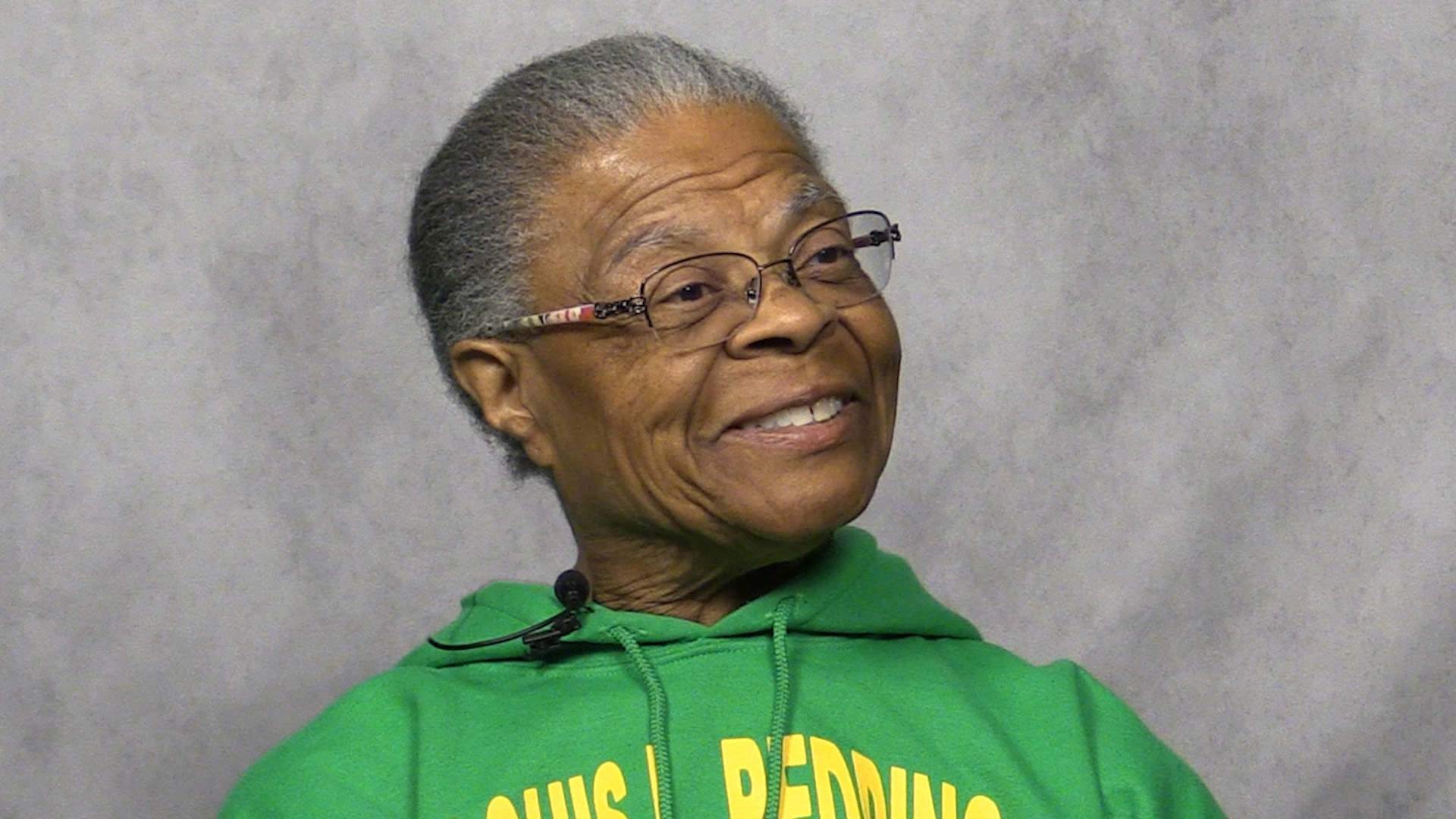
BIO INFO: Ardie Todd was born and raised in Middletown Delaware. Her family are long-time residents of Middletown and she has lived here with her husband all of her life. She was a Teacher for 48 years serving young children in the Appoquinimink School District. She has experienced segregation and then integration in her community.
TOPICS AND SUBJECT MATTER KEYWORDS: Family Heritage, Education, Religion, Social Activities, Community History, Career
TO VIEW SUBTITLES, PLEASE SELECT THE CLOSED CAPTIONING (CC) ICON AT THE TOP RIGHT OF THE VIDEO.
Recording Inventory Sheet: Ardie Todd
Digital Collections Sheet: Ardie Todd
Middletown Historical Society
Middletown, Delaware Oral History Series
Speaking of the Past: Conversations
With Long-Term Residents of
Middletown, Delaware, 1900 – Present
Interview with Ardie Todd
May 6, 2026
Middletown Historical Society Oral History Transcript
Ardie Todd – Youtube- 05062026
Interviewer: Patricia L Peirson Maichle
Pat: Okay. Good morning.
Ardie: Good morning. How are you?
Pat: I’m good. How are you?
Ardie: Wonderful.
Pat: I’m glad you’re here.
Ardie: Yes.
Pat: Um I’m Pat Maichle. I’m a volunteer with the Middletown Historical Society and I’m here with Keith Schneider who’s our videographer.
Ardie: Right.
Pat: And we’re at the Appoquinimink Community Library in Middletown, Delaware. Yeah. The Historical Society through your memories and experiences are trying to um describe the history of Middletown from the 1900s through present. And um hopefully with the stories that you tell us this morning, we’ll be able to add to the the abundance of information that we’ve gotten through these videos.
Ardie: All right.
Pat: So, relax, take it easy, and share your stories. What is your full name, and do you have a nickname?
Ardie: My name is Ardie Lou Francis Walker Todd.
Pat: Wow, that’s a lot of names.
Ardie: And I’ve had several nicknames over the years. Started out as Tiny, then I went to Butter, and then I became Butter Ball. So.
Pat: Hopefully not anymore.
Ardie: Yes, I’ve been working on taking that butter ball part away. Getting a little more exercise in.
Pat: I’m not going to call you that. When and where were you born?
Ardie: I was born July the 1st, 1951 right here in Middletown over on Green Street in a little part called Red Row. And um I was born with a midwife and then after that that’s when our parents would take us to the doctor to get completely checked out after the midwife delivered.
Pat: Okay. I’ve been surprised how many people were actually born at home in this town.
Ardie: Yes. And it’s coming back.
Pat: Yes.
Ardie: The midwife thing.
Pat: So, how did your family come to live here originally?
Ardie: Originally, my mother, she was born up in Armstrong Corner, Delaware, which is just what about three miles I guess up north of Middletown. But my dad came from Virginia to work in the farms here.
Pat: Okay.
Ardie: In Middletown
Pat: Were there other family members here already?
Ardie: On my mother’s side. Dad was by himself. So, he ventured well, he ventured up with some of his brothers, but then they kept going north. So, a couple of them stopped there in Chester and then some went over into New Jersey.
Pat: Okay. What was the house that you grew up in like? So, how many rooms did it have? Did it have electricity? Did it have an indoor uh plumbing?
Ardie: No, it well, like I said, it was called Walls Row. So, Mr. Walls was a businessman here in Middletown that grew several little row homes throughout uh the town. Um, what I remember because I think I was only like five or six when we moved from there, but I do remember it was a two-story. We did not have plumbing. We didn’t have water because I remember the water pump that we would go out and pump up the water and have our bucket to gather it, take it in. And we had the um outdoor toilet wherever you had to, but we had to keep it nice and clean. Yes, that was a must. Um it was two bedrooms if I remember upstairs and then we had the living room and the kitchen area downstairs.
Pat: Do you remember when you got plumbing, indoor plumbing?
Ardie: Um, I would say, let’s see, it was like 1957 when we moved over to Lockwood Street. My brother had come out of the service and he was able to purchase a home over there. So, all of the family that was there on Green Street, Red Row, we were able to move to Lockwood with him. But it didn’t have plumbing either when we moved. It did have water, but it didn’t have plumbing. It still had the outdoor shed. So, I’m thinking it wasn’t until 1963 or five or something like that when he built on a bathroom and that kind of thing. Yes. Yes.
Pat: Yeah. What is your earliest childhood memory?
Ardie: Still around on Red Row. I remember being outside with Mom. She was doing laundry with a washboard and the tubs of water. And they had this stuff called bluing, I think, that they would put in the rinse water that would make your clothes nice and white, your white clothes white supposedly. But um we were also getting a new um outhouse done. So, they were digging down and had the hole and our ball went down in the hole. And of course I’m running after the ball. I went right down after the ball. Got down in there.
Pat: Oh my.
Ardie: And I guess that’s why I don’t like spiders and bugs and stuff to this day because um Mom had to use one of the uh poles for the line to help get me up out of that.
Pat: Oh my.
Ardie: So that’s what I, that was my first memory that I can remember.
Pat: That’s a scary one.
Ardie: But yeah, but we would go out while Mom’s doing the laundry and we would play in the grass. That’s where we would learn to platt using the grass as our hair. Something using the suds from the uh from our tub of water and we would use mud and make like lemon meringue pies and the suds would be our meringue on our mud pies.
Pat: Pretty smart.
Ardie: Yeah. Those were fun things. Yeah.
Pat: Well, this kind of leads into this. What kind of games did you play growing up?
Ardie: Okay. I remember hopscotch and I remember um dodgeball. And inside we loved to do um it was a game called jacks where you had these they were metal or plastic like stars and you had a ball and you would have to gather up and not touch with the jack. So, it was fun. Um, and then we’d play marbles. And that’s about, no, I liked to play with paper dolls. Paper dolls. Yeah, that was fun.
Pat: Did you cut them out of the book?
Ardie: You would cut them out and then they started where you didn’t have to cut. You could just punch out the pieces after a little bit. Yeah, they were perforated. Yeah.
Pat: I remember those.
Ardie: Yes.
Pat: What was your favorite thing to do for fun? So, like go to the movies, go to the beach, do something else.
Ardie: Yes. For fun. We liked to go because like I said it was farmers and where we lived over on Lockwood there were, what did they grow? Soy beans. And there was a woods behind it. So, we would go walking through the soybean field to the woods and just go, you know, on an excursion to see what we could find out in the woods. Um, and we did like to go to the movies. We just had the Everett Theater at that time, which was fun. Um, I remember Mary Poppins when it came, but we were to sit up in the balcony part, not down in the orchestra part.
Pat: You were directed to do that?
Ardie: Yes. Yes, that’s where we were directed to do. Yeah, but it it was still fun. I mean, we enjoyed the shows. Yeah.
Pat: That was actually probably a better view.
Ardie: Yeah, I was going to say we were up looking down on instead of looking like this. So, yeah, it was great. And I like doing puzzles, all kinds of puzzles, crosswords and jigsaws and word puzzles. Yeah.
Pat: Did you did you have family chores? And if so, what were they?
Ardie: Oh, yes.
Pat: And what was your favorite?
Ardie: My favorite was actually washing the dishes. I love washing the dishes more so than drying the dishes. Yeah. But we we would rotate our chores so you didn’t do the same thing over and over. So that was good. So, we would do the vacuuming, the sweeping, uh, cleaning the bathrooms, washing the dishes, drying the dishes, taking out the trash. We had a lot of chores that we would do. Yeah. Picking up around the yard.
Pat: What was school like for you as a child? What was your best and worst subjects? And where did you go to school?
Ardie: I went to school at uh Louis Redding School. Yes. Representing as an alumni. And um we would walk to school. We were in a walking distance which was good except for rainy weather. It wasn’t so great. But still, um we were able to walk home for lunch from school. They trusted us enough that we could come come back. Yes, it was nice. Um, favorite subject?
Pat: You went there all 12 years?
Ardie: I went to Louis L Redding the first seven and then we were integrated and I went over to Middletown High School in 8th grade. Yes.
Pat: So, what was your favorite subject? I’m sorry.
Ardie: That’s okay. I love math, I guess, because it goes along with solving puzzles. So, I love math and science. They go together. Social studies, too much memory of dates and all that stuff. I’m just like, it would all just get jumbled and mixed up. Yeah.
Pat: Okay. Did you go to college?
Ardie: I did. I went to uh University of Delaware. Stayed in state of course thinking about finances. Didn’t have a lot so and was able to uh get grants and scholarships to pay my way for that.
Pat: What was your major? I’m sorry.
Ardie: It was early childhood and elementary education. So yes.
Pat: Do you remember any fads from your youth such as popular hairstyles or clothes?
Ardie: Yes, of course. In the ‘60s and ‘70s, we came up with the Afro. Yeah. But with me, it was just too much work, the work Afro. So, I I didn’t do the Afro. I went to the um getting it straightened instead. Yeah, it was easier to take care of for me. Um and you had the uh mini-skirts were the thing. And you had the bell bottoms. Yes. The dashikis. So yeah, I remember all those.
Pat: What was your favorite songs and music?
Ardie: Well, I I came up with Michael. Michael Jackson, which his story is out now, which is great. Went to see, enjoyed it. Um, so it was R&B music was a thing. Yeah.
Pat: Did you go to dances?
Ardie: I was kind of like a wallflower, but I loved the music. So, I would go, but most of the time I was made to go to be like a chaperone of my sisters and brothers and nieces because they didn’t know how to follow the curfews and all that. So, I was like the uh person to round everybody up and get everybody back. But yeah.
Pat: Okay.
Ardie: Yeah, we had a lot of dances.
Pat: Did you have any pets? What kind? If you had any.
Ardie: We did not when I was coming up, but I know my sister and brother, they used to have dogs, but they were out of the picture by the time I came ‘cuz I’m the youngest of the siblings.
Pat: What was your religion growing up and what church did you attend?
Ardie: Our religion was uh AME, which is African Methodist Episcopal. So, we Methodists and um we attended at Trinity AME that’s on Lockwood Street in Middletown.
Pat: Do you still go?
Ardie: I still go to church, but I go to our sister church, which is Ringgold AME. And Ringgold was um church up in Armstrong Corner where my mother was born. And her mother and my uh grandfather, they were um people who actually started in their home having services and then they were able to construct get money and construct the building. So, there in Armstrong.
Pat: And it’s still there.
Ardie: It is still there and that’s where we attend now.
Pat: Were you ever mentioned in the newspaper or other publication?
Ardie: I was mentioned in the Middletown Transcript. Um I believe it was when I um did outside gardens like a botanical garden in front of Silverlake Elementary School and I had the students and we did that. It was a kickoff from when it was um what is that day they have every year?
Pat: Earth?
Ardie: Earth Day. Yes.
Pat: And so, you were a teacher?
Ardie: Yes. Elementary teacher from I’ve taught kindergarten through fifth grade. Yes. And I still like tutoring now.
Pat: Do you still do?
Ardie: Yes.
Pat: In the schools?
Ardie: Uh it is a service that I do as part of our church. Yes.
Pat: Huh.
Ardie: So, I enjoy that.
Pat: So, you’re famous. Who were your friends when you were growing up?
Ardie: My friends were mostly my neighbors right close on our street and, you know, the students that I attend uh school with.
Pat: And you’re still friends with them?
Ardie: Yes, as a matter of fact, we are. Yes.
Pat: That’s pretty good.
Ardie: Yeah, it is. Yeah. We get together every now and then.
Pat: Do you have uh like lunches or
Ardie: We we all meet at different uh restaurants and have lunch together. Yes.
Pat: That’s good.
Ardie: Yes. Talk about the good old times.
Pat: Yeah. Many years ago. Yes. And I speak from my own.
Ardie: Yes.
Pat: What what world events had the most impact on you while you were growing up? Did any of them personally affect your family?
Ardie: Well, like uh the integration of schools was a big thing for us. Um my dad was instrumental in getting um Louis L Redding built. He was able to go to different politicians and he was known as Mr. Democrat. So, and there was an article in the newspaper, the Journal about him, Mr. Democrat. Um he enjoyed uh getting people to come out and vote in the neighborhood. So that was really big. Um, so the integration of schools.
Pat: did that go well for you?
Ardie: It went well. I didn’t have any hiccups along the way. I was able to uh socialize well, get in. Um, others would have their, you know, mishaps and quarrels or whatever, but I I seem to do well with it. Um, I remember the landing on the moon, which they just did another didn’t land, but they did the uh circulation of the moon. So, yeah, John F. Kennedy being president was a biggie. And I remember us taking a class trip up to 95 I think where it became was it the Vietnam ‘cuz they got a strip that’s the Vietnam Memorial. Yes, we did that. So yeah.
Pat: Did any of your family serve in the wars?
Ardie: Uh my oldest brother was in the service during the Korean War. He and one of his uh good friends.
Pat: And he made it back.
Ardie: He made it back. Yes, he did. After three years, I think he served. And he was stationed in Michigan and that’s when he came back and was able to purchase a home using the VA loan. That was great.
Pat: H how are holidays, for example, birthdays, Christmas, Easter, whatever you celebrate in your family, how are they celebrated? And do you have special family traditions?
Ardie: Birthdays in our household, if it’s your birthday, you got to choose what the dinner menu was going to be. And of course, you would have your cake and ice cream. you got to invite your close friends over to enjoy it with you. Christmas, one of our big things was uh we made homemade donuts, homemade root beer. So that was a big deal. Thanksgiving, we always got together and had all the turkey and the trimmings and that was great. So yeah.
Pat: Do you do that now?
Ardie: It’s not as many of us now, but I still try to carry the tradition where we can pull the family together. Yes.
Pat: How is the world today different from what it was like when you were a child? There’s lots to talk about.
Ardie: Well, first let’s start with being a child. You had respect for your elders and you know it was the thing where you were to be seen and not heard when we came up unless you were asked to join in. You know when adults were speaking that was your cue to leave the room and go play. Yes. That’s adults’ business not yours you know. So, and um now it seems like the children kind of run the roost the home. I’ve seen it with my own family members and all but uh so the respect part both ways is it seems to be not there. Um but now with the integration that’s a big change in our world because when I came up like there were certain parts of the town where you did not go unless you were there for business and then you just took care of your business and you got back to your community part of the community. Now you’re free to go wherever, which is great. And like I was saying earlier about the theater, now you can go and sit wherever you please in theaters. So, they so there’s some positives. Our town has grown like crazy when it was just a little farm town with our mom-and-pop stores. So now we have many chain stores here. So, you have a variety of places you can go. So yeah, there’s been some changes. We used to have just one traffic light in the center of town. So now we have a traffic light on just about every corner. Yeah. So, lots more traffic. Yeah.
Pat: Okay. What do you know about your family surname, like your maiden name.
Ardie: Walker? I don’t know. I I’ve never really done the research on that. So, yeah.
Pat: So, you don’t know where they came from?
Ardie: No.
Pat: Except your father was from Virginia.
Ardie: Virginia. And I believe that his parents were came from Georgia to Virginia. Other than that.
Pat: Okay. Well, you might not know this either. Is there a naming tradition in your family such as always giving the firstborn son the name of his paternal grandfather? So, do you replicate the name?
Ardie: Uh, we replicate the name because my Dad’s name was Lee, my brother is Luther Lee, and then we got Luther Lee. It goes all the way up to the fifth generation. So.
Pat: Okay. So, you do do that.
Ardie: Yeah, we do do that.
Pat: Okay. Considering that we’re celebrating the 250th anniversary of our country this year, what stories have come down to you about your parents, grandparents, more distant ancestors in service to the country?
Ardie: Okay. So, I don’t have much about ancestors. I just remember my grandfather, not great grandfather or great great in that. Um, and like I said, my brother served in the Korean War and my Dad was a local in the politics world. So.
Pat: So, you do have a history of service.
Ardie: Yes.
Pat: Your family.
Ardie: Yes. And most of our family are preachers and teachers.
Pat: Oh, yeah.
Ardie: So, that’s service.
Pat: Oh, yeah. For sure. Are there any stories about famous or infamous relatives in your family? Did anybody go outside the line?
Ardie: No. No.
Pat: No. Well, your grandfather, your father, your grandfather was famous in politics. Anyway.
Ardie: Father.
Pat: Father. Sorry.
Ardie: Yeah. Alright. Yes.
Pat: And your family is so is well known in this in this town.
Ardie: Yes. Yeah. We’ve been for many generations. We’ve been around for quite a while. Yeah. Yes, we have.
Pat: Own that.
Ardie: Okay.
Pat: I know. I knew about the Todd family. Are there any special heirlooms, photos, Bibles, or other memorabilia that have been passed down in your family?
Ardie: You know, I just got a family Bible that’s about this thick. Oh, my goodness. I could not believe how heavy it is. Um belonged to a cousin and I’m like wow. And in the front when you start to turn there they have written a lot of different information and I’m like I didn’t know that name was part of our family you know that’s her name was part of our family as you go through. So, yes. And then I have a picture of my grandmother holding a cousin, and that’s my grandmother who helped start Ringgold Family Church. So, I’ve got that. And I have the um certificates from the my Dad when he had his when we had his funeral service from uh the state of Delaware. And different memorabilia that
Pat: From the legislature?
Ardie: Yes. Yes. Oh, yeah.
Pat: Those are amazing gifts.
Ardie: Yes, they are.
Pat: Yes, they are. And will you pass them down to someone?
Ardie: I will. Yes. To my nieces, nephews. Yes. Yeah.
Pat: What was the full name of your spouse?
Ardie: Devon Montel Todd. And he is the son of Betty and Norman Todd.
Pat: Okay.
Ardie: Who are also well known in the community. The Todd family. Yes.
Pat: And he’s passed away.
Ardie: He passed unfortunately. He had glioblastoma. So yes.
Pat: When was that?
Ardie: A couple years ago or he passed in 1922. Yes.
Pat: So, it’s fresh. Sorry.
Ardie: Might be four years this.
Pat: When and how did you meet your spouse?
Ardie: I met my spouse through a nephew. They used to work together and uh we were introduced. So.
Pat: Love at first sight?
Ardie: No, he came knocking at the door one day just and then we started go dating. Yeah.
Pat: What kind of things did you do on your dates?
Ardie: We loved going to restaurants because he loved eating. Um, we loved going to movies, loved going to live shows, loved doing family get-togethers, um, going to his um, job affairs. He worked for W L Gore and Associates and they had a lot of different affairs there at W L Gore and they love celebrating.
Pat: What was he up there?
Ardie: He worked in um what is it when you set up for their meetings and stuff like that? Yeah.
Pat: Okay. Mhm. How long did he work there?
Ardie: Uh 31 years.
Pat: That’s pretty good.
Ardie: Yeah.
Pat: Where and when did you get married? And was it a big celebration?
Ardie: No. It was a small celebration. We got married over in Elkton at the courthouse because we decided we rather spend money on purchasing a home. So, the following year we were able to purchase our own home. So yeah. But we just did that.
Pat: How long had you been dating before you got married?
Ardie: Eight years.
Pat: Okay. You wanted to be sure.
Ardie: Yes.
Pat: How would you describe him? Like more than just what color his hair was?
Ardie: No, no. He was he was fun-loving guy. Jovial. He was always ready to crack a joke, you know, and get you laughing and having fun. He really knew how to draw people in.
Pat: Those are good memories.
Ardie: Yes.
Pat: What did your family enjoy doing together? You and he and your children.
Ardie: right.
Pat: What did you like to do together?
Ardie: Yeah. See, that’s where on his family side, they had six children and each of them would celebrate their birthdays together with their parents, which was great. So, everybody would always come together during birthday times. Um, I think that may have been the biggest thing that they did together when we were do, oh, yeah. Celebrating birthdays.
Pat: It was a lot of birthdays.
Ardie: Yes, exactly. What was your profession and how did you choose it?
Ardie: My profession was uh Early Childhood and Elementary. I taught um anywhere from kindergarten to fifth grade. Most of the time was first grade because I enjoyed um getting students started reading. I figured if you could start reading and have a good foundation there, you could blossom into whatever you’d like. But I thought that was a very key part of education to get a good foundation in reading. Um, I chose reading because in high school I thought I was going to be going into nursing because I enjoy taking care of people, also. Like if somebody when we were playing and skinned their knee or, you know, got a cut or something, I’m the one that’s taking them in to get washed up, you know, and putting the band-aid on that kind of thing. But then I found myself also helping classmates to make his root some subject area. So, it kind of switched over to education. So that’s how I got chosen from out of but yeah.
Pat: And how many years were you a teacher?
Ardie: I taught for 30 years and then I substituted for another 18 years. So, 48 years total.
Pat: You were committed to the job.
Ardie: And I taught here in Appoquinimink School District. I believe in giving back to your community. So.
Pat: Always at Silver Lake.
Ardie: Uh most of it at Silver Lake and I did kindergarten over in Odessa when it was a kindergarten center. So yes.
Pat: If you could have had any other profession, well you kind of answered this, what would it have been? Nursing.
Ardie: Nursing. Yes. Yes. Nursing.
Pat: What accomplishments were you the most proud of?
Ardie: I was proud of being able to graduate from the University of Delaware because again that was during the time when they were taking in and integrating also. But it was also a time, because I was going to go to Delaware State. It was college at that time, Delaware State University. But it was a question as to whether they were going to be certified getting their certificate. So that’s why I’m like, okay, let me just go where I know that I’m going to put in the work and it’ll be no, you know, recognized and uh so that’s University of Delaware. Yeah, that was a biggie.
Pat: Especially at that time.
Ardie: Yes.
Pat: How has the recent development affected the area in Middletown? You talked a little bit about it earlier.
Ardie: I did. I did. Well, early on it we were a small community. Everybody knew each other. The families knew the families. So, you were kind of closer. Um, now we have people who have immigrated here from other states. I’m not too sure if maybe we’re out counted now as you know the locals are out counted. So, it’s it’s a joy when you do go into the stores and you see a local person and you’re like “Hey, good to see” you know like. Yeah. Um, and but we we have a lot more, you know, we don’t have to travel 30 miles north or south to get services that we used to do. So, that’s a good thing for the uh build up here. I like that.
Pat: How has the community changed? So ,culturally? Um, religiously? We have a lot more churches than we used to have.
Ardie: Oh my gosh, we sure do. Exactly. And like I said, you know, before even though we knew each other, but we still kind of socially we were separated. Now we come together more socially. Yeah.
Pat: What do you want people to know the most about yourself, your family, their business if they had one? What do you want them to remember your you and your family about?
Ardie: Well, we’re we’re a family of service and always have been. Whether it’s just making sure somebody has food to eat, clothes to wear, a way to get to their appointments. So, we and we still carry that on. That’s the way we were brought up to take care of one another. Um I want us to just add that like I say that we reach out and help one another.
Pat: And still do.
Ardie: Still do.
Pat: What do you want people to know the most about Middletown’s past? So, that’s what we’re remembering is the past Middletown. Yes. What do you want people to remember about that?
Ardie: That we have always been a loving community and we will take you in as one of our own. Um, I remember, um, it was a gentleman named Harry Blackton. I don’t know if you heard these names, Austin Waters, Howard Young, who were on the town council at some point and represented the black part of the community on the town council to make sure we were represented in a way and got the services that we were to get. Um, and I just think that what’s great that we do did had that. Um right now I know we have um the Howard Young Correctional Center. He was the first black warden in the state of Delaware.
Pat: Do we still have it?
Ardie: We do still have it. We do still have it. Uh my brother Luther, he was the first black um Superintendent of Buildings and Grounds in the state for schools in the state of Delaware. Yeah. And as I said, my Dad, Mr. Democrat, love him. So.
Pat: And he he was instrumental in getting Louis L Redding built. Correct?
Ardie: Yes. Yes, indeed.
Pat: And they’ve just redone the building. Is that
Ardie: Yes. It’s beautiful. Very modern. Yes.
Pat: Were you there?
Ardie: Louis L Redding. It is. It It was always a great landmark in our community. That’s where we would hold all of our different big affairs. A lot of different musicians would come. I think it was called um like the Chitlin Circuit that would come, you know, the people from there.
Pat: They performed over there?
Ardie: At Louis L Redding. Okay. Yes. Yes.
Pat: Darn. I missed it.
Ardie: I know. Isn’t that something?
Pat: Who was Louis L Redding?
Ardie: Louis L Redding is recognized as the first black lawyer in Delaware and also he was with the Roe vs. Brown. So, you know, for the integration of schools. Oh, yes.
Pat: Did you ever meet him?
Ardie: Yes, indeed. Oh, yes. Several times. Several times. Yes.
Pat: Do you keep a journal?
Ardie: I do.
Pat: Of all of these famous people that you
Ardie: I do have a collection at home. Yes. Newspaper clippings and all. Yes.
Pat: Excellent. Yes. I’m jealous.
Ardie: Yes.
Pat: Well, those are good things for Middletown for people to remember about Middletown.
Ardie: Very much so.
Pat: Um, that’s all the questions that I have. Do you have anything else you want to tell us about or anything you want to add to this?
Ardie: I just want to say that when I remember early on you had asked a question a big difference in coming up now. And when we went to school, the teachers always wanted you to do your best. I mean, and they didn’t accept anything less. So, they had a way of pulling that out of you. Not that you just attend school, but they’re going to get the best that they can out of you. They’re going to work with you and help you to be your best. I’m not sure that happens now. I feel so sad for students. I don’t know why not, but it just doesn’t seem to be happening. And I’m saying that be from my point of view of being in the schools like I said for 48 years. It kind of fell on the way side of um individualizing the education.
Pat: Anything else?
Ardie: That’s it.
Pat: Well, we really appreciate it. I know I appreciate you coming in here and talking to us. It’s very nice. Um, I know the Historical Society will be glad to to hear your interview and have the the video on their website.
Ardie: Very good. Very good.
Pat: Thank you very much.
Ardie: Thank you for inviting me.
P.S. With Mrs. Todd’s permission, we add the following post script. Louis L Redding was one of the attorneys who represented the plaintiffs in Brown vs. Board of Education in the landmark case in the U.S. Supreme Court.