2026.005.008 Al Grimminger
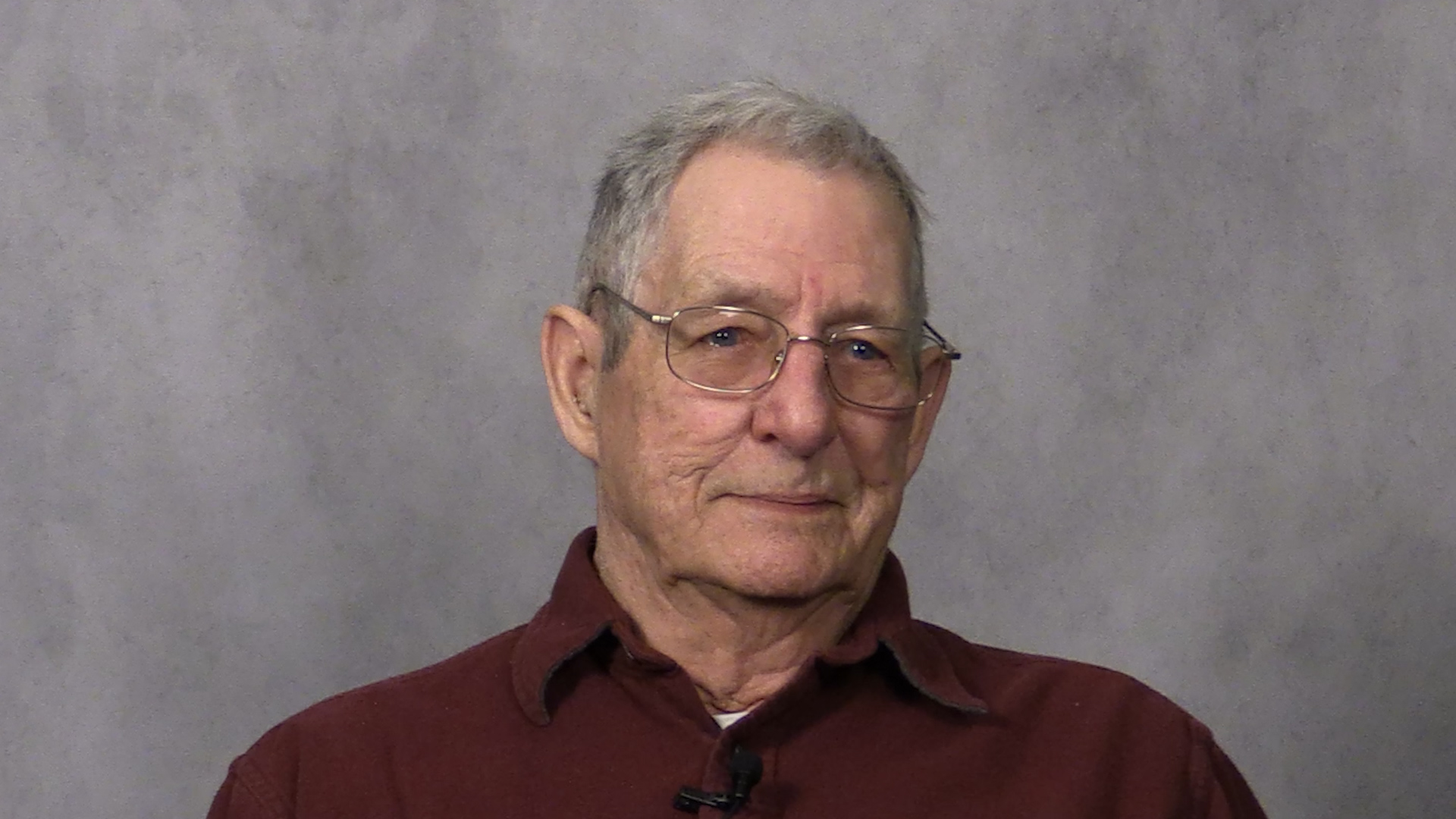
BIO INFO: Alfred Otto Grimminger was born in Philadelphia in 1940 and the family moved to Richardson Park, Wilmington, DE. Al lived there until 1952 when they then moved to Middletown. Al attended school in the one school for first to 12th grade where he graduated. His family owned a Bakery in Middletown. Al served in the Delaware National Guard. He lives with his wife Janet and their children are grown and have children of their own.
TOPICS AND SUBJECT MATTER KEYWORDS: Farming, Military, Family Heritage, Education, Religion, Social Activities
TO VIEW SUBTITLES, PLEASE SELECT THE CLOSED CAPTIONING (CC) ICON AT THE TOP RIGHT OF THE VIDEO.
Recording Inventory Sheet: Al Grimminger
Digital Collections Sheet: Al Grimminger
Middletown Historical Society
Middletown, Delaware
Oral History Series
Speaking of the Past: Conversations
With Long-Term Residents of
Middletown, Delaware, 1900 – Present
Interview With Alfred Grimminger
March 2, 2026
Middletown Historical Society Oral History Transcript
Alfred Otto Grimminger – Youtube – 03022026
Interviewer Patricia L Peirson Maichle
Pat: Okay. Good morning.
Al: Morning. How are you?
Pat: I’m good. I’m Pat Maichle. I’m a volunteer with the Middletown Historical Society and we’re here with Keith Schneider who is our videographer. And we’re in the Appoquinimink Community Library in Middletown, Delaware. And um we’re here with Al Grimminger who’s going to talk about himself this morning and the history of Middletown. The Historical Society is basically documenting in video the history of Middletown from the 1900s through today uh to talk about how the town has changed and what your experience and memories have been. So, let’s get started. What is your full name and do you have a nickname?
Al: Full name is Alfred Otto Grimminger and a lot of people call me Al and people that don’t like me call me worse. But
Pat: What and where were you born?
Al: I was born in Philadelphia in a house in 1940.
Keith: Hey Pat, can I stop you just for a second now? Can you adjust with your glasses, can you just slide it down your nose just a tad because I just am seeing lots of Oh, that is better. Okay, great.
Pat: Is that okay?
Keith: Yeah.
Pat: How did your family come to live here?
Al: Well, my father and my uncle came from Germany. Uh that was back in I believe it like 1937. And uh they were in a bake shop with Sterling’s Bakery who uh brought them here or gave them a job when they got here. And then I don’t know what the year was but a few years after that then my uncle and my father had a bake shop in uh Wilmington on Union Street and uh that was until 1952. And then uh they broke up for some reason. I never did find out why or how. My uncle, he went to uh uh another baker in Wilmington. And my father and us, we came to Middletown and had the bake shop in uh in Middletown on North Broad Street.
Pat: And what was that called?
Al: It was called Grimminger’s Bakery. And then uh when my father retired from it, one mistake he made is that uh the people that bought the bakery, the guy that bought it, he bought it for his son to get his son involved in in a job. His son had no idea about baking. Didn’t want to do it. But his father forced him to. And the thing that my father regretted doing was letting them to keep the Grimminger name for a couple years and it started running down the business. But uh then they got out of the business and now it’s a it’s a barber shop.
Pat: Excuse me. Were there other family members in the area? And if so, who?
Al: Yes, there was my brother, my sister, and uh later on uh ended up with another sister like 20 years down the road. Uh but uh they were in the area and then uh uh. Now my one sister uh is well both of them are over in Maryland now and my brother was killed in an auto accident.
Pat: What was your house like that you grew up in? Was it uh how many rooms did it have? Did you have electricity? Did you have running water, a telephone?
Al: Yes. Uh we grew up in uh uh uh Elsmere or not Elsmere. Richardson Park in Wilmington. And uh we had uh an upstairs downstairs and the heat we had was uh a coal fire, you know, had to shovel coal in it. And we we did have electric and we did have uh plumbing in the house. And then uh they also added uh my parents added a couple more rooms, couple more bedrooms and and things like this downstairs. And it was uh a small yard. Uh and uh in fact, we lived right next to uh uh to our our family doctor. And uh that worked out because there were some times we came home from school in the wintertime and uh my parents weren’t home yet. So, the doctor’s wife would have us come over and we had cookies and milk, you know, until my parents got home. So.
Pat: What was your earliest childhood memory?
Al: Earliest childhood memory? Uh, well, I remember when my mother died. I was about two years old when she died. And, uh, my father had me on, uh, some people that he knew who, in fact, one of them was a nurse. And I end up calling them aunt and uncle, but uh I lived with them for on a farm for several years until my father remarried and and then uh we moved to Richardson Park.
Pat: What kind of games did you play growing up?
Al: Well, some of the games that we played, uh, uh, I would, uh, smack the kids if they did it now because we would go down to the woods with BB guns and shoot at each other like cowboys and Indians. And, uh, then we would u we play baseball and things like this, but they would be wouldn’t be regular baseball bats. There’d be sticks and and uh some soft balls, but that was about it.
Pat: What was your favorite thing to do? Like go to the movies, go to the beach.
Al: Well, we didn’t go to the movies too much because expense. And at that time, I think it was like uh 25 cents for a movie to go to it. And uh uh back then in the ‘50s 25 cents was a lot of money. And uh going to the beach uh we used to go to as a family uh every couple weeks or so we’d end up uh going over to Wildwood. And then uh it’d be our family and my my mother’s family stepmother u her family would go with us. And then um my aunt always wanted to ride in a car with uh with my mother and my father. So, I was voluntold to drive her car to follow him with myself, my brother, my sister, and my cousins in that car. So, that’s the way we went and way we got back.
Pat: And that’s in New Jersey, right?
Al: That’s in New Jersey.
Pat: Did you have family chores and what were they?
Al: Yes. Um when we were living in uh uh Richardson Park, uh every Saturday we had a a big porch with big windows and all. And every Saturday it was my job. I had to clean the windows. I had to scrub the floor. And if I did it fast enough, I was able to uh go to the movies before the movie started. And that was back when I was like 12 years old.
Pat: And then you had chores when you moved to Middletown?
Al: We moved to Middletown and yes um had chores. Worked in the bakery bakery. Uh, and my last four years of high school, uh, we started at midnight and my father let me off at 7:30 to go home, get ready to go to school. And my brother, he had to come in at 3:00 in the morning and we made he made deliveries uh down to Dover down to Playtex Corporation at that time. So that’s where we uh spent a lot of time in the bake shop. And then I hated it when school was off, like we had a snow day or something, things like that, because that meant I had to work longer in the bake shop until we were done.
Pat: What was school like for you as a child? What were your best and worst subjects?
Al: That’s kind of tough, but uh uh I liked I liked math and and history uh you know things like this. You, of course at that time uh if you acted up in school then you met the board of education. And that board of education was an 18 inch paddle and uh so we had that uh and you got it a couple times and you learn to to listen and uh and be a good boy. And uh the thing is on that when my father took us to school, he told them that if we need discipline to discipline us and he wanted to know about it. And the first time I got the paddle, I was scared to go home. But when I got there, he was standing at the door because they had called him. And the second time I got the paddle, I was afraid to go home. But I don’t know whether he just gave up or what, but he wasn’t there and didn’t say anything. So, but uh. Yes, the school I went to uh was now the Everett Middle School. Uh that was the first to 12th grade at that time. And uh I went there in the sixth grade when we moved to Middletown.
Pat: So, that was the only school you went to while you were?
Al: That’s the only school I went to there. Yeah.
Pat: Did you go to college or
Al: No.
Pat: Anything? Okay. Do you remember any fads from your youth? Popular hairstyles, clothes?
Al: Yeah. Uh, one that, uh, we had they called the Don Eagle, and that was where the side of your hair was almost shaved and then right in the center it was just like uh long hair. That and and uh uh I forget what you call it now the but the real short hair and then used to put the the cream on it to make sure the hair stood up straight.
Pat: How about clothes? Were there styles that everybody wore?
Al: Uh, a lot of a lot of it was jeans and uh tight fitting jeans and and uh boots, uh where now a lot of tennis shoes. But we had uh had boots like in the western time and and uh western hats.
Pat: What were your favorite songs and music?
Al: Well, in school I played the trumpet. Uh, so, you know, I really didn’t have, as a child, I really didn’t have uh too much on on uh songs. But uh as went on in years, my favorite was country western.
Pat: Did you have any pets? And if so, what kind and what were their names?
Al: We had German Shepherd called him Rinnie. Full name was Rinnie Tin Tin, after the movie. And uh uh that dog took care of us as kids. Uh no one could get around us uh and you know try and hurt us or anything like that. And even with with uh kids going around and we’re all joking around, playing around, we had to make sure that the dog wasn’t around because the dog would almost want to attack them. But uh everything went fine.
Pat: What was your religion growing up and where did you go to church or synagogue? Whatever.
Al: We went to when we came to Middletown, went to church at the Methodist Church in in Middletown. And uh then later on when I got married, then ended up uh going to New Covenant Church, uh which is a Presbyterian Church over on Boyd’s Corner Road across from Cedar Lane School.
Pat: What church did you go to where when you were younger in Middletown?
Al: Went to the Methodist Church uh on uh Main Street.
Pat: Okay. Were you ever mentioned in the newspaper or other publications?
Al: Uh there are a few things with the military, you know.
Pat: Like what?
Al: But I can’t I can’t remember what it was. just that, you know, especially when our unit was in the Delaware National Guard and uh during the Berlin crisis in ‘61 ‘62, our unit was ordered active duty. Uh and uh we went to Aberdeen Proving Grounds and so that was all in the paper.
Pat: Who were you friends with when you were growing up? Do you remember?
Al: Well, I had a good friend that uh used to work with u Bob First and uh we would get into an argument every once in a while. In fact, when we were in the working in the army aviation shop in the supply room, uh, of course, Bob First, uh, he was like 300 pounds or not quite 300, but but he was a a big guy. And here I am, you know, uh, smaller. And we’d get into an argument and, uh, uh, the Facility Commander, he’d come into the supply room. If we’d be arguing, he’d go right back out the door and uh then a little bit later, he’d open the door and say, “Is it safe to come in?” And things like this. But uh uh we did a lot together and uh uh it he passed away. He had a heart attack and uh that hurt, but uh that was that was one of my best friends.
Pat: I’m sorry to hear that that he passed away. What world events had the most impact on you while you were growing up? Did any of them personally affect your family?
Al: Well, World War II. Uh, since my father and my uncle were in the, uh, baking business and one of them had to go in the army or go in the service. the other one didn’t because of the baking business. And my father didn’t have to go because he couldn’t pass the test. When he was in Germany on the soccer team, uh the opponent when he kicked the ball, the opponent kicked and broke his ankle. So, he always walked with a limp. So, it made my my uh uncle to go in the army. And uh my grandfather from Germany told him to get in the Mess Section, become a cook because you’ll never starve. And uh so at that time my aunt was living with us for a while uh while her husband was, you know, was in the army. And then that was uh that was a rough time. Uh uh money wasn’t there and uh having extra people in in the house and all which which hurt and then uh that. When we moved to Middletown and you know things kind of changed.
Pat: He made it back though, right?
Al: You, made it back. Yes.
Pat: How are holidays, birthdays, Christmas, whatever you celebrate in your family, how are they celebrated? And does your family have uh special traditions or did your family?
Al: Well, the biggest holiday was Christmas. And um when we were kids, uh after Santa Claus left, then uh uh my parents would wake us up and Christmas uh Eve and and we would be allowed to open up one gift. But before we did that, of course, I played the trumpet, my brother played the trumpet, and my father uh played the violin. So, before we could do anything, keep in mind that we just got up and we weren’t fully awake, but we had to play a song together, a Christmas song, uh with the violin and the two trumpets. And then we could go ahead and open up a gift and then go back to bed. And uh so that was always something that that was the tradition that that we had. So, we knew it as soon before we even got up. We knew what we had to do. So, we got our instruments ready to go.
Pat: What did you do on Christmas day as a family? I guess
Al: As a family we opened up the gifts and uh there were times that maybe the aunts and uncles would would come over with their kids, the cousins, and all um and just have a meal and that would be about it.
Pat: How is the world different today from when it was like when you were a child?
Al: There’s so much going on in the world right now with all the battles, all the wars, uh, and people, they lose sight of God. And there’s too much right now. So, there’s too much uh ‘I’ trouble. I this, I that, I the other, and not the we. And that’s not just with family, that’s with nations, that’s with villages, that’s with towns. And people people have changed so much. Uh it’s it’s not like “yes ma’am”, “yes sir”, and things like this. The kids don’t know that anymore. And I blame a lot of that on the parents. But at the same time, the parents now uh are the ones that were never taught it because this goes back several generations where everything started to change. So, we need to go back to the olden days.
Pat: Is there a naming tradition in your family, such as always giving the firstborn son the name of his paternal grandfather?
Al: No, not that I know of.
Pat: How about your surname Grimminger? Do you What do you know about that?
Al: Grimminger uh is German. And uh it’s funny because even with the military uh uh when we had duty over in Germany, the Grimminger name over there is almost like a Smith name here in certain areas. Uh, there’s so many Grimmingers, but they’re not related. But a lot of the Grimmingers were bakers and not any relation. It’s just one of those things. There was a lot of Grimmingers that had bakeries over there. In fact, when um when I was over there with the military, uh at one time, I connected with a baker and he took me back to his bakery and and showed me his big operation and uh things like this. And I come home and told my father about it and all, you know, and and we talked. But that was that was something. And when we were in Germany, and that was be when we left uh Richardson Park and come and went to Middletown, we had a month or maybe it was two months in Germany as a family staying with my grandfather and then my cousin and myself uh the my grandfather made the long pretzels and and we had to put them in the little plastic bags and then my cousin and I would take them down to the to the bars because the uh the bars would have beer and the pretzels and we had to deliver those every day.
Pat: Considering that we’re about to celebrate the 250th anniversary of our country this year, what stories have come down to you about your parents, grandparents, more distant ancestors?
Al: Nothing that I can think of uh on that. Uh it’s it’s going to be a big celebration. Uh and it’s been planned for a couple years, you know, knowing and this is the year we’ll just have to wait and see what happens.
Pat: Are there any stories about famous or infamous relatives in your family?
Al: No, not that I can think of.
Pat: Are there any special heirlooms, photos, Bibles, or other memorabil memorabilia that have been passed down in your family?
Al: No.
Pat: Nothing.
Al: No.
Pat: Not even pictures?
Al: Well, we got we got some old pictures, you know, uh uh the black and white pictures, but uh you know, there’s nothing that was really passed down, you know, to the family.
Pat: What was the full name? What is the full name of your spouse and um siblings, parents, if you want to list them? And tell us about your spouse. What was what what is she like? What does she you know, what do you think about her? What do you love about her?
Al: Well, Janet Lucy Grimminger. Um, in fact, uh, we met, uh, that’s my second wife. And, uh, we met at, uh, one of the schools, um, in Middletown. In fact, for a couple schools, I was president of the PTA. And uh I know there was one uh Silver Lake school where my daughter went. And uh I got a a call from the school that my daughter was getting a uh an award at the ceremony and I was invited to it. So, that morning I went to work in my uniform military ‘cuz I work full-time civil service and uh after I got to work then I changed into civilian clothes and and I went to the school in the auditorium and my daughter was standing up or was walking down uh the aisle and she saw me and she told me afterwards she said, “Oh, I guess I’m getting an award because dad’s here”. And, uh Janet’s daughter was also getting an award. So, uh uh she was there and I didn’t know her. And uh so then afterwards uh everybody was clearing out and Janet was sitting on the seat um fold up chairs. That’s all we had at the time. And and uh I asked her, I said she looked like she was down in the dumps. And I said, “Are you okay?” I said, “What’s the matter with you?” And she started telling me and we sat there and next thing we knew all the other chairs was gone except the ones that we were sitting in. And so, we said, “Oh, we better go.” So, then we left. And uh so next day I called her and uh uh asked her if she wanted to go out to dinner. Well, she was divorced and I was divorced and and uh so we went out to dinner. But our kids knew each other before Janet and I did because they went to school together. And uh so then we got married at Methodist Church in Townsend. And then at that time uh we were living in Townsend out uh outside of town limits but uh Townsend address on Blackbird Landing Road and we uh were there for quite a few years and then we left there and went to where we’re living now on Lorewood Grove Road.
Pat: Where’d you get married? You said the Methodist Church in Townsend.
Al: Methodist Church in Townsend. Yeah.
Pat: Did you have a big celebration? Did your family come?
Al: No, we it was a small celebration. Uh, the kids were there and my parents and and her mother because her father passed away uh when she was young. So, uh, and then, uh, we had my friend Bob, who was my best man, and, uh, her friend Janet, another Janet lived in Odessa, was, uh, you know, her, what do you call him? Bridesmaid or whatever. And that was about it.
Pat: What did your family What? Well, you may still. What does your family enjoy doing together?
Al: Well, right now, uh, the kids are all gone. I mean, it’s just, uh, Janet and I right now. And uh so summertime we usually have a Fourth of July party at our place because we had the pool and uh above ground pool and then the kids would come and uh swim and then they bring their kids. So, we end up with our kids, the grandkids and now even great grandkids. So, uh that’s one of the biggest things they would do in the summertime together. But other than that, uh, you know, birthday parties and and, uh, things like that. Christmas, uh, we get together, uh, for a brunch and that’s about it.
Pat: What was your profession and how did you choose it?
Al: Well, I worked for my father in the bake shop uh, until ‘64. Uh and then in ‘64 I started working I was in the National Guard since ‘57 and uh I started working for the Guard in uh January of ’64 full-time, you know, civil service as Administrative Supply Technician at one of the units and then uh I worked at the in the supply for the Army Aviation Support Facility and then I end up down United States Prop and Physical office on River Road and I retired there as a Warehouse Foreman.
Pat: And then you uh do you volunteer now doing emergency work, right? Um can you talk about that?
Al: I’m in the uh Coast Guard Auxiliary and uh up until this year for the last 30 years um every summer been out on the water. Two years I was uh u a a u crew member and for 28 years I was Coxen. Had my boat and uh when we’re on patrol then the Coast Guard we’re on on federal orders and the Coast Guard uh paid for for our fuel and uh per diem rate and uh we did search and rescue and safety patrols up uh for the most part on Delaware Bay. And uh when Victory Village was alive, that was a home that we opened up or that was opened up for uh homeless veterans out on Port Penn Road. Uh I volunteered there for quite a few years and then uh it ended up uh folding up going into bankruptcy. And so and I’m also involved with uh the school district, Appoquninimink school district uh on the building utilization uh uh committee and also on the construction update committee. And my wife for quite a few years was also on the finance committee for the school district. But uh you know, that’s she’s out of that now but I’m still on you know the construction update and building utilization.
Pat: If you could have had any other profession, what would it have been?
Al: And yeah, I really never gave it much thought, but uh I did do uh some farming part-time. Uh and that was doing that uh and then working full-time. So, that kind of helped out uh a little bit with finances. Uh where when I lived in Townsend then it was on a 3 acre lot but um I was renting uh over a 100 acres to uh till but there was like 10 acres here, five acres here and uh things like this. And uh now you ride down the road. What are they? They’re houses. All those fields are now houses and uh so that uh I could have kept up but you know I didn’t.
Pat: So, kind of leading into this next question. Well, first of all, what accomplishments were you the most proud of over your lifetime?
Al: Retiring. Uh yeah. Uh being able to hold a job and and uh you know uh make friends and uh accomplish what for the most part uh what I tried to do.
Pat: How has the recent development affected the area? So, you kind of started with the farming changes.
Al: Well, when we moved to Middletown in ‘52, there was only one red light in town, and that was the center of town. The limits of the town were south would be uh just past Sharondale, which Sharondale is now. Going north was uh Shalcross’ place was uh the last road in town. And on that road is uh is where my parents had a house built. Uh ‘cuz when we first moved to Middletown, we lived in a in a house next to the bakery. Uh but when they built that house, then uh right past that backyard was nothing but a corn field all the way down to the the uh the split between uh uh Broad Street and which is now Summit Bridge Road. And to the west was Summit Bridge Road. And to the east was uh a street right out here uh Catherine Street. That was the town of Middletown. And now it’s expanded so far, you know, and uh I don’t think they can do much more expanding because they’d be running into another town.
Pat: What do you how do you feel about all this expansion?
Al: The school district is building schools because of all the people that are moving in. Uh you don’t know the people anymore. When we first moved here, uh, everybody knew everyone and a lot of people knew the bakery. They knew the family. And if I walked down the street smoking a cigarette, people across the street would say, “Alfred, put that out or I’m going to tell your father.” and I’d put it out because the worst thing is they would tell him. There was one time that I was standing out in front of the bakery talking to a girl and I said she asked me about some some change. She had a dollar or something and I said “I ain’t got no change”. And then I felt a lump in the back of my neck. And what it was was my English teacher. And he held his hand on the back of my neck, marched me into the bake shop, went back behind the counter, back to my father. He said, “Mr. Grimminger, your son ain’t got no change.” And he turned around and walked out. But that’s the way it was back then. And right now, if something like that was to happen, uh you’d be sued. And that is where things really started to change. Uh because it got to the point that parents weren’t take weren’t taking care of the kids anymore. The kids were telling the parents what they’re going to do and the parents didn’t didn’t uh do too much in a lot of cases, not all, in a lot of cases, uh didn’t do anything about it. Keeping in mind that back then uh a lot of times the mother stayed home. But now with the economy and all, it takes two of them out to work, the mother and the father. And then when they come home, they’re too tired to worry about raising the family. Or I can’t say raising the family, but the things that matter, if that makes sense.
Pat: What do you what do you want people to know the most about yourself, your family, their business, etc.
Al: That we’re a good family. Uh we tried to raise the kids to respect each other, to respect uh other people, and I think that we did a pretty good job at it because they’re also teaching their kids the same thing. I see that. Uh, and in fact, even with uh my grandkids that I’d when they were smaller and I’d joke around with them and all this, you know, and if they would start joking back with me, then um I know my son, he would look at him like they were doing something wrong and I’d said, “Brick, no. Leave him alone.” Even though we’re all joking, you know, but you know, he just didn’t want them to get carried away. And my daughter uh and or my daughter… so, they all did the same thing. So, uh it it kind of worked out.
Pat: What do you want people to know the most about Middletown’s past?
Al: The friendship that it used to be. Everyone knowing each other. Everyone helping each other. It was always, “What can I do to help you? What do you need?” And now all it is is give me, give me, give me. And it needs to get a little bit more back to the olden days.
Pat: Did you have anything additionally you wanted to say while we’re on camera?
Al: No, I think that’s about it. Uh, I hope I answered your questions and uh gave a little bit of talk about Middletown on what it was. Uh, it’s it’s interesting and some of the questions that you asked were things that I had never thought about uh until uh now. It still gives me something to think about.
Pat: Well, we appreciate you being part of this series and um thank you for your time and your effort.
Al: Oh, thank you.
Pat: That’s it.Al: How did it go?